How to Open a Cafe in India: Cost, Licences and Step-by-Step Plan
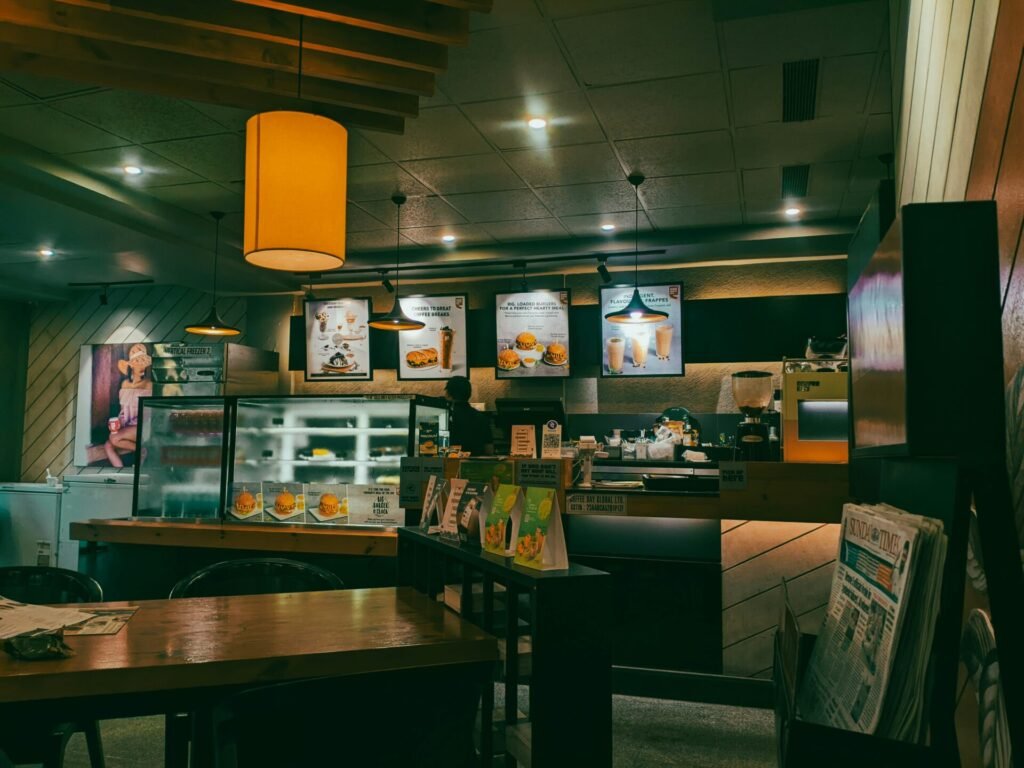
A cafe looks like the “easy” way into the restaurant business — smaller footprint, simpler menu, no liquor licence to chase. It can be, but only if you cost it properly before you sign a lease. Here’s a realistic setup-cost breakdown, the licences you actually need, and a step-by-step plan, based on how we scope cafe projects for clients.
How much does it cost to open a cafe in India?
For a typical cafe of 1200–1,500 sq ft (dine-in + counter, no bar), here’s the breakdown:
| Cost head | Estimated range |
|---|---|
| Capex (construction & fit-out) | ₹18–24 lakh |
| Opex (kitchen & operating setup) | ₹12–16 lakh |
| Fixed one-time pre-opening expenses | ₹10–14 lakh |
| Opening stock | ₹2–3 lakh |
| Grand total | ₹42–57 lakh |
Capex (construction/fit-out): civil work and interiors ₹10–13L, AC ₹2.5–3.5L, lighting ₹1.5–2L, furniture and seating ₹4–6L (a cafe’s seating-to-kitchen ratio is much higher than a full-service restaurant, so this line is proportionally larger), signage and branding ₹1–1.5L, POS/billing setup ₹0.5–1L.
Opex (kitchen & operating setup): espresso machine and grinder ₹3–6L (this is the single biggest swing factor — a good commercial machine alone can run ₹4L+), other kitchen/pantry equipment ₹4–5L, crockery and glassware ₹1.5–2L, small wares and utensils ₹1–1.5L, uniforms and misc ₹1L.
Fixed one-time pre-opening expenses: security deposit (5–6 months’ rent, per our standard benchmark) ₹4–8L depending on city tier and size, 2-month staff salary buffer ₹2–3L, marketing/launch ₹1.5–2L, design and architect fees ₹1.5–2L, brokerage ₹1L.
Opening stock: coffee, tea, bakery inputs, beverages, packaging — ₹2–3L to start.
Rent itself isn’t in the grand total above since it’s ongoing, not one-time — use our standard city-tier bands: metro ₹300–500/sq ft/month, tier 1 ₹200–400, tier 2 ₹150–250, tier 3 ₹80–140.
What drives the cost up or down
Location and footprint. A kiosk or grab-and-go counter in a mall can cost a fraction of a full sit-down cafe with outdoor seating. Size the space to your actual seating plan rather than taking whatever’s available.
Equipment quality. Espresso machines range from ₹1.5L entry-level to ₹8L+ for a serious multi-group commercial unit. Buy for your expected daily cup volume, not for the machine that looks best on Instagram.
Interior finish level. A cafe’s ambience is a bigger part of the customer experience than in a QSR — but “Instagrammable” and “expensive” aren’t the same thing. Good lighting and a few well-chosen materials go further than an over-designed fit-out.
Licences you need to open a cafe in India
A cafe generally needs the same core licences as any food business, minus a liquor licence unless you plan to serve alcohol:
- FSSAI licence/registration — mandatory for any food business.
- GST registration — required once turnover crosses the threshold, and most operators register upfront regardless.
- Shops & Establishment registration — state-level, required to legally operate the premises.
- Fire NOC — required based on seating capacity and local fire department rules.
- Eating House Licence — required if you serve food for consumption on the premises (most cafes do).
- Health trade licence / Municipal trade licence — issued by the local municipal corporation.
- Music licence (PPL/IPRS) — required if you play recorded music, which most cafes do.
Exact timelines and fees vary by state — see our full licence checklist for the state-by-state breakdown, or use our licence time calculator to estimate your timeline.
Step-by-step plan to open a cafe in India
1. Validate the concept and location. Footfall, nearby competition, and target customer profile matter more for a cafe than almost any other format, since a large share of revenue is walk-in and repeat visits.
2. Finalise the menu before the kitchen design. Your equipment list — and therefore a big chunk of your opex budget — follows directly from the menu. Deciding the menu after buying equipment is how budgets balloon.
3. Sign the lease and start fit-out. Budget the security deposit and 2-month rent buffer into your pre-opening cash needs, not just the fit-out cost itself.
4. Apply for licences in parallel with fit-out, not after — several take weeks to process and can run alongside construction.
5. Hire and train staff 3–4 weeks before opening. Barista training in particular needs real practice time before service starts.
6. Soft-launch before the public opening to stress-test the kitchen workflow, POS, and service timing with real orders before you’re relying on first impressions.
Is a cafe business profitable in India?
Cafes can be profitable, but the model depends on volume and beverage mix more than food margins. The mechanics that matter: beverages (coffee, tea) carry far higher margins than food, so your beverage attach rate per ticket matters more than menu size. Table turnover matters more in a small footprint than in a large dining room. And payroll as a percentage of revenue needs the same discipline as any other format — see our food cost and prime cost benchmarks for the numbers we track with clients.
FAQs
How much does it cost to open a cafe in India?
A typical 800–1,000 sq ft cafe costs roughly ₹42–57 lakh all-in, covering fit-out, kitchen and equipment, pre-opening expenses, and opening stock — before ongoing rent.
What licences do I need to open a cafe in India?
FSSAI registration, GST registration, Shops & Establishment registration, Fire NOC, Eating House Licence, a municipal trade licence, and a music licence if you play recorded music. A liquor licence is only needed if you plan to serve alcohol.
Is a cafe business profitable in India?
It can be, driven mainly by beverage margins and table turnover rather than food margins alone, provided food cost and payroll are kept within the same benchmarks used for other formats.
What’s the biggest cost driver when opening a cafe?
The espresso machine and kitchen equipment quality, and how much you spend on interior fit-out relative to your seating plan — both vary far more than the licensing or registration costs.
The bottom line
A cafe’s cost structure is different from a full-service restaurant — smaller footprint, no bar, but a heavier equipment and interior spend relative to size. Get the menu and equipment list locked before you finalise the fit-out budget. If you want a real cost estimate for your specific location and concept, talk to our cafe consulting team, or book a free 30-minute consult.
Related Posts
March 26, 2026
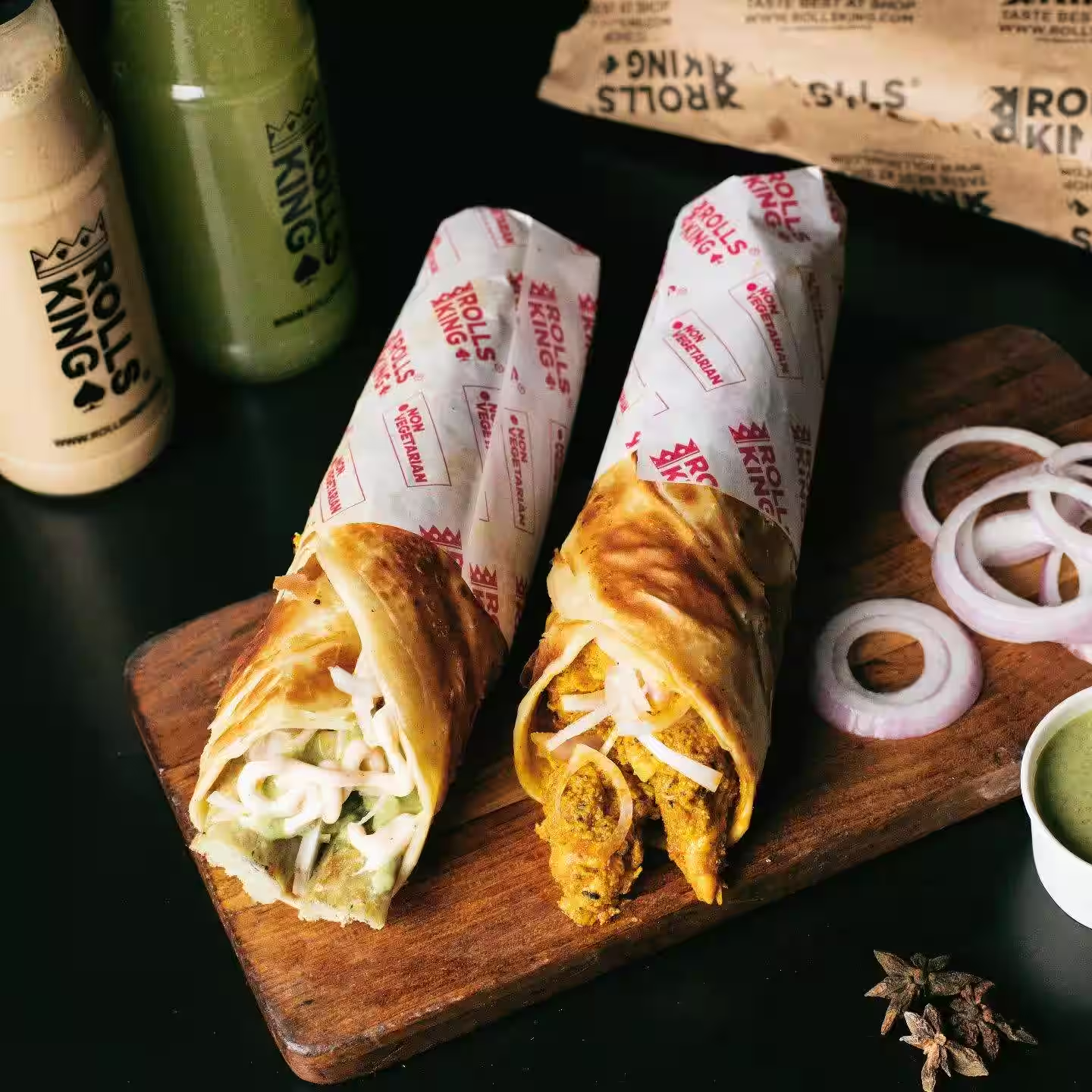
Rolls King Expansion
The Indian food service industry is witnessing a fascinating shift. Homegrown brands are no longer…

March 25, 2026
Café Laptop Policy
The recent buzz around Indiranagar, Bangalore—where several popular cafes are reportedly restricting laptop usage—has sparked…
March 20, 2026
How Zomato Helped Dum Noorani Achieve 5x Growth
As a restaurant business coach working with food entrepreneurs across India, I’ve seen a recurring…