Cloud Kitchen Setup Cost in India: Complete 2026 Breakdown
Generic articles quote ₹5–15 lakh for a cloud kitchen because they’re describing a single-brand, bare-minimum setup. A serious cloud kitchen built to run multiple delivery brands off one commercial kitchen — the kind we actually build for clients — lands differently, because the kitchen itself has to work harder even though there’s no dining room. This piece breaks down a real ~500 sq ft build, derived line-by-line from an actual full-service project we’ve costed, with every dine-in-only cost stripped out and every delivery-specific cost scaled to what a cloud kitchen actually needs.
What’s different about a cloud kitchen budget
Removed entirely: furniture, sound system, plants/curtains, TV/projector, bar equipment, bar utensils, glassware, table setup, bar mats, printed menus, liquor licence, liquor stock, and VAT security deposit — anything tied to seating a customer or serving alcohol on-premise.
Scaled down: construction, AC/exhaust, lighting, security deposit, rent, staff salary buffer, marketing, and design fees — smaller footprint (max 500 sq ft), a smaller team (kitchen and packing staff only, no servers, hosts, or bartenders), and lower-cost industrial/commercial space instead of a high-street or mall location.
Kept intact or increased: kitchen equipment, CCTV, and POS/order-management tech — a cloud kitchen’s entire value is in kitchen throughput, so these don’t shrink just because the footprint does.
Removed from licensing: the Eating House Licence, since there’s no public dining — a real, meaningful saving most first-time cloud kitchen owners don’t know to expect. Fire safety / suppression is also optional for a kitchen-only unit unless your specific building or local fire authority requires it — confirm locally before assuming either way.
Full capex breakdown (~500 sq ft, multi-brand)
Capex — kitchen fit-out: ₹14.65 lakh (+₹1.2 lakh if fire suppression is required for your unit)
| Item | Amount | Why |
|---|---|---|
| Construction (kitchen-grade flooring, drainage, exhaust points) | ₹6 lakh | No dining shell needed — just functional kitchen infrastructure |
| AC/exhaust for the cooking line only | ₹2.5 lakh | No dine-in comfort cooling required |
| Fire safety / suppression system | Optional — ₹1.2 lakh if required | Not mandatory for a kitchen-only unit; confirm with your building/local fire authority |
| Light fixtures (functional only) | ₹0.8 lakh | No ambience lighting |
| CCTV (QC + delivery verification) | ₹0.5 lakh | Same or greater importance — used for quality control per brand |
| POS/order-aggregation tablets + kitchen display system + printers | ₹1.5 lakh | Every order arrives via Zomato/Swiggy tablets, not a dine-in POS |
| Wi-Fi setup | ₹0.15 lakh | Essential — every order depends on it |
| Kitchen tap fittings | ₹0.2 lakh | Scaled to smaller kitchen |
| Exhaust/fresh air for cooking odours | ₹2 lakh | Still required, especially in a shared commercial building |
| Gas pipeline + suppression | ₹1 lakh | Scaled to fewer burners |
Opex — kitchen & operating setup: ₹17.45 lakh
| Item | Amount | Why |
|---|---|---|
| Kitchen equipment (full commercial line) | ₹9 lakh | Running multiple brands off one kitchen often needs MORE cooking capacity, not less, despite the smaller footprint |
| RO machine | ₹0.8 lakh | Scaled to smaller capacity |
| Staff locker | ₹0.25 lakh | Smaller kitchen-only team |
| Store racks | ₹0.5 lakh | Kept intact — high SKU turnover across multiple brands needs real storage |
| Kitchen utensils | ₹2.5 lakh | Scaled to smaller line |
| Kitchen garbage bins | ₹0.2 lakh | Scaled down |
| Uniforms | ₹0.4 lakh | Kitchen-only staff, no front-of-house uniforms |
| Food tasting / trials | ₹0.8 lakh | Scaled to a lean but proper trial process |
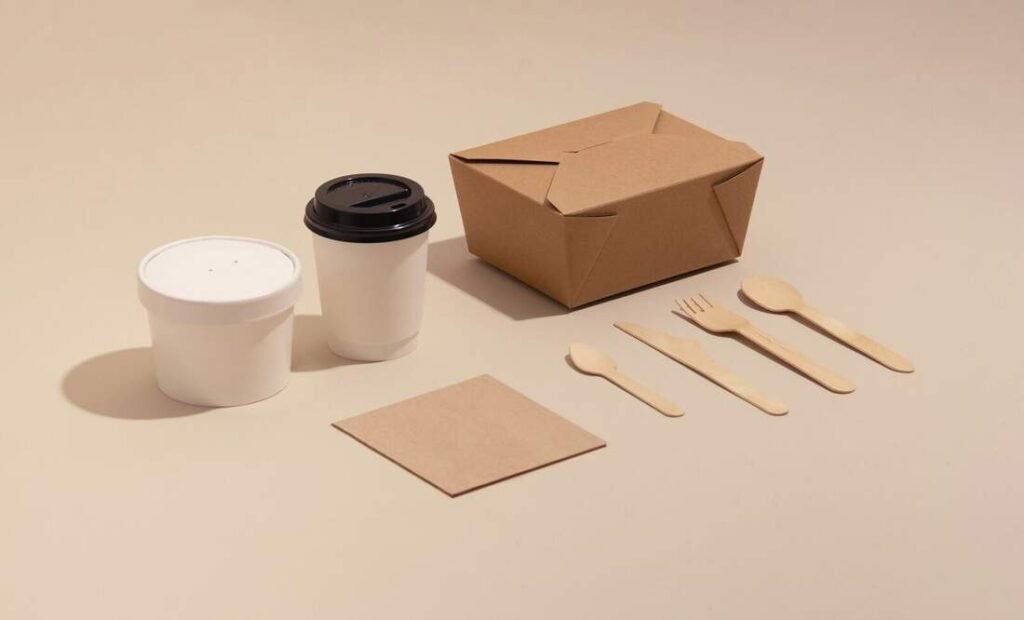
| Packing materials | ₹1.5 lakh | Every order needs delivery-grade packaging |
| Miscellaneous | ₹1.5 lakh | Scaled down |
Fixed / one-time pre-opening expenses: ₹13.35 lakh
| Item | Amount | Why |
|---|---|---|
| Licence fees | ₹0.75 lakh | No Eating House Licence needed — a real saving vs. a dine-in restaurant |
| Security deposit | ₹3 lakh | Industrial/commercial rent is far lower per sq ft than a retail location, and the space is a fraction of the size |
| Design fee | ₹0.5 lakh | Functional layout only — no interior design or branding for a space customers never see |
| Brokerage commission | ₹1 lakh | Scaled to a smaller, lower-rent deal |
| Architect fee | ₹0 | It’s a kitchen-only layout — the same contractor who builds it draws it, no separate architect needed |
| Staff salary (2-month buffer) | ₹4 lakh | Smaller team — kitchen and packing staff only, no servers, hosts, or bartenders |
| Marketing & launch | ₹2 lakh | No grand-opening event — spend goes to aggregator app photography, listing optimisation, and launch-week promotions instead |
| HLP (electricity load) | ₹0.8 lakh | Scaled to a smaller kitchen’s power draw |
| Rent (2 months, with GST) | ₹1.3 lakh | Industrial/commercial rate on a ~500 sq ft space |
Opening stock: ₹2 lakh — ingredients only, no liquor stock.
Grand total: roughly ₹47–49 lakh for a properly equipped, multi-brand-capable cloud kitchen (₹47.45 lakh base, plus ₹1.2 lakh if fire suppression is required for your specific unit) — meaningfully more than the ₹5–15 lakh figure quoted for a bare-minimum single-brand setup, and a fraction of the ₹2.5+ crore required for a full-service restaurant with a bar.
Cloud kitchen vs. full-service restaurant — the real difference
A cloud kitchen at roughly ₹47–49 lakh costs well under a fifth of a full-service restaurant with a bar (₹2.48–3.05 crore) — but the difference isn’t just “the same restaurant, smaller.” The licensing is genuinely lighter (no Eating House Licence, fire suppression often optional), the team is smaller and simpler to run, and spend shifts almost entirely toward kitchen capacity and packaging instead of front-of-house experience.
Running costs and margin
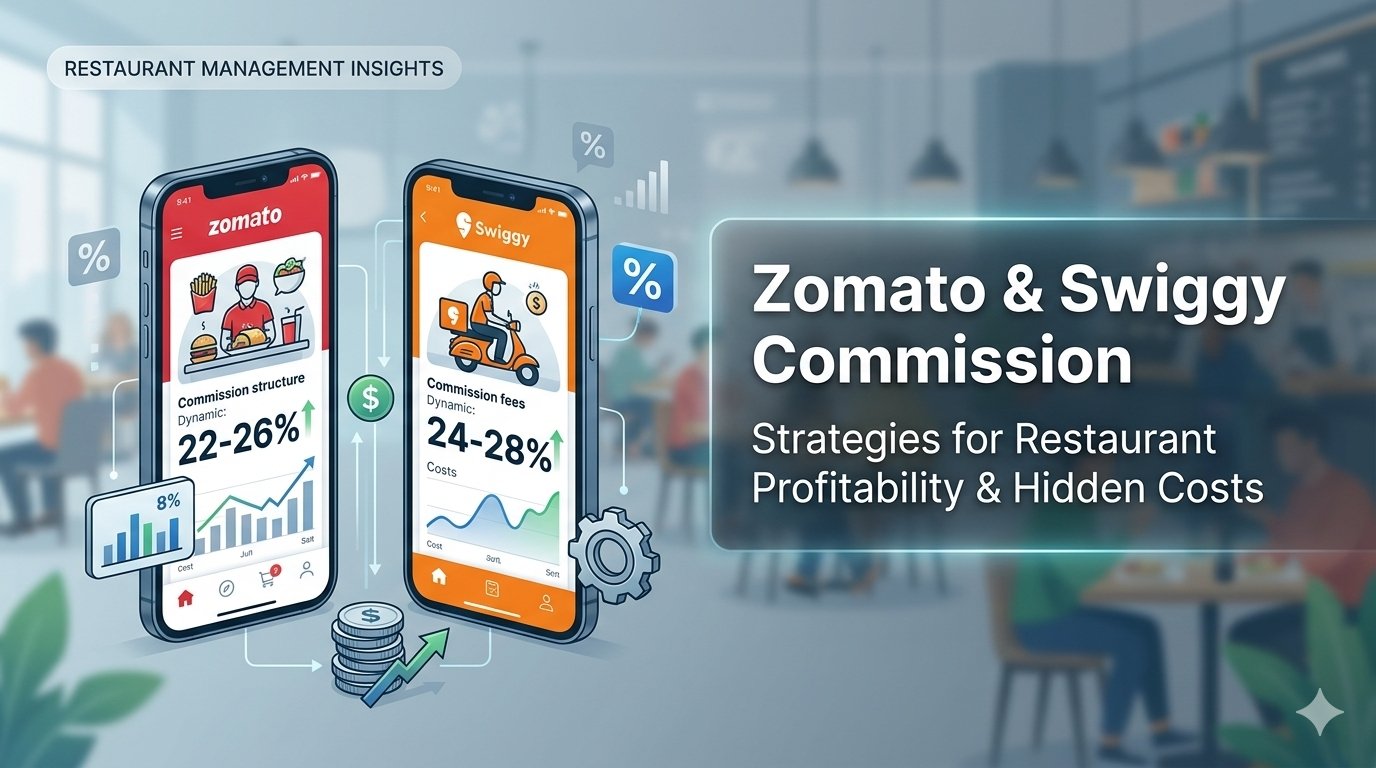
Once you’re live, the ongoing numbers that matter most are platform commissions and net margin. Aggregator platforms (Zomato, Swiggy) typically take 25–27% of order value in commission — budget this into your pricing from day one, not as an afterthought. After commission, ingredients, packaging, staff and rent, a well-run multi-brand cloud kitchen should target a net margin of up to 20%. Anything you’re modelling above that is optimistic; anything meaningfully below it usually points to a pricing or portion-cost problem worth fixing before you scale to a second location.
FAQs
How much does it cost to set up a cloud kitchen in India?
For a properly equipped, multi-brand-capable cloud kitchen around 500 sq ft, budget roughly ₹47–49 lakh all-in — kitchen fit-out (~₹14.65 lakh, plus ₹1.2 lakh if fire suppression is required), equipment and operating setup (~₹17.45 lakh), pre-opening fixed expenses (~₹13.35 lakh), and opening stock (~₹2 lakh). Bare-minimum single-brand setups can be done for ₹5–15 lakh, but with far less cooking capacity and redundancy.
Why is a cloud kitchen cheaper than a full-service restaurant if the kitchen equipment is similar?
Because everything tied to serving a customer in person disappears: furniture, interior design, signage, bar setup, dine-in licensing (no Eating House Licence), and a much smaller front-of-house team. The kitchen itself often needs just as much cooking capacity, especially when running multiple delivery brands from one location.
Does a cloud kitchen need an Eating House Licence?
No — the Eating House Licence exists to permit serving food to the public on-premise. A delivery-only cloud kitchen doesn’t need it, which is a real cost and time saving over a dine-in restaurant. FSSAI, GST, Fire NOC, and Shops & Establishment registration still apply; fire suppression specifically is often optional for a kitchen-only unit, depending on your building and local fire authority.
What’s a realistic profit margin for a cloud kitchen in India?
Budget for aggregator platform commissions of 25–27% of order value, and target a net margin of up to 20% after all costs. That ceiling accounts for how much commission and delivery-grade packaging eat into revenue compared with a dine-in restaurant.
The bottom line
A cloud kitchen isn’t a shrunk-down restaurant — it’s a different cost structure entirely, with real savings on licensing and front-of-house, and real spending that shifts toward kitchen capacity and packaging. If you’re ready to size this against your own concept and city, talk to our cloud kitchen consulting team, or book a free 30-minute consult.
Related Posts
September 3, 2026
Zomato & Swiggy Commission Rates in 2026 — and How to Protect Your Margin
Every restaurant owner doing delivery volume through Zomato and Swiggy asks the same question sooner…
March 25, 2026
Swiggy Platform Fee Hike
It’s happened again. Just as we were all getting used to the last round of…
March 22, 2026
From Student Mess to ₹10 Crore
The Indian food business is often romanticized, but the reality is that it’s a battlefield…
March 4, 2026
Rapido Ownly Launch
The news is out, and it’s creating quite a buzz in the Indian food and…