Demos
Demos  Colors
  Docs
Docs  Support
Home 15
Newly Added

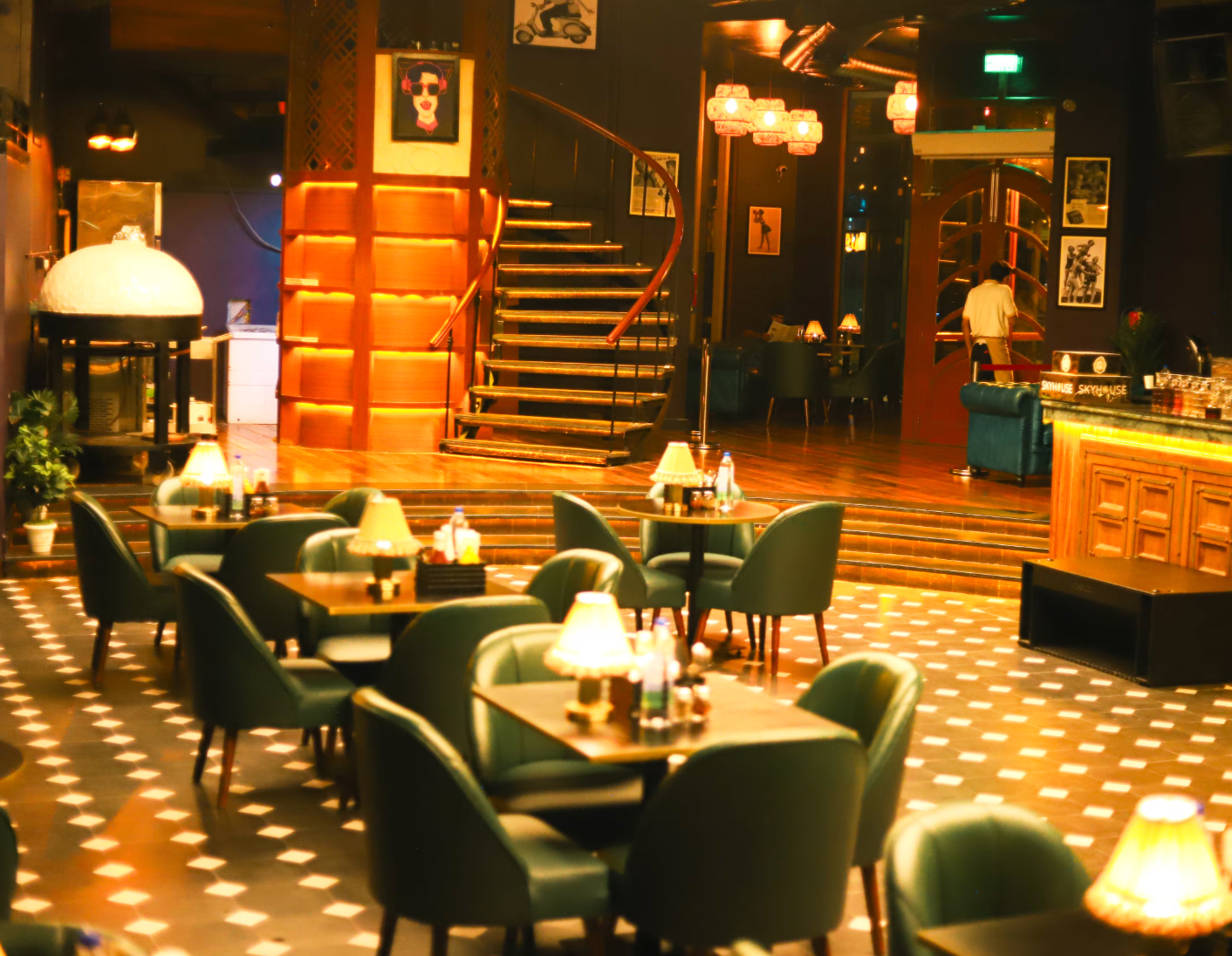

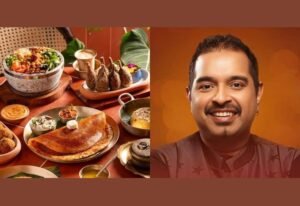
The recent news about music maestro Shankar Mahadevan opening his second Malgudi outlet in Mumbai’s Chembur has created quite a buzz. For the average foodie, it’s a reason to celebrate. But for you, the Indian restaurant owner, food entrepreneur, or aspiring founder, this is more than just a headline—it’s a masterclass in strategic growth.
shankar
At RestaurantCoach.in, we dissect such moves not for gossip, but for the powerful business lessons they hold. The successful expansion of a brand like Malgudi validates crucial strategies that can be applied to restaurants of all sizes, from fine-dining establishments in Delhi to cloud kitchens in Bangalore. This article will break down the Malgudi expansion, analyse its direct impact on your business, and provide a clear, actionable roadmap for your own growth.
Let’s first understand the news beyond the press release. Shankar Mahadevan’s Malgudi, a brand synonymous with authentic South Indian “resto-cafe” experiences, has opened its second outlet in Chembur, Mumbai. The original outlet gained a loyal following for its Benne Dosas, Filter Kaapi, and the nostalgic charm of its “Malgudi Days” theme.
This expansion from one successful location to a second isn’t a random decision. It’s a calculated move that signals several things:
Product-Market Fit Achieved: The first outlet proved that the concept resonates deeply with Mumbai’s audience. The food, ambience, and pricing have been validated by the market.
Brand Strength: The Malgudi name, bolstered by Shankar Mahadevan’s personal brand, has built enough equity to attract customers to a new location without starting from scratch.
Systematisation Ready: Opening a second outlet implies that Malgudi has successfully standardised its recipes, service protocols, and operational workflows. You cannot scale what you cannot systemise.
This transition from a single, beloved restaurant to a multi-outlet brand is a critical juncture that many Indian restaurant owners aspire to but often find challenging to navigate.
You might be thinking, “That’s great for a celebrity-backed venture, but my restaurant is different.” The principles, however, are universal. Here’s how this news directly impacts your thinking, whether you run a cafe, a QSR, a cloud kitchen, or a fine-dining establishment.
When a brand like Malgudi expands, it raises the bar for the entire industry. Customers who experience its consistent quality and strong branding at multiple locations will begin to expect the same level of polish and reliability from other restaurants, including yours. It’s no longer enough to just serve great food; the entire brand experience must be memorable and replicable.
Malgudi’s success demonstrates that specialised, regional Indian cuisine has massive scalability potential beyond its place of origin. It’s a powerful case study that breaks the myth that only North Indian or Chinese food can find pan-India appeal. This opens up a world of opportunity for owners specializing in regional delicacies, from Gujarati thalis to Kashmiri Wazwan.
The choice of Chembur for the second outlet is a strategic masterstroke. It’s a densely populated, family-oriented suburb with a high affinity for South Indian culture, yet potentially underserved by premium-quality, thematic South Indian restaurants. This isn’t a shot in the dark; it’s a data-informed (or at least, keenly observed) decision on demographic and psychographic fit.
Inspired by Malgudi’s move? Here is a concrete, step-by-step plan you can implement to assess and execute your own growth strategy.
Before you even think of a second location, your first outlet must be a proven, profitable machine. Ask yourself:
What is my consistent net profit margin?
Is my customer base loyal, with a high repeat rate?
Are my operational costs under control, with a solid handle on food and labour costs?
Your Next Step: Conduct a thorough 6-month financial review. If your profitability isn’t stable and predictable, focus on fixing the foundation first. This is the single most important step we stress to our clients at RestaurantCoach.in.
You cannot be in two places at once. Your expansion relies on your ability to clone your operations.
Create SOPs: Documented Standard Operating Procedures for everything—from how to marinate the chicken to how to handle a customer complaint.
Build a Training Manual: Your staff training should not rely on verbal hand-me-downs. A structured manual ensures consistency in quality and service.
Don’t choose a location because you “feel” it’s good. Analyse it.
Demographics: Does the area have your target customer? (e.g., families, young professionals).
Competition: Who are the direct and indirect competitors? What gap can you fill?
Footfall & Accessibility: Is it easy to find and access? Is there adequate parking or delivery bike access?
Malgudi leverages a powerful, nostalgic brand. What is yours?
Define Your “Why”: Why does your restaurant exist beyond making money?
Ensure Visual Consistency: Your logo, colours, and interior design should be distinctive and consistent across all touchpoints.
Leverage Your Unique Selling Proposition (USP): Is it your secret recipe, your sourcing ethos, or your unique dining experience? Double down on it.
A new outlet cannot rely on walk-ins alone.
Build hype on social media for weeks in advance.
Run a targeted digital ad campaign for the new locality.
Engage with local food influencers and communities.
Offer a compelling launch promotion to drive initial footfall.
Expansion is capital intensive. Create a detailed project report.
Estimate Capex: Renovation, kitchen equipment, interiors, licensing.
Project Opex: Rent, salaries, utilities for the first 6-12 months.
Secure Funding: Have a clear plan—will it be through retained earnings, a loan, or an investor? Many promising expansions fail due to underestimating the cash required.
Your second outlet needs a leader, not just a manager. Identify a key employee from your first outlet who embodies your culture and can be trained to lead the new location. Empower them with authority and accountability.
In our coaching practice at RestaurantCoach.in, we see a common pattern: successful expansion is 20% about the idea and 80% about execution. The Malgudi news confirms several key industry trends we’ve been observing:
1. The Era of the “Thematic Brand” is Here: Customers today crave an experience, not just a transaction. Malgudi’s “Malgudi Days” theme provides a story that customers can connect with emotionally, which is far more powerful than just a menu.
2. Controlled Growth Over Rapid Franchising: Notice that this is Malgudi’s second company-owned outlet. This indicates a strategy of controlled, manageable growth to maintain quality—a far cry from the rapid, often quality-diluting franchise models of the past. This patience is a hallmark of building a legacy brand.
3. The Power of a Founder’s Brand: While not every owner is a Shankar Mahadevan, every owner is a brand. Your passion, your story, and your connection with your community are invaluable assets. We help restaurant owners articulate and leverage their personal brand to build a deeper connection with their audience, just as a celebrity would.
Shankar Mahadevan’s Malgudi expansion is a beacon for the Indian restaurant industry. It proves that with a strong concept, systematised operations, and a strategic growth plan, scaling a restaurant business is not just possible—it’s a predictable outcome.
The journey from a single successful outlet to a multi-location brand is fraught with challenges, but each challenge has a proven solution. The key is to approach expansion not as a gamble, but as a well-researched, meticulously planned business project.
The recent expansion of Burger Singh into Darbhanga, Bihar, is more than just another outlet…
If you’re running a restaurant, cafe, or cloud kitchen in India today, you can’t afford…
The recent news that Third Wave Coffee is opening two new cafes in Ahmedabad is more than…
Vietnamese Coffee Brand Enters India: Key Lessons for Restaurants The arrival of Three O’Clock Café…

Founded in 2015 by seasoned restaurant professionals who understood the challenges faced by food entrepreneurs in India, Restaurant Coach began as a vision to democratize restaurant success.

Founded in 2015 by seasoned restaurant professionals who understood the challenges faced by food entrepreneurs in India, Restaurant Coach began as a vision to democratize restaurant success. After witnessing countless talented chefs and passionate food lovers struggle with business aspects of restaurant operations, our founders decided to bridge the gap between culinary passion and business acumen.