Demos
Demos  Colors
  Docs
Docs  Support
Home 15
Newly Added


If you’re running a restaurant, cafe, or cloud kitchen in India today, you can’t afford to ignore the strategic moves of the major players. The recent news that Third Wave Coffee has opened its 200th café in Mumbai isn’t just another corporate milestone—it’s a masterclass in disciplined growth, brand building, and market adaptation. As your restaurant coach, I see this not as a distant corporate story, but as a rich source of actionable insights for every food business entrepreneur, from a single-location cafe in Bangalore to a multi-city QSR chain.
THIRD WAVE 1
Achieving 200 outlets is a testament to a powerful, replicable system. For us at RestaurantCoach.in, this news underscores the core principles we teach: sustainable scaling isn’t about luck; it’s about a “disciplined growth engine,” as their CEO calls it. Let’s dissect this development, understand its direct impact on your business, and, most importantly, extract the actionable strategies you can implement starting next week.
Third Wave Coffee’s journey from its first cafe in 2016 to its 200th in Chembur, Mumbai, is a narrative of precision. They didn’t just open cafes; they built a scalable ecosystem. The opening of their 40th cafe in Mumbai and plans for 100 more by 2026 signal a deep, multi-format expansion into neighborhoods, commercial hubs, and high-traffic corridors like airports.
The choice of Chembur for this milestone is particularly instructive. They cited the area’s “growing café-going culture” and “concentration of young professionals.” This tells us they are using hyper-localized market intelligence to guide expansion, not just following a city-level map. Furthermore, their investment in an 8x automated roastery in Bengaluru, capable of supporting 700 cafes, shows a critical lesson: backend infrastructure must precede, or at least match, frontend growth. You cannot build a skyscraper on a weak foundation.
So, how does a large chain’s success affect your standalone restaurant or small chain? The impact is both a challenge and an opportunity.
Raising the Customer Experience Bar: Chains like Third Wave are training the Indian consumer to expect more—premium quality, consistent taste, tech-enabled convenience, and a specific ambiance. This raises the baseline expectation for all food service outlets. A “good enough” cup of coffee or a standard dining experience may no longer suffice.
Intensified Competition for Prime Real Estate & Talent: As major brands deepen their presence in neighborhoods (like Chembur), they drive up real estate visibility and costs. They also attract and retain skilled baristas, managers, and chefs with structured career paths, making talent acquisition more competitive for independents.
Validation of the “Premium Experience” Economy: The news highlights a “nationwide shift toward premium, experience-led cafés.” This isn’t limited to coffee. It applies to bakeries, bistros, and even cloud kitchens offering gourmet home-style meals. Consumers are willing to pay for quality, story, and experience.
The Omnichannel Mandate: Third Wave’s expansion beyond cafes into retail coffee bags, blends, and merchandise is a crucial signal. Your brand’s reach and revenue should not be confined to your physical outlet’s four walls or your delivery app listing. Diversifying revenue streams is no longer optional; it’s essential for resilience.
Inspired by the big players? Let’s translate their strategy into your actionable playbook. Here is what you should do:
Before dreaming of a second outlet, audit your first. Can your kitchen handle 2x the orders without chaos? Are your recipes documented down to the gram? Is your supply chain reliable? At RestaurantCoach.in, we help owners create Standard Operating Procedures (SOPs) that form the bedrock of consistency—the very thing that allows Third Wave to promise the same taste in Chennai or Delhi.
You may not have 200 cafes, but you can own your neighborhood like Third Wave owns Chembur. Engage deeply:
Host local art displays or book clubs.
Partner with nearby gyms or offices for corporate packages.
Use social media to highlight local customers and stories.
Become the undisputed hub for your immediate community.
What is your version of “specialty coffee”? Identify your Unique Experience Proposition (UXP). Is it:
A live kitchen counter where customers see their meal being crafted?
A story behind your ingredients (e.g., sourced directly from Kodagu or Varanasi)?
An immersive theme? Package this experience and make it the core of your marketing.
Think beyond your main service. Can you create additional income streams?
Packaged Goods: Sell your signature spice blend, chutney, cookie mix, or cold brew concentrate.
Merchandise: Branded mugs, t-shirts, or aprons.
DIY Kits: “Make our bestselling biryani at home” kits.
Subscription Models: A monthly coffee bean or dessert box.
A Rs. 200 promo in their app wallet celebrates their milestone and drives footfall. Build your own direct customer relationship channel.
Use a simple WhatsApp Business catalogue to share daily specials.
Start a mailing list offering exclusive first-access to new menus.
Implement a straightforward points-based loyalty program. Own your customer data.
When considering a new location or a cloud kitchen extension, mimic the Chembur analysis.
Demographics: Who lives and works there?
Competition: What’s missing in the current market?
Footfall Patterns: Is it a residential evening crowd or a lunch-time office hub?
Test the Waters: Consider a pop-up or a delivery-only kitchen to validate demand before a full-scale investment.
The most critical lesson: Sustainable scaling is profitable scaling. Don’t expand until your first (or current) unit is financially healthy, with clear, positive unit economics. Growth for the sake of vanity metrics is a path to burnout and closure.
In my coaching experience, the most successful restaurant owners are students of the market. They observe giants like Third Wave Coffee or Starbucks not with envy, but with a strategic lens. The current trend is clear: the middle ground is shrinking. Consumers are choosing between hyper-convenient, value-driven QSR and premium, experiential brands.
Your survival and growth depend on clarity of positioning. Are you the fastest, most affordable option in your category? Or are you the most memorable, quality-focused experience? Trying to be both often leads to being neither.
This is why in our restaurant coaching programs at RestaurantCoach.in, we start with a deep dive into defining this positioning. We then build operational and marketing plans around it. One of our clients, a cafe owner in Gurugram, successfully pivoted to a premium “farm-to-cup” model after such an analysis, increasing their average bill value by 40% within six months. The blueprint exists; it requires tailored execution.
The opening of Third Wave Coffee’s 200th cafe reaffirms that the Indian food service market is vibrant with opportunity for those who are strategic, customer-obsessed, and operationally excellent. Their journey from 1 to 200 cafes provides a roadmap: build a rock-solid, consistent foundation, know your community, create a memorable experience, and diversify your reach.
Your journey might not target 200 outlets, but it certainly targets greater profitability, resilience, and brand love. Start by implementing one or two action steps from this analysis. Master your unit economics, own your local community, and craft an experience that people crave.
Feeling inspired but unsure how to build your own “disciplined growth engine”?
You don’t have to navigate these complex decisions alone. Our expert restaurant coaching programs at RestaurantCoach.in are designed specifically for Indian food entrepreneurs like you. We provide the strategic framework, operational tools, and accountability to transform your restaurant vision into a profitable, scalable reality.
[Contact us today for a consultation] and let’s build your success story, one strategic step at a time.
The recent expansion of Burger Singh into Darbhanga, Bihar, is more than just another outlet…
The recent news about music maestro Shankar Mahadevan opening his second Malgudi outlet in Mumbai’s…
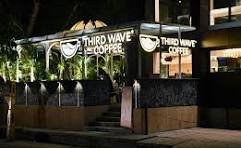
The recent news that Third Wave Coffee is opening two new cafes in Ahmedabad is more than…
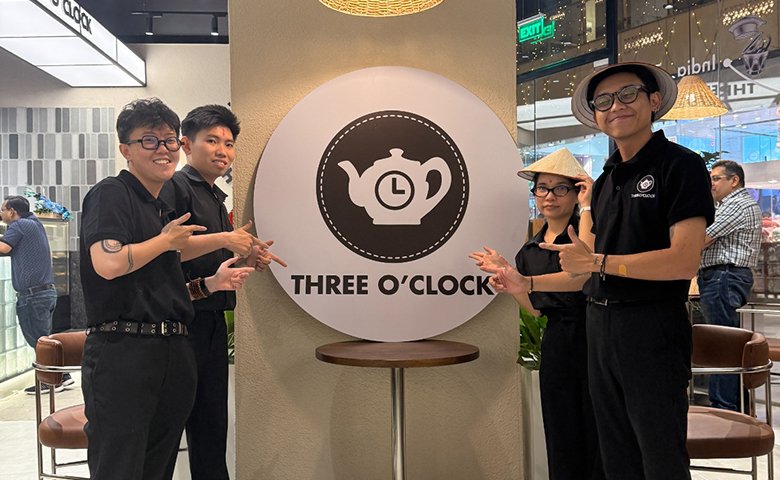
Vietnamese Coffee Brand Enters India: Key Lessons for Restaurants The arrival of Three O’Clock Café…

Founded in 2015 by seasoned restaurant professionals who understood the challenges faced by food entrepreneurs in India, Restaurant Coach began as a vision to democratize restaurant success.

Founded in 2015 by seasoned restaurant professionals who understood the challenges faced by food entrepreneurs in India, Restaurant Coach began as a vision to democratize restaurant success. After witnessing countless talented chefs and passionate food lovers struggle with business aspects of restaurant operations, our founders decided to bridge the gap between culinary passion and business acumen.