Demos
Demos  Colors
  Docs
Docs  Support
Home 15
Newly Added



The recent expansion of Burger Singh into Darbhanga, Bihar, is more than just another outlet opening. It’s a strategic blueprint for growth in today’s Indian restaurant market. For owners, entrepreneurs, and food business professionals across India, this news highlights a powerful trend: the massive, untapped potential of Tier 2 and Tier 3 cities.
burger singh 1
As restaurant business coaches at RestaurantCoach.in, we’ve observed that success is no longer confined to metro real estate. The real growth story is unfolding in cities like Darbhanga, Muzaffarpur, and Saharsa, where rising disposable incomes and a demand for organized dining are creating fertile ground for savvy restaurateurs. This article will break down Burger Singh’s strategy, explain its direct impact on your business, and provide a clear, actionable roadmap for you to capitalize on these emerging opportunities.
Burger Singh’s expansion is a calculated move, part of a plan to open 5-7 more outlets in Bihar within 12-18 months, targeting cities like Patna, Bettiah, and Begusarai. This decision is data-driven, based on demographic growth, increasing disposable income, and an evolving local food culture.
The brand’s Chief of Staff, Bhargav P V, explicitly stated they see “tremendous potential in Tier 3 cities where organised QSR demand is still underserved”. This sentiment is echoed by industry-wide research. A report from Grant Thornton Bharat and the National Restaurant Association of India (NRAI) found that over 90% of large restaurant operators plan to expand into smaller cities.
This mass migration is fueled by compelling economics: nearly 78% of restaurants expect to reach breakeven in Tier-II/III markets within two years, a timeline often much faster than in saturated, high-cost metros.
*Table: Key Drivers of Restaurant Expansion into Tier 2/3 Cities*
| Driver | What It Means for Restaurants | Evidence from Industry |
|---|---|---|
| Faster Breakeven | Lower operational costs and real estate expenses lead to quicker profitability. | 78% expect breakeven within 2 years in these markets. |
| Growing Demand | Rising incomes and exposure to brands create demand for organized dining formats. | Focus on cities with demographic growth and evolving food culture. |
| Less Saturation | Escape intense metro competition for customer attention and prime locations. | Brands target markets where QSR demand is “underserved”. |
| Digital Savvy | Consumers in these cities are digitally connected, enabling online ordering and marketing. | Nationwide digital penetration supports growth in emerging markets. |
So, what does this large-scale strategic shift mean for you, whether you run a cloud kitchen in Bangalore, a café in Pune, or a QSR in Delhi?
First, it signals a redefinition of competition. Your future competitor may not be the café across the street, but a well-funded national chain expanding into your city. Second, it validates that consumer expectations are rising uniformly across India. Patrons in Darbhanga now seek the same consistency, quality, and experience as those in Delhi.
Most importantly, it creates both a threat and an immense opportunity. The threat is being left behind as the market evolves. The opportunity lies in your inherent local advantage. You understand the nuances of your community’s taste, culture, and consumption habits better than any national chain ever could. The key is to systematize that insight into a professional, scalable operation.
Here is a practical, step-by-step guide to strengthening your position and growing your business in this new landscape.
Don’t assume you know everything. Systematically analyze your city:
Demographics: Identify growth pockets, colleges, new residential complexes, and office hubs.
Competition Map: Catalogue not just direct competitors but all food options. Where are the gaps?
Taste Preferences: Use small-batch menu trials to test regional twists on your offerings. As seen in the U.S., success often comes from hyper-regional specificity and authenticity, not generic menus.
The goal is to achieve profitability quickly. This requires meticulous focus:
Cost Control: Negotiate with local suppliers. Optimize portion sizes. Reduce waste through better inventory management, a challenge noted in smaller cities due to weaker supply chains.
Smart Pricing: Be brand-aware but price-sensitive. Consumers in these markets value affordability. Consider strategic bundle offers, which are a top customer consideration in the pre-purchase stage.
Track Metrics Religiously: Know your food cost percentage, labor cost, and average order value daily.
“Glocal” means thinking globally but acting locally.
Standardize Quality: Ensure every plate that leaves your kitchen meets a high, consistent standard. KPMG research identifies consistency in taste and presentation as a fundamental hygiene factor for customer retention.
Localize Engagement: Connect with the community. Sponsor local events, celebrate regional festivals, and use local landmarks in your marketing. Proactive community engagement is a proven differentiator that fosters customer connection.
Your online presence is your new storefront. In the U.S., many successful modern brands leverage sophisticated digital storytelling, while traditional ones struggle with outdated profiles.
Claim and Optimize Listings: Keep your Google Business Profile updated with perfect information, photos, and responses to reviews.
Leverage Social Media Authentically: Show behind-the-scenes, highlight local staff, and engage with customers. Don’t just post ads; build a community.
Simplify Ordering: Ensure your website or app offers a seamless ordering experience.
Customer experience is the ultimate battleground. According to KPMG, 61% of customers say the “purchase stage” is most impactful on their overall experience.
Train for Service: Friendly and attentive service is a top-rated experience parameter. Empower your staff to be brand ambassadors.
Seek and Act on Feedback: Implement simple feedback systems via SMS or digital receipts. Show customers you listen by making visible changes.
You don’t need to build a 50-seat restaurant to expand.
Cloud Kitchen / Ghost Kitchen: Test a new locality with a delivery-only model. This is a booming trend, with over 2,200 Indian ghost kitchens operating in the U.S. alone.
Strategic Franchising: Like Burger Singh’s “Owner-Partner” model, consider how you can package your systems for trusted local partners.
Pop-Ups: Use temporary setups in high-footfall areas to build brand awareness before committing to a full lease.
Efficiency is your moat. Technology is no longer optional.
Adopt Restaurant Management Software: Use tools for inventory, billing, and customer relationship management (CRM) to reduce errors and save time.
Embrace Automation: Consider AI-driven tools for tasks like analyzing customer feedback or optimizing social media content, which can significantly boost marketing efficiency.
In our coaching sessions at RestaurantCoach.in, we consistently see that the founders who win are operationally obsessed and community-connected. Burger Singh’s expansion confirms a principle we teach: growth follows efficiency. A brand can only scale if its unit economics are rock-solid and its customer experience is systemized, not serendipitous.
The industry is bifurcating. On one side are generic, undifferentiated businesses struggling with rising costs. On the other are focused, professionalized brands that own a specific niche—be it a regional cuisine, a unique experience, or an unbeatable value proposition. The future belongs to restaurateurs who are equal parts creative chef and savvy CEO.
The great news for independent owners is that local wins. A national chain can bring brand recognition, but you bring authentic community roots. By combining that local trust with the operational discipline of a large chain, you create an unbeatable advantage.
Burger Singh’s move into Bihar is a clear indicator: the growth engine for India’s restaurant industry has shifted to Tier 2 and Tier 3 cities. This presents a decade-defining opportunity for prepared entrepreneurs.
The winning formula combines hyper-local understanding with professional, system-driven operations. It’s about building a brand that resonates deeply with your community while running it with the precision and strategic focus of a market leader.
Are you ready to build a restaurant business that’s both locally loved and built for scale? Our tailored coaching programs at RestaurantCoach.in are designed for Indian restaurant owners like you. We provide the frameworks, accountability, and strategic insight to help you streamline operations, strengthen your brand, and capture growth in your market.
Contact us today for a consultation, and let’s transform your culinary vision into a thriving, sustainable business.
Q: Is it really profitable to open a restaurant in a Tier 3 city?
A: Yes, the data suggests strong potential. A Grant Thornton/NRAI report indicates nearly 78% of restaurants expect to reach breakeven in Tier-II/III markets within two years, often faster than in high-rent metros due to lower operational costs.
Q: What’s the biggest challenge when expanding to a smaller city?
A: While real estate is cheaper, securing a prime location can be challenging. The most significant operational hurdle is often supply chain consistency. Sourcing quality ingredients reliably can be more difficult and costly due to less developed cold-chain infrastructure.
Q: How important is digital marketing in these markets?
A: Absolutely critical. Consumers across India are digitally savvy. A strong online presence—an updated Google Business Profile, active social media, and positive reviews—is essential for discovery and credibility. “Food near me” searches are a primary way customers find options.
Q: Should I change my menu for a smaller city?
A: Adaptation is key. While you should maintain your core identity and quality standards, incorporating local tastes and preferences is crucial. This doesn’t mean a complete overhaul but could involve adding a few localized specials or adjusting spice levels. The global trend is toward hyper-regional specificity.
Q: Can I compete with well-funded national chains entering my city?
A: Absolutely. Your deep local knowledge and community connection are powerful advantages. National chains are standardized; you can be agile, personalized, and culturally attuned. Focus on superior customer service, community engagement, and consistently great food that speaks to local palates.
If you’re running a restaurant, cafe, or cloud kitchen in India today, you can’t afford…
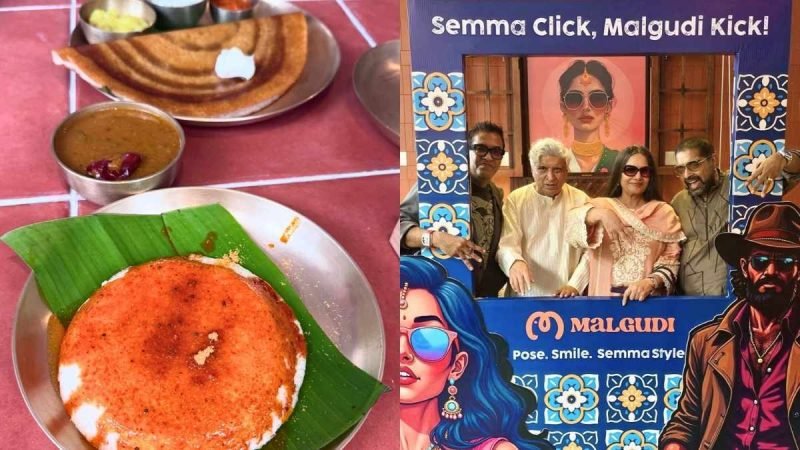
The recent news about music maestro Shankar Mahadevan opening his second Malgudi outlet in Mumbai’s…
The recent news that Third Wave Coffee is opening two new cafes in Ahmedabad is more than…
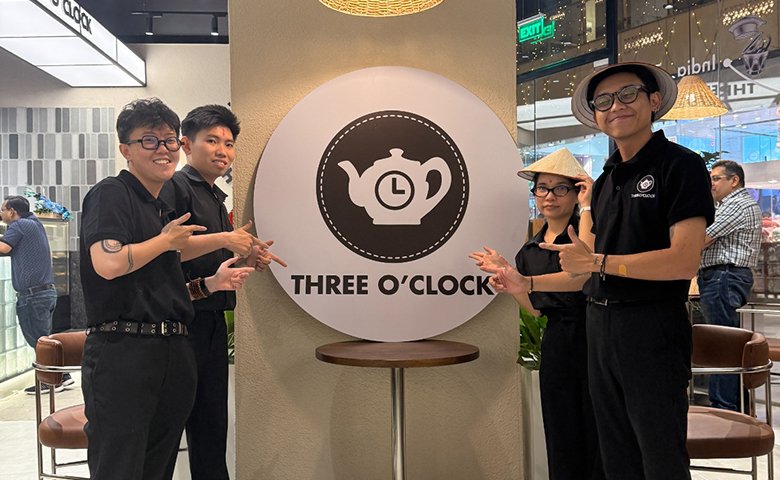
Vietnamese Coffee Brand Enters India: Key Lessons for Restaurants The arrival of Three O’Clock Café…

Founded in 2015 by seasoned restaurant professionals who understood the challenges faced by food entrepreneurs in India, Restaurant Coach began as a vision to democratize restaurant success.

Founded in 2015 by seasoned restaurant professionals who understood the challenges faced by food entrepreneurs in India, Restaurant Coach began as a vision to democratize restaurant success. After witnessing countless talented chefs and passionate food lovers struggle with business aspects of restaurant operations, our founders decided to bridge the gap between culinary passion and business acumen.