Demos
Demos  Colors
  Docs
Docs  Support
Home 15
Newly Added


Zomato vs Swiggy Commission 2026
Are high food delivery commissions making your restaurant unprofitable?
You’re not alone. New data shows that per-order commissions on Zomato and Swiggy have tripled, jumping from an average of 9.6% in 2019 to a staggering 24.6% in 2023. As your restaurant coach, I can tell you this isn’t just a line-item expense—it’s a fundamental challenge to your business model.
At RestaurantCoach.in, we work directly with restaurant owners across Mumbai, Delhi, and Bangalore, and the story is consistent: 35.4% of restaurants surveyed are considering leaving delivery platforms entirely due to these unsustainable costs. Many feel trapped in a system where delivery partners account for nearly one-third of their total revenue yet deliver shrinking profits.
This comprehensive guide goes beyond simple commission comparisons. I’ll provide you with a complete strategic framework to understand your true costs, negotiate better rates, and, most importantly, build a sustainable business less dependent on any single platform.
Table: 2026 Commission Structure Comparison: Zomato, Swiggy & The Disruptors
| Platform | Commission Range | Key Fee Structure | Best Suited For | Notable Advantages |
|---|---|---|---|---|
| Zomato | 18% – 28% | Base commission + 5-7% delivery fee | Fine dining, high-ticket items, cuisine-focused brands | More curated audience, typically less promotion-heavy |
| Swiggy | 18% – 28% | Base commission + 5-8% delivery fee | Budget meals, QSRs, cafés, impulse-snack brands | Higher order volume in many markets, strong in metro cities |
| Rapido | 8% – 15% | Flat fee: ₹25 (<₹400 order), ₹50 (≥₹400 order) | Small restaurants, value-focused menus, cost-sensitive operations | Supported by NRAI; simple, transparent pricing |
| Zero-Commission Models | 0% (e.g., RailRestro) | Subscription or service fee models | Niche markets (e.g., rail travelers) | Full revenue retention, direct customer relationship |
The “base commission” on your settlement report is only the tip of the iceberg. To understand your true profitability, you must account for five hidden layers of cost:
GST on Commission: An additional 18% is levied on the platform’s commission fee, which is a cost to you, not the customer. On a 25% commission, this adds another 4.5% to your effective rate.
Platform Delivery Cut: This 5-8% fee is for the logistics network and is separate from the commission paid for customer discovery.
Promotional & Visibility Fees: Sponsored ads can cost a minimum of ₹400-500 per day to maintain basic visibility. Many restaurants report spending over ₹30 per order just to be seen on the app.
Early Settlement Fees: Accessing your cash weekly instead of the standard cycle costs an extra 0.75% to 1.5% per order.
Forced Campaign Subsidies: Deep discounts during platform-led sales are often funded disproportionately by restaurants through “contribution” requirements.
The Result? On a ₹300 order with a 25% commission, you don’t receive ₹225. After GST and delivery fees, your take-home is closer to ₹190-195—a 35%+ reduction before you’ve even paid for ingredients, packaging, or labor.
The “best” platform isn’t universal—it depends entirely on your restaurant’s profile and strategy.
For QSRs & Cloud Kitchens: Swiggy often delivers higher volume, making it a strong customer acquisition tool. However, its promotion-heavy environment demands careful menu engineering. Focus on high-margin combos to offset commissions. This is a critical strategy we implement with our RestaurantCoach.in clients operating cloud kitchens.
For Fine Dining & High-AOV Concepts: Zomato’s more curated audience can be a better fit. Your higher average order value (AOV) absorbs the fixed cost of commissions more effectively. Negotiating power here is stronger if you maintain high ratings.
For Small & Independent Restaurants: The new entrant Rapido, with its 8-15% commission, is a compelling test case. Its pilot in Bengaluru, backed by the National Restaurant Association of India (NRAI), aims to create a more democratic model. It’s worth exploring, especially if you’re in a competitive, price-sensitive market.
You can negotiate better terms. Your leverage comes from being a high-performing, low-maintenance partner. Here’s your actionable playbook:
Build Your Data Dossier: Before you call your account manager, arm yourself with data. Track your monthly order volume, average customer rating (aim for 4.5+), and cancellation/refund rate. A restaurant with 300+ orders/month and a 4.7-star rating has a powerful business case.
Calculate Your True Profitability Per Platform: Use the formula below. Presenting this data shifts the conversation from emotion to economics. “On my current rate, I’m losing money on orders under ₹400” is an irrefutable argument.
Ask for Tiered Commissions: Propose a volume-based slab. For example: “If I commit to 400 orders/month, can we move to a 22% rate? At 500 orders, can we achieve 20%?” Platforms value predictability.
Request Non-Monetary Benefits: If they won’t move on rate, ask for value. Request featured placement in local searches, ad credits, or waived early settlement fees for a quarter. These improve your visibility and cash flow without changing the percentage.
Leverage Multi-Platform Presence: Use a competitor’s offer as leverage. “Rapido is offering me 12% for exclusivity in my area. What can you do to help me stay with you?”. This is most effective if you have actual data from another platform.
This simplified formula helps you find your Net Platform Margin. Do this for each platform separately.
Net Platform Margin = (Platform Payout / Gross Order Value) x 100
Where Platform Payout = Gross Order Value – (Commission + GST on Commission + Delivery Fee + Promotional Spend on that order).
Example for a ₹500 Zomato order:
Commission (25%): ₹125
GST on Commission (18%): ₹22.5
Delivery Fee (7%): ₹35
Promotional Cost (est. ₹30/order): ₹30
Total Deductions: ₹212.5
Platform Payout: ₹500 – ₹212.5 = ₹287.5
Your Net Platform Margin: (287.5 / 500) x 100 = 57.5%
Now, subtract your Food Cost, Packaging, and Labor for that order from the ₹287.5 payout to see your true profit. If your combined costs are 50% (₹250), your final profit is just ₹37.5 per ₹500 order.
Negotiation is damage control. Diversification is survival. The single most important project for your restaurant in 2026 is building a direct revenue channel. Our successful clients at RestaurantCoach.in aim to reduce platform dependency from 80% to below 40% within 12-18 months. Here’s how they do it:
The “Direct Order” Incentive: Offer a 10-15% discount for orders placed via your WhatsApp, website, or phone. This still saves you 10-15% compared to a platform commission, and you own the customer’s data.
Turn Packaging into a Billboard: Every Swiggy/Zomato bag should have a QR code linking to your direct ordering menu. Offer a “loyalty dessert” on the next direct order.
Leverage Simple Tech: You don’t need a complex app. A WhatsApp Business number with a curated menu PDF or a simple, mobile-friendly ordering page via services like Razorpay or Paytm can handle 80% of direct orders.
Build a Marketing List: For every direct order, collect a phone number or email (with permission). Start a monthly SMS/email newsletter with a “subscriber-only special.”.
The Indian food service market is projected to cross USD 125 billion by 2030, with cloud kitchens and QSRs leading growth. The winners in this booming market won’t be “Swiggy restaurants.” They will be omni-channel brands that master a blend of dine-in, direct delivery, strategic platform use for customer acquisition, and even retail products.
The recent commission changes are a forced evolution. They separate the strategic entrepreneurs from the operational managers. Your goal is no longer just to get more five-star reviews on an app, but to build a brand so strong that customers seek you out, regardless of the platform.
Q1: Is it ethical to have higher prices on Zomato/Swiggy than in my restaurant?
A: Absolutely. This is differential pricing, a standard practice across industries. You are paying for a service (customer acquisition + delivery logistics) on the platform, and that cost is reflected in your pricing. It’s no different than a product costing more in a premium retail store than at a wholesale market.
Q2: What’s the first step if 80% of my revenue comes from delivery apps?
A: Start building your “lifeboat” this week. Create a simple WhatsApp ordering menu for your 10 best-selling dishes and promote it on your social media and packaging. Your immediate goal is to shift just 5% of your loyal customers to direct ordering. Small, consistent steps break dependency.
Q3: Will the government regulate these commissions?
A: While industry bodies like the NRAI are advocating for fairer practices and supporting alternatives like Rapido and ONDC, betting your business on external regulation is risky. The most powerful response is to adapt your own business model for resilience and profitability.
Need a personalized plan to navigate these challenges and build a profitable, independent restaurant business? Our tailored coaching programs at RestaurantCoach.in help food entrepreneurs like you master unit economics, negotiate effectively, and implement proven systems for growth. Contact us today to transform your restaurant vision into a sustainable reality.
Hookah and Food are Separate Supplies Under GST: What This Landmark Ruling Means for Your…
The Indian hospitality landscape is shifting. It’s no longer just about metro cities and business…
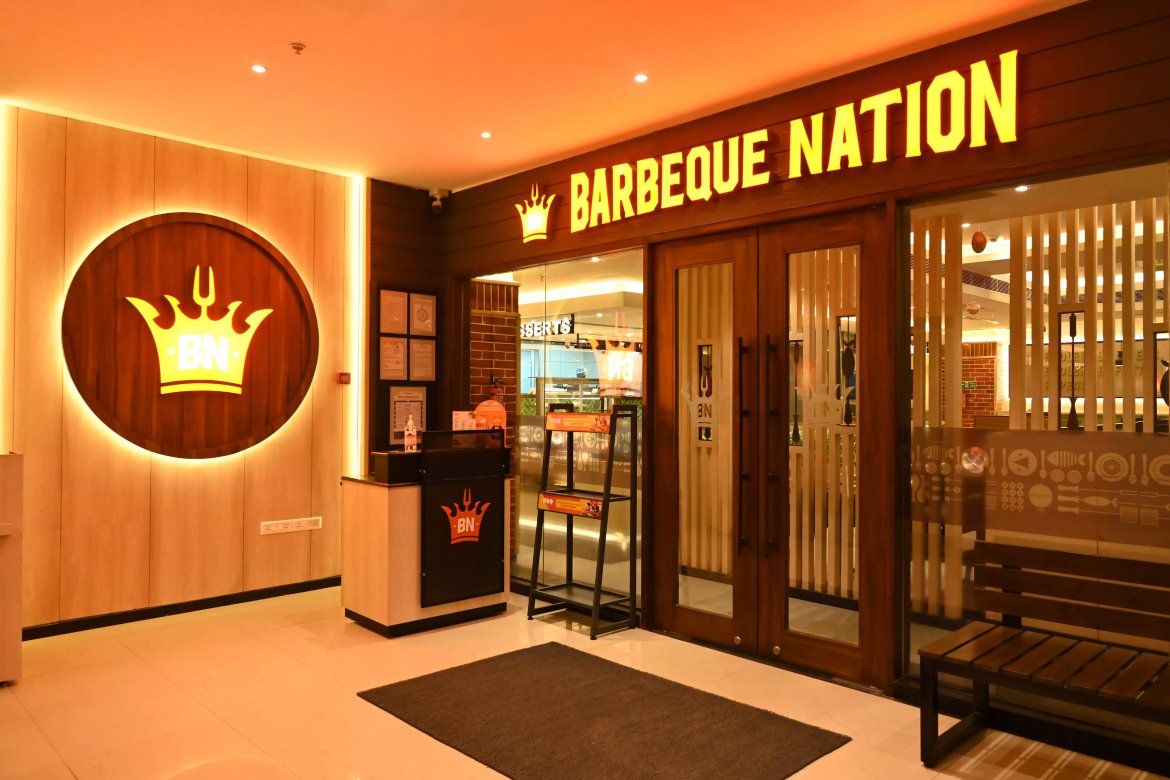
This week, news broke that Barbeque Nation has opened its doors at CP67 Mall in Mohali.…
The Indian food service industry is witnessing a fascinating shift. While dine-in traffic recovers, the…
Founded in 2015 by seasoned restaurant professionals who understood the challenges faced by food entrepreneurs in India, Restaurant Coach began as a vision to democratize restaurant success.

Founded in 2015 by seasoned restaurant professionals who understood the challenges faced by food entrepreneurs in India, Restaurant Coach began as a vision to democratize restaurant success. After witnessing countless talented chefs and passionate food lovers struggle with business aspects of restaurant operations, our founders decided to bridge the gap between culinary passion and business acumen.