Demos
Demos  Colors
  Docs
Docs  Support
Home 15
Newly Added


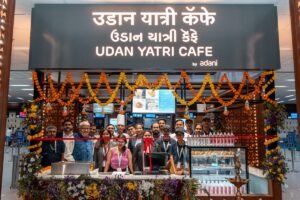
The news hit the wires this past week: Union Minister Ram Mohan Naidu inaugurated two Udan Yatri Cafes at the Thiruvananthapuram airport, offering passengers a cup of tea for just ₹10 and snacks for ₹20 .
udan yatri
At first glance, this might seem like a simple government press release about affordable travel. But here at RestaurantCoach.in, we see something far more significant. This isn’t just a story about airport food; it is a masterclass in value engineering, government intervention in food pricing, and a stark warning for restaurant owners across India.
With the food services sector projected to hit over $100 billion by 2030, the competition for the Indian consumer’s wallet is intensifying from unexpected places . The “Udan Yatri Cafe” model—leveraging scale, subsidizing costs, and prioritizing volume—is a concept that every QSR, cafe, and fine-dining establishment needs to study.
In this post, we’ll break down why this matters, how it impacts your bottom line, and the specific steps you must take to ensure your restaurant doesn’t just survive but thrives in this new value-conscious economy.
Let’s look at the specifics of this initiative. The Udan Yatri Cafe is a brainchild of the Ministry of Civil Aviation and the Airport Authority of India. The goal is simple: make travel affordable by providing quality food at budget-friendly prices .
Beyond Thiruvananthapuram, these cafes have popped up in Mumbai, Navi Mumbai, and Mangaluru . We are talking about prime real estate—airports—where traditionally, a cup of tea could easily set you back by ₹50 to ₹100. The pricing is aggressive:
Tea: ₹10
Coffee: ₹20
Samosa: ₹20
Water Bottle: ₹10
This is a classic high-volume, low-margin strategy backed by government subsidies. It aligns with the UDAN scheme, which aims to make flying accessible for the “aam aadmi” (common man). They are betting that rock-bottom prices will drive massive footfall, compensating for the thin margins.
You might be thinking, “I don’t run an airport cafe, so why does this matter?” The answer lies in consumer psychology and market positioning. Here is how this development directly impacts Indian restaurant owners, cafe proprietors, and QSR operators:
When a government-backed entity establishes that a cup of tea should cost ₹10, it creates a psychological pricing anchor in the consumer’s mind. If a chai shop down the road charges ₹20, the customer now perceives a ₹10 premium. They may not expect ₹10 at your restaurant, but the gap between “government rate” and “market rate” must now be justified by experience. As per recent industry analysis, value-led demand is dominating the market, with premium categories struggling to gain traction .
This isn’t just a single cafe. This is a scalable model being rolled out across major airports managed by entities like Adani Airports . It demonstrates that institutional players are willing to enter the food business with deep pockets and a mandate for affordability. If this model proves successful, similar concepts could appear at railway stations, bus depots, and government offices, directly competing with your local outlet.
While the Udan Yatri Cafe captures the bottom of the pyramid, it highlights a massive gap in the middle. Consumers who want more than a ₹10 tea but less than a ₹500 fine-dine experience are looking for value. Recent data shows that QSRs like Domino’s are succeeding because they are perceived as offering better value for money, while premium burgers are under pressure . The market is bifurcating: you either compete on pure price or on undeniable experience.
We are in an environment where restaurant input costs (rent, labor, food) continue to rise. Yet, initiatives like this put downward pressure on selling prices. In our coaching experience at RestaurantCoach.in, we’ve seen that restaurants often panic and slash prices, which leads to a death spiral of shrinking margins. You cannot compete with a subsidized government entity on price alone, nor should you try.
So, how do we respond to this shift? Here are 7 actionable recommendations to implement immediately.
As one industry expert noted, “Price alone doesn’t change how guests behave. What brings people back is whether the experience still feels worth it when they leave” . You cannot win a price war against a subsidized cafe.
Action: Audit your customer journey. Is your restroom clean? Does your staff smile? Is the music at the right volume? These are the differentiators that justify a ₹50 tea.
Industry leaders suggest that in this environment, a barbell menu strategy is key . This means offering some highly affordable entry-level items (like the ₹10 tea) to draw people in, while also offering premium, high-margin items for those willing to spend more.
Action: Create a “Daily Delight” section on your menu with 2-3 aggressively priced items. Use these as loss leaders to drive traffic, and then up sell your signature dishes.
To compete with lean pricing models, your operations must be airtight. The government can subsidize costs; you cannot. You must optimize.
Action: Conduct a deep dive into your food cost percentage. Standardize recipes. If you’re losing 5% in portion control, that’s your margin gone. We help our coaching clients at RestaurantCoach.in implement portion control tools that instantly save 2-4% on costs.
Relying on high-footfall locations (like airports) is great, but most restaurants have to work to get people in the door. Stop over-relying on Zomato and Swiggy, where commissions erode your ability to offer value.
Action: Start a simple WhatsApp broadcast list. Offer a “WhatsApp-only” discount that matches the affordability of the Udan Yatri Cafe. This bypasses aggregator fees and builds loyalty.
The Udan Yatri Cafe wins on convenience (it’s in the airport) and speed. Similarly, your restaurant must win on “share of stomach” in your locality.
Action: Analyze your “OTIF” (On Time, In Full) rate for deliveries and your table-turn time for dine-in. Faster service effectively lowers the “cost” for the customer.
You cannot buy a “Udan Yatri Samosa” anywhere else, but the concept is generic. Your food must be crave-able and unique.
Action: Develop one signature item that customers cannot get anywhere else. This removes price from the comparison equation. Make it your hero product.
Your staff must be able to articulate why your dish is worth its price. Is it the imported cheese? The 12-hour slow-cooked gravy? The organic ingredients?
Action: Hold a tasting session with your staff. Teach them the story behind the food. An informed server can justify a price tag much better than a menu can.
In my years of coaching restaurant owners across Mumbai, Delhi, and Bangalore, one truth remains constant: You cannot save your way to prosperity, and you cannot price-war your way to growth.
The Udan Yatri Cafe is a brilliant initiative for the traveling public. For us in the restaurant business, it is a clear signal. The era of charging a premium simply because of a “good location” is ending. The modern Indian consumer, especially the Gen Z and Millennial crowd, demands transparency and value. They are willing to pay, but they need to feel the value .
We are seeing this in the market. Restaurants that scale successfully in 2026 are those that focus on cultural relevance and experience-led recall rather than just transactions . If you look at successful launches, like the Indian-Arabic fusion concepts we’ve analyzed, they aren’t winning on price; they are winning on a unique blend of familiarity and novelty .
At RestaurantCoach.in, our experience shows that the restaurants surviving the “value revolution” are those that have moved from being a “food vendor” to being a “host.” They understand that the tea might cost ₹10 down the street, but the conversation, the ambiance, and the service at their establishment is worth ₹50.
This is why we emphasize building systems. When your operations are systematized—from kitchen prep flows to service handovers—you reduce stress and waste, which gives you the financial headroom to invest in what truly matters: the guest experience .
The launch of the Udan Yatri Cafe at ₹10 tea is more than news; it’s a business metric. It sets a new baseline for value in the Indian food and beverage industry.
Your job as a restaurant owner is not to match the price, but to exceed the value. By streamlining your operations, engineering a smart menu, and focusing obsessively on customer experience, you can build a business that thrives regardless of what the competition charges.
If you’re feeling the pressure from rising costs and changing consumer expectations, you don’t have to navigate it alone.
Need expert guidance to navigate these industry changes? Our restaurant coaching programs at RestaurantCoach.in help food entrepreneurs build profitable, sustainable businesses. We’ll help you build the systems, strategies, and mindset to turn challenges like these into growth opportunities. [Click here to book your free 30-minute restaurant assessment] and let’s transform your restaurant vision into reality.
4. Suggested Primary Keyword
Udan Yatri Cafe impact on restaurants
5. Secondary Keywords
Restaurant pricing strategy India 2026
Value engineering for restaurants
How to compete with low-cost cafes
Indian restaurant profitability tips
Restaurant menu engineering barbell strategy
Previous Post
Next Post
It’s happened again. Just as we were all getting used to the last round of…
The Indian food business is often romanticized, but the reality is that it’s a battlefield…
The news is out, and it’s creating quite a buzz in the Indian food and…
Swiggy vs Zomato Q3 Results: What It Means for Restaurant Owners The latest quarterly results…

Founded in 2015 by seasoned restaurant professionals who understood the challenges faced by food entrepreneurs in India, Restaurant Coach began as a vision to democratize restaurant success.

Founded in 2015 by seasoned restaurant professionals who understood the challenges faced by food entrepreneurs in India, Restaurant Coach began as a vision to democratize restaurant success. After witnessing countless talented chefs and passionate food lovers struggle with business aspects of restaurant operations, our founders decided to bridge the gap between culinary passion and business acumen.