Demos
Demos  Colors
  Docs
Docs  Support
Home 15
Newly Added



The story of Revival Restaurant is one of calculated patience and powerful brand equity. After a nearly ten-year absence, this award-winning vegetarian brand didn’t just open another outlet; it made a strategic re-entry into one of India’s most competitive food markets. Choosing a partnership with The Fern Residency, a Series by Marriott in Seshadripuram, signals a move towards premium hospitality and trusted service standards.
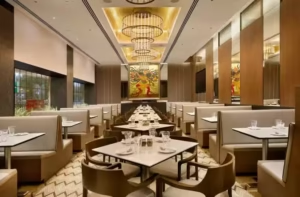
REVIVAL RESTAURANT
For restaurant owners, the key takeaway isn’t the decade-long gap—it’s what the brand did with that time. Revival leveraged its legacy as a “leading pan-Indian vegetarian destination” while meticulously planning a multi-format launch. The new outlet isn’t just a fine-dining space; it’s a comprehensive food service hub featuring banquet halls, all-day dining, and in-room dining with an expansive 80-item menu. This approach diversifies revenue streams and maximizes the footprint’s potential, a smart move in a high-rent city like Bengaluru.
This launch coincides perfectly with a major global trend: Indian cuisine is going mainstream. Searches for Indian buffets and takeout are surging internationally, proving the timing is right for strong, authentic brands to expand or, in this case, re-emerge.
Bengaluru presents a unique landscape. It’s a city with a booming corporate population, a vibrant startup culture, and a deep appreciation for both traditional and innovative food. Success here requires more than good food; it demands an understanding of local hotspots like Koramangala for trendy cafes, Indiranagar for upscale dining, and Whitefield for corporate crowds.
Revival’s partnership with a hotel in Seshadripuram taps into both local clientele and traveling guests, creating a built-in customer base—a savvy location strategy any entrepreneur can learn from.
So, how does a single restaurant’s launch affect your business? It raises the bar and spotlights the expectations of today’s Indian diner. This isn’t just competition; it’s a live case study in modern restaurant strategy.
First, it validates the power of a focused culinary philosophy. Revival’s “Veg for Life” is a clear, unwavering brand promise. In a market where diners are overwhelmed with choice, a strong, simple identity cuts through the noise. Whether your anchor is hyper-local cuisine, a specific dietary focus, or a unique cooking style, clarity is your greatest asset.
Second, it highlights the non-negotiable demand for experience. The live chaat counter, where food is prepared tableside, transforms a meal into a memorable event. This aligns with the global fast-casual trend where customization and transparency are now expected. Guests don’t just want to eat; they want to see, interact, and be part of the process.
Finally, it demonstrates the value of diversified revenue models. By incorporating banquet facilities, MasterChef-style live counters for events, and a planned bar, Revival is not reliant on any single daypart or customer type. For you, this could mean optimizing for late-night crowds, developing a thriving catering arm, or mastering the delivery game with cloud kitchen efficiency.
Seeing a successful strategy is one thing; implementing it is another. Here are five concrete steps you can take, inspired by Revival’s playbook, to strengthen your own food business.
Your brand is more than your logo. Ask yourself: Is my culinary philosophy as clear as “Veg for Life”? Conduct a simple SWOT analysis (Strengths, Weaknesses, Opportunities, Threats) of your current market position. What single thing do you want to be famous for? Double down on it in your menu, marketing, and customer conversations.
Identify one element of your service that can be turned into a signature experience. It doesn’t have to be a live counter. It could be:
A custom spice-level selection for every dish.
A brief story told by staff about a signature ingredient’s origin.
A unique, interactive dessert presentation.
This creates shareable moments that fuel word-of-mouth and social media buzz.
Don’t put all your eggs in the “dine-in” basket. Explore at least one additional model:
Packaged Goods: Like Revival’s house-made pickles, consider what shelf-stable products you can create from your kitchen.
Event Catering: Use your banquet or cooking expertise for private events.
Meal Kits: Package pre-portioned ingredients for your popular dishes.
Subscription Models: Offer weekly tiffins or specialty coffee deliveries.
Win your locality first. Ensure your Google Business Profile is flawless—with updated photos, accurate hours, and active responses to reviews. Collaborate with local businesses for cross-promotions. As we’ve seen with clients at RestaurantCoach.in, a restaurant that feels like a community hub builds a loyal, defensive moat against competitors.
Move beyond just posting food photos. Share the “why” behind your dishes. Post behind-the-scenes clips of your team, highlight local farmers you source from, and celebrate staff stories. Encourage and reshare user-generated content (UGC) from happy customers—it’s the most trusted form of marketing. Authentic storytelling isn’t a cost; it’s an investment in credibility.
In our decade of coaching at RestaurantCoach.in, we’ve guided over 50 successful launches. The Revival story reinforces core principles we teach every entrepreneur.
Legacy is built on consistency, not gimmicks. A brand that can return after ten years has banked immense trust through quality and memorable hospitality—like Revival’s traditional ‘Pranaam’ welcome. Your daily commitment to consistent taste, service, and value is what compounds into a valuable brand.
Adaptation is survival. The 2026 diner seeks bold flavors, personalization, and authentic experiences. The successful restaurant blends timeless principles (great food, warm service) with timely adaptations (digital ordering, experiential dining). For example, the surge in searches for specific Indian dishes like biryani or regional Kerala cuisine indicates a diner who is knowledgeable and curious. Your menu and marketing should educate and excite this informed customer.
Finally, view your restaurant as a multi-faceted business, not just a kitchen. The most sustainable businesses we’ve helped build at RestaurantCoach.in excel in four pillars: culinary excellence, operational efficiency, financial acumen, and marketing savvy. Neglecting any one pillar puts the entire venture at risk.
Revival Restaurant’s journey back to Bengaluru teaches us that a powerful brand, when paired with strategic evolution, can not only return but thrive. It underscores that today’s market rewards those who offer clarity, experience, and authentic connection.
The question is no longer if you should adapt, but how fast you can implement these winning strategies in your own unique context.
Ready to build a restaurant that stands the test of time? Our team at RestaurantCoach.in brings together over 100 years of combined industry experience. We offer end-to-end coaching—from concept validation and menu engineering to operational audits and growth marketing—tailored specifically for the Indian market. Let’s transform your culinary passion into a profitable, enduring business.
Schedule your free 30-minute consultation today at RestaurantCoach.in, and let’s craft your comeback story.
Next Post
The Indian food and beverage (F&B) industry is buzzing with news that has significant implications…
Maharashtra PNG Supply Hike: A Restaurant Coach’s Guide to Relief and Resilience For restaurant owners…
The Fast-Food Diabetes Link: What Telangana’s Health Warning Means for Your Restaurant’s Future As a…
As restaurant business coaches in India, we at RestaurantCoach.in spend a lot of time in commercial kitchens.…

Founded in 2015 by seasoned restaurant professionals who understood the challenges faced by food entrepreneurs in India, Restaurant Coach began as a vision to democratize restaurant success.

Founded in 2015 by seasoned restaurant professionals who understood the challenges faced by food entrepreneurs in India, Restaurant Coach began as a vision to democratize restaurant success. After witnessing countless talented chefs and passionate food lovers struggle with business aspects of restaurant operations, our founders decided to bridge the gap between culinary passion and business acumen.