Demos
Demos  Colors
  Docs
Docs  Support
Home 15
Newly Added



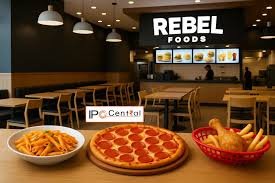
If a well-funded giant like Rebel Foods is hitting the brakes, it’s a clear signal that the market has fundamentally changed. The company, a pioneer of India’s cloud kitchen revolution, has entered FY25 with a marked slowdown in growth, reporting a 14% revenue increase to ₹1,617 crore while managing to cut its losses by 12% to ₹336 crore.
ipo1
This isn’t just another business headline. For every Indian restaurant owner, café proprietor, and cloud kitchen entrepreneur, this news is a critical case study in real-time. It reveals that the era of growth-at-all-costs is over, and the age of sustainable, profitable operations has decisively begun. The fact that Rebel Foods is prioritizing cost control and efficiency over aggressive expansion tells us everything we need to know about the current state of the food service sector.
In our coaching sessions at RestaurantCoach.in, we consistently emphasize that external market signals should directly inform your internal strategy. This development is one of the clearest signals we’ve seen. Let’s break down what Rebel Foods’ numbers truly mean for your business and, more importantly, what proactive steps you must take now to not just survive but thrive in this new landscape.
Let’s look beyond the headlines to understand the strategic shift. While a 14% year-on-year revenue growth to ₹1,617 crore is respectable for many businesses, for Rebel Foods it represents a second consecutive year of muted expansion. This is a company that once defined hyper-growth in the food-tech space. The slowdown indicates a broader sector-wide deceleration affecting cloud kitchens and QSRs alike, with peers like Barbeque Nation also facing margin pressures.
However, the most telling part of the story is not the top line, but the bottom line and the path to get there. Rebel Foods achieved its 12% reduction in annual losses (to ₹336 crore) through disciplined cost management. Their total expenses grew at only 7%—roughly half the rate of their revenue growth. Key efficiencies were found in reducing employee costs by 2% and controlling the rise in brokerage and material costs.
The most critical metric for any restaurant owner to understand is unit economics. Here, Rebel Foods shows clear progress: the company spent ₹1.23 to earn each rupee of revenue, an improvement from ₹1.31 in the prior year. This “cost to earn” ratio is a vital health indicator for your own business.
You might think, “They’re a giant with millions in funding; what does this have to do with my single outlet or small chain?” The connection is direct and profound. Rebel Foods’ strategic pivot reflects market realities that impact businesses of all sizes:
Investor Patience is Thinning: With nearly $803 million raised, even Rebel Foods is shifting from an expansionary posture to one focused on survival and profitability. This signals that the entire ecosystem—from venture capitalists to local lenders—is now prioritizing sustainable unit economics over growth stories. Access to capital will become tighter and more performance-linked.
The “Growth at Any Cost” Model is Broken: The report highlights that the company’s formidable funding base is depleting, forcing a focus on cash conservation. For you, this underscores the danger of deep discounting, unsustainable marketing spends, and expansion before achieving kitchen-level profitability. The market is no longer rewarding mere scale.
A Sector-Wide Reality Check: The challenges aren’t unique to Rebel Foods. The article notes that cloud kitchens and QSRs are experiencing a sharp slowdown in demand, squeezing margins across the board. This creates a more competitive, price-sensitive environment where only the most efficient and customer-centric operations will win.
In essence, Rebel Foods’ journey from disruptor to a company focused on “stabilising but not really scaling” is a microcosm of the industry’s maturation. The lesson is universal: long-term success is no longer about how fast you grow, but how profitably and resiliently you operate.
Watching industry trends is useful only if you translate them into action. Here is a concrete, five-step plan you can implement immediately, inspired by the lessons from this case and proven in our coaching at RestaurantCoach.in.
Your first task is to calculate your own “cost to earn” metric. For a specific period (e.g., last month), divide your total expenses by your total revenue. Is it below 1 (meaning you’re profitable) or above 1 (meaning you’re spending more than you earn)? Track this ratio monthly. Rebel Foods improved from ₹1.31 to ₹1.23; your goal should be to drive it consistently below 1.0.
Rebel Foods operates a multi-brand portfolio to maximize kitchen utilization. You can apply this principle by analyzing your menu. Identify:
Star Items: High-profit, high-popularity dishes. Market these aggressively.
Plowhorses: Popular but low-margin items. See if you can adjust recipes or portion sizes to improve their margin by 5-10%.
Puzzle Items: High margin but low sales. Consider better menu placement or descriptions.
Dogs: Low margin and low sales. Remove them to simplify inventory and operations.
Focus on your two largest cost centers, just as Rebel Foods did:
Material Costs: They form 34% of Rebel’s expenses. Negotiate with suppliers, reduce waste through better inventory management, and standardize recipes. A strict inventory system can reduce food waste from an industry average of 10% to 2-4%.
Employee Costs: Achieved a 2% reduction through efficiency. Cross-train your staff to be flexible during peak and off-peak hours. Use sales data to create optimal schedules and avoid overstaffing, which can reduce labor costs by 5-8%.
Over-reliance on aggregators (noted in their brokerage costs) increases vulnerability. Develop your own channels:
Launch a simple WhatsApp-based ordering system for your neighborhood.
Create a loyalty program for repeat customers (this can improve retention by up to 30%).
Collect phone numbers or emails with every order to build a direct marketing list you control.
Before investing in a new dine-in location, consider a virtual brand or cloud kitchen model. This was Rebel Foods’ core innovation—decoupling the brand from expensive real estate. You can test a new cuisine concept (e.g., a biryani-only brand or a healthy bowls concept) using your existing kitchen infrastructure during off-hours. This minimizes risk and capital expenditure while unlocking new revenue streams.
From a coaching standpoint, Rebel Foods’ situation validates a core principle we teach: business maturity requires strategic discipline. The initial phase of any venture is driven by passion and customer discovery, but the next phase demands operational excellence and financial acuity.
The Indian restaurant landscape is moving from a finite game (competing on price, chasing today’s sales) to an infinite game (building a legacy, creating unmatched value, and playing for long-term customer loyalty). Rebel Foods is adapting to this shift, and so must you.
This period of industry-wide recalibration is not a threat but an opportunity for the prepared. It will separate the casual operators from the serious entrepreneurs. The businesses that will emerge stronger are those that use this time to strengthen their systems, understand their numbers intimately, and deepen their connection with their core customers.
A final, crucial insight: Consistency doesn’t come from control; it comes from care. Your focus on profitability should never come at the expense of the soul of your food or the warmth of your service. The goal is to build a system so your care can be delivered consistently, order after order, profitably.
It’s happened again. Just as we were all getting used to the last round of…
The Indian food business is often romanticized, but the reality is that it’s a battlefield…
The news is out, and it’s creating quite a buzz in the Indian food and…
Swiggy vs Zomato Q3 Results: What It Means for Restaurant Owners The latest quarterly results…

Founded in 2015 by seasoned restaurant professionals who understood the challenges faced by food entrepreneurs in India, Restaurant Coach began as a vision to democratize restaurant success.

Founded in 2015 by seasoned restaurant professionals who understood the challenges faced by food entrepreneurs in India, Restaurant Coach began as a vision to democratize restaurant success. After witnessing countless talented chefs and passionate food lovers struggle with business aspects of restaurant operations, our founders decided to bridge the gap between culinary passion and business acumen.