Demos
Demos  Colors
  Docs
Docs  Support
Home 15
Newly Added

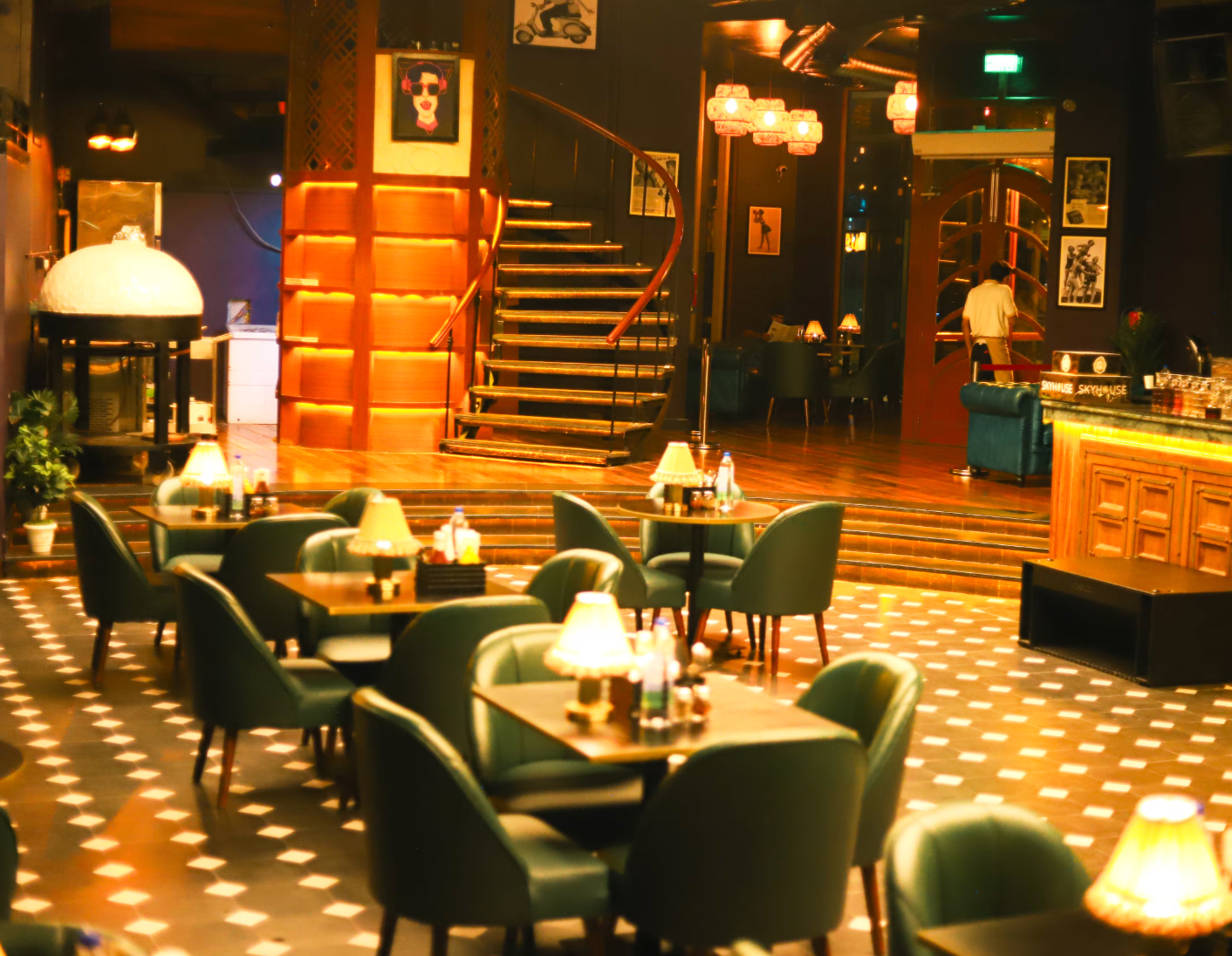

If you’re an Indian restaurant owner, you might have seen the headlines: Radisson MG Road in Delhi has launched a new “world cuisine” restaurant called LORE – Recipes Retold for Today. On the surface, it’s just another hotel restaurant opening. But from our coaching desk at RestaurantCoach.in, this news is a clarion call for every independent restaurateur, cafe owner, and food entrepreneur across India.
Radisson’s Lore
This isn’t a hotel simply adding a food outlet. It’s a strategic pivot by a major hospitality player, directly competing for your customers with a powerful new weapon: narrative-driven, experiential dining. LORE is designed not just for hotel guests, but to attract the local Delhi-NCR crowd seeking depth and discovery. Their General Manager, Ashish Saxena, stated they aimed to create a space “where food becomes a storyteller”.
Why should you care? Because this move underscores the most significant trend reshaping India’s food landscape: Food & Beverage (F&B) is now a primary revenue driver, not a side amenity. In many hotels, F&B contributes 35-50% of total revenue, narrowing the gap with room income. They are now investing heavily to become standalone dining destinations. Your competition just got bigger, smarter, and better-funded.
But here’s the good news: This shift also represents your greatest opportunity. The demand for experiences is booming. A stunning 89% of young diners (18-35) visit fine-dining establishments at least twice a month. This isn’t about copying hotels; it’s about leveraging your inherent advantages—authenticity, agility, and community connection—to claim your slice of this lucrative market.
Let’s break down what LORE’s launch actually means, beyond the press release. Executive Chef Kush Koli has curated a menu framed as “thematic chapters” like Indian Short Stories and Scrolls from the Silk Road, blending global techniques with regional narratives.
This is a textbook example of the “Experiential Dining” model. It’s a direct response to a massive consumer shift. Post-pandemic, diners are no longer satisfied with just a meal. They seek an “experience beyond just food”. They want to be moved, to learn, and to feel a sense of belonging through cuisine.
For hotels, this is a calculated financial strategy. With global hotel F&B markets projected to double by 2035, experiential concepts can boost a property’s F&B sales by 15-30%. They are leveraging their resources to capture more of the urban diner’s wallet. As one industry expert noted, dining out has become a “primary lifestyle priority,” evidenced by a massive 34% spike in UPI payments for such experiences.
For you, the independent operator, this signals that the battlefield has changed. The competition is no longer just the restaurant down the street. It’s well-funded entities that understand the new currency of hospitality: story, emotion, and memory.
So, how does a hotel restaurant in Delhi affect a cloud kitchen in Bangalore, a QSR in Mumbai, or a fine-dining spot in Chennai? The impact is both a challenge and a validation of your potential.
1. Elevated (and More Expensive) Customer Expectations
Today’s diner, influenced by concepts like LORE, expects more. A Zomato review of LORE praises it as “a meditation on memory, migration, and the soul of Indian cuisine”. Your customers now judge you on the entire narrative journey—the authenticity of your ingredients, the story behind your signature dish, the uniqueness of the ambiance. This is true across segments. Even a QSR can embed a story about its sourcing or a cafe about its single-estate beans (as LORE does with its Coorg Arabica). If you’re not providing a point of differentiation beyond price and taste, you’re vulnerable.
2. The Blurring Lines of Competition
Hotels are aggressively targeting your local market. Their strategy is to draw in non-guests by creating buzz-worthy destinations. This means your marketing must work harder to capture attention in a more crowded field. Your unique selling proposition (USP) needs to be crystal clear.
3. A Blueprint for Higher Profitability
Paradoxically, this trend is excellent for your bottom line. Experiential dining commands higher average order values and builds fierce loyalty. When customers pay for a story and a memory, they are less price-sensitive. This is a proven path out of the brutal race-to-the-bottom pricing that plagues our industry, where 73% of restaurants struggle to survive. By adopting an experiential mindset, you can protect and grow your margins.
You don’t need a Radisson budget to compete. You need strategy and soul. Here are five actionable steps you can implement immediately.
1. Unearth and Leverage Your “Why” (Your Most Powerful Asset)
Hotels have architects and designers; you have heritage and heart. Your story is your superpower.
Action Step: Gather your team this week. Ask: Why does this restaurant exist? Is it a family recipe passed down for generations? A specific regional cuisine you’re passionate about? A sustainable mission? Write it down. This isn’t for a brochure; it’s the core of every decision you make.
Example: A struggling restaurant owner we coached at RestaurantCoach.in rediscovered his “why”—his grandmother’s handwritten recipes from a royal kitchen. He rebranded his menu around this story, and within months, had a three-week waiting list.
2. Master the “Chapter Menu” Concept
You don’t need to overhaul your entire menu like LORE. Start small by introducing thematic “features.”
Action Step: Designate a “Regional Story of the Month.” Feature 3-4 dishes from a specific Indian state or community, like the coastal flavors of Mangaluru or the festive foods of Punjab. Train your staff to tell a one-sentence story about each dish. This creates novelty, educates customers, and gives you endless content for social media.
3. Systematize the Experience
Experience without consistency is chaos. The brutal truth is that most restaurants fail because they are a collection of passionate people, not a streamlined system.
Action Step: Document one core customer journey this month. Map every touchpoint from online booking to post-meal follow-up. Create simple Standard Operating Procedures (SOPs) for key moments: how to greet, how to present the menu story, how to handle feedback. As one Hyderabad-based restaurateur notes, flawless operations are the bedrock of great guest experience.
4. Embrace Hyper-Local Collaboration
While hotels look globally, you can win locally. This builds community and authenticity.
Action Step: Partner with a local artisan, farmer, or spice grower. Host a one-night dinner series, a featured ingredient week, or simply credit them on your menu (“Heirloom tomatoes from XYZ Farm”). This is a powerful story that no large hotel can easily replicate.
5. Invest in Metric-Driven Hospitality
Move beyond just tracking sales. Start measuring experience indicators.
Action Step: Identify three key metrics: (1) Repeat Customer Rate (aim for 30-40% of visits), (2) Online Sentiment (track review keywords), and (3) Average Time Spent. Review these weekly with your managers. A restaurateur in Bangalore who started tracking just five key numbers daily saw a 40% increase in profitability within six months.
In our work with dozens of clients at RestaurantCoach.in, we’ve seen a clear divide. The owners playing the “finite game”—fighting over today’s covers, copying competitors, and slashing prices—are burning out. Those playing the “infinite game”—building a legacy, innovating on their own terms, and competing on value—are thriving.
LORE’s launch is not an anomaly. It’s part of a global movement where regional specificity and chef-driven narratives are winning. In the US, upscale Indian restaurants exploring hyper-regional cuisines are seeing reservations sell out in seconds. The message is universal: depth triumphs over breadth.
Your advantage is your authenticity. A hotel can build a beautiful set, but you are living your story every day. The future belongs to restaurants that understand they are not in the “food service” business, but in the “memory creation” business. As Chef Milan Gupta notes, today’s diners view a premium meal as a “cultural investment”. Are you offering an investment worth making?
The opening of Radisson’s LORE restaurant is a powerful signal. The era of transactional dining is fading. The demand for culinary storytelling, emotional connection, and unique experiences is the dominant force in India’s F&B future.
This shift is your gateway to building a more resilient, profitable, and fulfilling business. You have the raw materials: your passion, your recipes, and your unique voice. The task now is to strategically craft that into an irresistible experience for your guests.
Q1: My restaurant is a simple neighborhood cafe/QSR. Does “experiential dining” really apply to me?
Absolutely. Experience is scalable. For you, it might mean an exceptionally warm and personalized greeting, a spotlessly clean environment, a “secret menu” item for regulars, or a story about your coffee blend on the wall. It’s about creating a positive, distinctive feeling that goes beyond the transaction.
Q2: I’m struggling with basic costs and staff turnover. How can I focus on “storytelling”?
You must address the fundamentals first. An experiential strategy is built on a foundation of operational stability. We often guide clients to first implement simple systems for inventory and staff training to cut waste and reduce turnover. Once the business is stable, adding narrative layers becomes your growth engine, not a distraction.
Q3: Won’t this require a huge investment in renovation and marketing?
No. The most powerful investments are in training and content. Training your staff to be storytellers costs time, not capital. Using your phone to create social media content about your kitchen, your suppliers, or your recipe testing is free. Start with what you have.
Previous Post
Next Post
Hookah and Food are Separate Supplies Under GST: What This Landmark Ruling Means for Your…
The Indian hospitality landscape is shifting. It’s no longer just about metro cities and business…
This week, news broke that Barbeque Nation has opened its doors at CP67 Mall in Mohali.…
The Indian food service industry is witnessing a fascinating shift. While dine-in traffic recovers, the…

Founded in 2015 by seasoned restaurant professionals who understood the challenges faced by food entrepreneurs in India, Restaurant Coach began as a vision to democratize restaurant success.

Founded in 2015 by seasoned restaurant professionals who understood the challenges faced by food entrepreneurs in India, Restaurant Coach began as a vision to democratize restaurant success. After witnessing countless talented chefs and passionate food lovers struggle with business aspects of restaurant operations, our founders decided to bridge the gap between culinary passion and business acumen.