Demos
Demos  Colors
  Docs
Docs  Support
Home 15
Newly Added


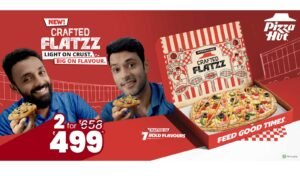
The Indian food service industry is a battlefield. Every day, legacy brands and nimble newcomers fight for the attention (and appetites) of a generation that is constantly seeking the “next big thing.” Recently, Pizza Hut fired a significant shot in this war with the launch of its Crafted Flatzz campaign, featuring Indian cricketers Shivam Dube, Varun Chakravarthy, and Harshit Rana.
Pizza Hut New
At first glance, it’s just another celebrity ad for a new pizza. But from our perspective at RestaurantCoach.in, it’s a masterclass in strategic thinking that every Indian restaurant owner—from a cloud kitchen founder in Gurugram to a cafe owner in Bangalore—can learn from.
In this post, we’ll dissect the Pizza Hut campaign and translate its core strategies into actionable steps you can use to grow your own food business. We’re not here to just report the news; we’re here to help you apply it.
Pizza Hut has introduced a new menu item called Crafted Flatzz, a radical departure from their traditional round pizza. It’s an oval-shaped, lighter-crust pizza designed to be more shareable and feel less heavy than its predecessors. To launch this, they’ve partnered with three popular Indian cricketers.
The campaign film cleverly uses the cricketers’ on-field banter to highlight the product’s USPs. They joke that the pizza is “bolder than team selections” and its crust is “lighter than the competition.” This is a brilliant way to connect a product innovation (a new shape and texture) with a cultural moment (cricket fever during the T20 World Cup and upcoming IPL season).
Manish Guptaa, CMO of Pizza Hut Indian Subcontinent, perfectly summed up the strategy: they are responding to “evolving consumer preferences and the growing appetite for new formats and bold flavours.”
You might be thinking, “That’s great for Pizza Hut, but I run a single outlet in Mumbai. How does this affect me?” The answer is: more than you think. The moves made by industry giants like Pizza Hut are powerful indicators of shifting consumer tides. If you ignore them, you risk being left behind.
Here’s what this news tells us about the current market:
Pizza Hut is essentially admitting that the classic round pizza, while iconic, is no longer enough to drive excitement. They are betting on a format innovation to reignite consumer interest. This is a clear signal that your customers are hungry for novelty. If a global giant feels the pressure to reinvent its core product, the pressure on independent restaurants is even greater. Sticking to a static menu is a recipe for irrelevance.
The new Flatzz is designed for sharing. In a post-pandemic world, dining out and ordering in has once again become a social activity. People want food that facilitates connection. This means your menu items shouldn’t just taste good; they should be designed to be part of a shared experience. Think about dishes that are easy to pass around, platters, or combo meals designed for two or more.
Pizza Hut didn’t just launch a product; they synced it with the biggest cultural event in India—cricket. They understand that to break through the noise, you have to attach your brand to what people are already talking about and feeling excited about. This isn’t just for big-budget ads; it’s a principle that works for any restaurant. Are you aligning your specials with local festivals, big sports matches, or even seasonal changes?
The new product is the marketing. The oval shape gives them a reason to talk. It’s a visual differentiator. For independent restaurants, this means your next big marketing push shouldn’t just be “30% off on biryani.” It should be about a new dish, a new format, or a unique dining experience that gives people a reason to choose you over the dozens of other options.
Based on the Pizza Hut strategy, here are seven concrete steps you can take, regardless of your restaurant’s size or budget.
1. Audit Your Menu for “Format Fatigue”
Take a hard look at your bestsellers. Are they all the same shape, size, and style? Brainstorm one signature dish you can reinvent by changing its format. For example:
Instead of a regular burger, try a slider trio.
Instead of a standard thali, create a “tasting menu thali” with smaller portions of 10 different items.
Instead of a round naan, try a signature bread in a unique shape.
2. Create a “Shareable” Section on Your Menu
Dedicate a part of your menu specifically to dishes designed for 2-3 people. Give them appealing names like “Cricket Match Platter” or “Team Feast.” This psychologically encourages higher order values and enhances the social dining experience.
3. Map Out the Year’s Cultural Moments
Sit down with a calendar and mark every major festival (Diwali, Eid, Pujo, Christmas), sporting event (IPL finals, World Cup matches), and local event. For each one, brainstorm a limited-time offer (LTO) or a special dish that ties into it.
4. Don’t Just Discount, Innovate
Instead of offering a blanket discount to boost sales, invest that marketing budget into developing one new, exciting dish. Promote the dish heavily, not just the price. The novelty will attract more attention and bring in customers willing to pay full price for a new experience.
5. Run a Customer “Name the Dish” Contest
Get your customers involved in your innovation. Develop a new recipe and ask your followers on social media to name it. This builds anticipation, gives you free market research, and creates a sense of ownership among your customers before the dish even launches.
6. Study Your Competition’s Menu Gaps
What are the big players in your area doing? What are they not doing? If every other pizzeria is doing the same round pizzas, could you be the one offering a unique stuffed-crust rectangular pizza? Find the white space in your local market.
7. Train Your Staff to Tell a Story
When you launch your new “format” or dish, your staff needs to be able to sell it. Give them a simple line, like: “Our new Keema Pav Sliders are our take on a Mumbai classic—lighter, shareable, and perfect for the game tonight.” This turns a simple order into a curated experience.
In our coaching programs at RestaurantCoach.in, we’ve helped dozens of restaurant owners use these very steps to increase their average order value by over 20%. The key is consistent, small innovations, not a complete overhaul every year.
From my years of coaching food entrepreneurs across India, I’ve observed that the ones who thrive are not necessarily the ones with the best recipes, but the ones with the best strategies for adaptation. Pizza Hut’s Crafted Flatzz launch is a textbook example of strategic evolution.
They aren’t abandoning their core identity (pizza). They are simply evolving it to meet a new consumer need. They are also brilliantly using brand partnerships—not just with any celebrities, but with cricketers who embody the “team” and “all-rounder” spirit they want for the pizza.
This is a crucial lesson for the Indian restaurant market. We often see owners get too attached to a “traditional” way of doing things. But tradition must coexist with innovation. Whether it’s a 50-year-old south Indian eatery introducing a new filter coffee brewing method or a modern QSR in Delhi experimenting with regional flavours, the principle is the same: evolve or get left behind.
At RestaurantCoach.in, our experience shows that the most successful restaurants are those that view themselves as dynamic brands, constantly learning from the market and adapting their offerings. They don’t just react to trends set by giants like Pizza Hut; they learn to anticipate them in their own local context.
Q: I have a small budget. How can I compete with marketing campaigns like Pizza Hut’s?
A: You don’t compete on budget, you compete on relevance. Use hyper-local marketing. Partner with a local chai wala for a combo. Sponsor your local gully cricket team. Your advantage is that you can be more authentic and deeply connected to your immediate community than a global chain ever can.
Q: How often should I introduce a new menu item?
A: It depends on your restaurant type. For a QSR or cafe, a seasonal LTO every 2-3 months works well. For a fine-dine restaurant, focus on perfecting your core menu and offering a “Chef’s Special” that changes weekly or monthly. Consistency in quality is more important than the frequency of new launches.
Q: Is celebrity endorsement essential for success?
A: Absolutely not. While Pizza Hut uses national cricketers, you can use “local celebrities.” This could be a popular food blogger in your city, a respected local chef for a guest appearance, or even a collaboration with a nearby business. The principle is influence, not just fame.
Pizza Hut’s Crafted Flatzz campaign is more than just a new product; it’s a strategic signal about the future of the food business in India. It tells us that innovation, cultural connection, and a focus on shareable experiences are the keys to capturing the modern consumer’s heart and wallet.
Don’t just read this article and forget it. Pick one of the seven actionable steps above and implement it this week. Whether it’s brainstorming a new dish format or planning for the next festival, take action today.
Need expert guidance to navigate these industry changes and build a restaurant that not only survives but thrives? Our personalized restaurant coaching programs at RestaurantCoach.in are designed to help food entrepreneurs like you turn challenges into opportunities. [Click here to schedule a free consultation] and let’s transform your restaurant vision into a profitable reality.
Previous Post
Next Post
The Indian food service industry is witnessing a fascinating shift. Homegrown brands are no longer…
The recent buzz around Indiranagar, Bangalore—where several popular cafes are reportedly restricting laptop usage—has sparked…
As a restaurant business coach working with food entrepreneurs across India, I’ve seen a recurring…
The Indian restaurant industry thrives on energy, passion, and a connection with its customers. So,…

Founded in 2015 by seasoned restaurant professionals who understood the challenges faced by food entrepreneurs in India, Restaurant Coach began as a vision to democratize restaurant success.

Founded in 2015 by seasoned restaurant professionals who understood the challenges faced by food entrepreneurs in India, Restaurant Coach began as a vision to democratize restaurant success. After witnessing countless talented chefs and passionate food lovers struggle with business aspects of restaurant operations, our founders decided to bridge the gap between culinary passion and business acumen.