Demos
Demos  Colors
  Docs
Docs  Support
Home 15
Newly Added


The arrival of Olive Garden, a global American-Italian casual dining giant, at New Delhi’s Aerocity is more than just another restaurant opening. For Indian restaurant owners, from QSR operators in Bangalore to fine-dining entrepreneurs in Mumbai, this marks a pivotal moment. It represents the accelerated entry of deep-pocketed, systematized international brands into one of the world’s most vibrant food markets.
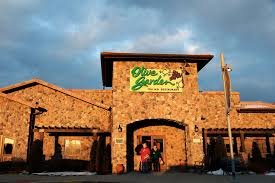
olive garden
At RestaurantCoach.in, we view this not as a threat, but as a clarion call for strategic evolution. When a brand like Olive Garden—with over 900 restaurants worldwide and a parent company (Darden Restaurants) reporting billions in sales—sets up shop, it validates India’s potential while raising the competitive bar. This article will break down what this launch truly means for you and provide a clear, actionable blueprint to not just survive, but thrive in this new landscape.
Gourmet Investments Pvt. Ltd., the franchisee behind this move, is strategically launching Olive Garden’s first Indian outlet at 4 Worldmark, Aerocity, New Delhi, with plans for a phased expansion across the Delhi NCR region. The brand’s leadership has emphasized that “Olive Garden is more than a restaurant—it’s a feeling,” focusing on generous hospitality, familiar flavors, and a family-style dining experience.
Key elements of their India strategy include:
Menu Adaptation: Staying true to its American-Italian core while thoughtfully adapting to local tastes, offering a mix of vegetarian and non-vegetarian options, and including its famous never-ending soup or salad and breadsticks with every entrée.
Experiential Design: The Aerocity location is designed to reflect Tuscan roots with rustic textures and indoor-alfresco spaces, creating a specific, transportive ambiance.
Strategic Intent: Ramit Bharti Mittal of Gourmet Investments stated the goal is to “make iconic names… more accessible to Indian diners” and contribute to “shaping the culinary landscape in India”. This signals a long-term, multi-brand vision.
This launch is part of a broader trend where global casual dining brands are targeting India’s growing appetite for experiential, family-oriented meals. It follows the successful playbook of other international chains that have localized without losing their core identity.
The entry of a player like Olive Garden creates ripple effects across the entire ecosystem. Your customers’ expectations are about to be influenced by a new benchmark. Here’s how different segments will feel the impact:
For Fine-Dining & Premium Casual Restaurants: The competition for the “special occasion dining” rupee intensifies. Olive Garden’s focus on a consistent, high-quality environment and service (backed by global SOPs) means customers will expect similar polish and reliability elsewhere.
For Family-Style and Café Owners: The core of Olive Garden’s appeal is shared, value-driven family meals. If your restaurant operates in this space, you’re in direct competition for the same family gatherings and weekend treats. Their “never-ending” offerings directly challenge perceived value.
For QSRs and Cloud Kitchens: While not direct competitors, the heightened focus on delivery and takeout by giants like Olive Garden (a significant growth channel for its parent company) means more sophisticated competition on aggregator platforms. Their marketing budgets can drown out smaller players.
For All Food Entrepreneurs: This raises the capital and operational benchmark. Competing now requires more than just great food. It demands excellence in branding, customer experience, supply chain resilience, and data-driven decision-making. As one industry leader noted, 2026 is about “clarity of intent, depth of experience, and operational intelligence”.
You cannot outspend a global chain, but you can outmaneuver them with agility, authenticity, and deep customer connection. Here is your immediate action plan:
Double Down on Your Unique Story & Clarity of Concept
Global brands offer a consistent, generic experience. Your power lies in your unique story. Is your cuisine hyper-regional? Is your chef’s narrative compelling? Does your design tell a local tale? As trends indicate, diners in 2026 are seeking concepts with a strong, cohesive point of view, moving away from trying to be everything to everyone. Action Step: Refine your restaurant’s “one-liner.” If you can’t explain what makes you uniquely special in 10 seconds, revisit your concept. This clarity must permeate your menu, service, and marketing.
Master the Value Equation, Not Just the Price Point
Olive Garden succeeds on a powerful value perception—generous portions, inclusive sides, and strategic promotions like the $13.99 Never Ending Pasta Bowl. Value isn’t cheapness; it’s the feeling that the customer got more than they paid for. Action Step: Audit your menu. Can you introduce a signature “feast” or sharing platter? Can you include a complimentary homemade bread, chutney, or drink that creates a memorable, generous first touchpoint? Re-frame your promotions around experience, not just discounting.
Embrace “Invisible” Technology for Smarter Operations
The future winner uses technology to empower staff and make data-driven decisions. As experts highlight, AI and automation are becoming crucial backend enablers for forecasting demand, optimizing menus, and managing inventory. This isn’t about replacing human warmth but eliminating guesswork and waste. Action Step: Implement a simple POS system that tracks your top-selling and least-selling items. Use this data weekly to adjust prep lists, reducing waste and focusing your kitchen on what truly sells. At RestaurantCoach.in, we’ve helped clients reduce food costs by 5-8% starting with this single step.
Cultivate Hyper-Local Loyalty Through Community
A global chain cannot replicate your deep community roots. This is your unbeatable advantage. Action Step: Launch a genuine “Neighbourhood Table” program. Host monthly community dinners, collaborate with local artisans, or feature produce from nearby farms on your menu. Use your social media not just for food photos, but to tell the stories of your staff, your suppliers, and your regulars. Make your restaurant a community hub.
Invest in Systematic Hospitality Training
Consistency is where large chains excel. They have Standard Operating Procedures (SOPs) for every guest interaction. Your service must be consistently warm, not inconsistently excellent. Action Step: Develop simple SOPs for the three key moments: Greeting, Problem-Solving, and Farewell. Train your team not just on the menu, but on how to read a table’s mood and personalize the experience within a consistent framework. Empower them to make small, memorable gestures.
Having coached hundreds of restaurant owners across India, I see this moment as an incredible opportunity for market maturation. Olive Garden’s entry is a sign that India’s dining scene is globally respected. It forces all of us to level up.
The defining trend for 2026 is “intentional hospitality”. It’s about moving away from chasing fleeting fads and towards a deep, operational focus on who you are and who you serve. The restaurants that will win are those that:
Lead with authenticity, not imitation.
Use data to inform intuition, not replace it.
See technology as a tool for efficiency, allowing more human connection, not less.
Understand that their team is their ultimate competitive advantage.
A scattered, multi-cuisine approach will struggle. A sharp, concept-driven restaurant with a loyal community will flourish. This is the time to refine, focus, and execute with precision.
Olive Garden’s launch is a milestone, not a market takeover. It signifies growth and opportunity. The playing field is changing, and the rules now demand greater strategic thinking, operational excellence, and authentic connection.
Your response should not be fear, but focused action. Revisit your core concept, engineer unforgettable value, leverage data, embed yourself in your community, and systemize your hospitality. These are the pillars of a modern, competitive Indian restaurant.
Need expert guidance to navigate these industry changes and build a profitable, future-proof business? Our tailored restaurant coaching programs at RestaurantCoach.in are designed to help food entrepreneurs like you develop clear strategy, streamline operations, and cultivate lasting customer loyalty. Contact us for a consultation to transform your restaurant vision into a thriving reality.
Previous Post
The Indian food service industry is witnessing a fascinating shift. Homegrown brands are no longer…
The recent buzz around Indiranagar, Bangalore—where several popular cafes are reportedly restricting laptop usage—has sparked…
As a restaurant business coach working with food entrepreneurs across India, I’ve seen a recurring…
The Indian restaurant industry thrives on energy, passion, and a connection with its customers. So,…

Founded in 2015 by seasoned restaurant professionals who understood the challenges faced by food entrepreneurs in India, Restaurant Coach began as a vision to democratize restaurant success.

Founded in 2015 by seasoned restaurant professionals who understood the challenges faced by food entrepreneurs in India, Restaurant Coach began as a vision to democratize restaurant success. After witnessing countless talented chefs and passionate food lovers struggle with business aspects of restaurant operations, our founders decided to bridge the gap between culinary passion and business acumen.