Demos
Demos  Colors
  Docs
Docs  Support
Home 15
Newly Added



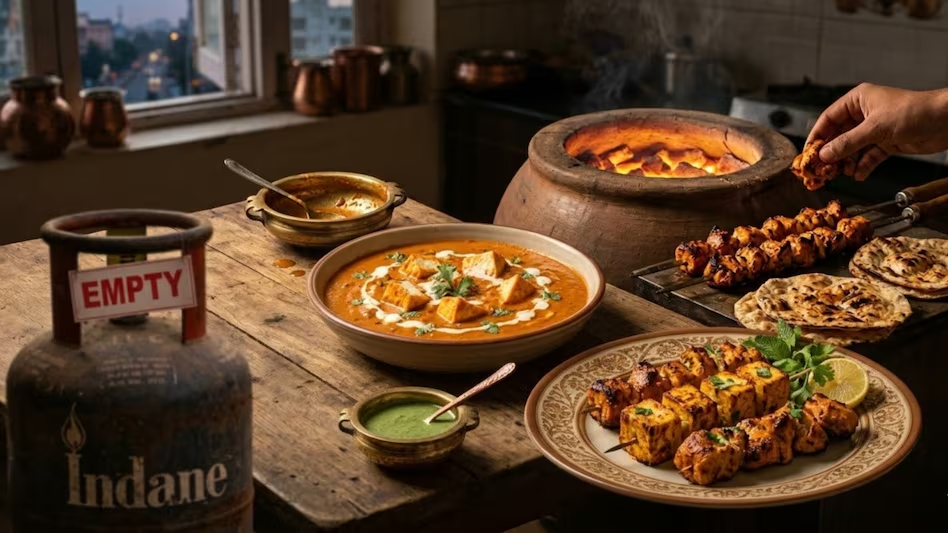
For restaurant owners across Maharashtra, the past few months have been a masterclass in navigating uncertainty. We’ve seen firsthand, through our work with clients at RestaurantCoach.in, how sudden supply chain shocks can turn a profitable week into a stressful scramble. The news that the Maharashtra government has increased Piped Natural Gas (PNG) supply to the commercial sector by 20% is, without a doubt, a welcome breath of fresh air.

P N G supply in Maharashtra
But let’s be clear: as a restaurant business coach, I see this not just as a relief measure, but as a critical moment for introspection. This temporary reprieve from a gas crisis is a powerful reminder of the vulnerabilities in our operating models. For the owners we coach in Mumbai, Pune, and Nagpur, this isn’t just about turning the burners back on; it’s about turning on a new way of thinking.
This article will break down exactly what this PNG allocation increase means for your bottom line, and more importantly, provide you with a roadmap to use this breathing room to build a more resilient, profitable, and sustainable business for the long haul.
To understand the full impact, let’s first look at the facts. The Maharashtra government, responding to urgent pleas from the hospitality industry, has increased the PNG supply to restaurants and commercial establishments from a previous level to a new total of 50%. This latest 20% increment came into effect on March 23rd and is a direct response to a global energy crisis that began to choke our kitchens.
This crisis wasn’t a local issue; it was a geopolitical ripple effect. Tensions in West Asia, particularly disruptions in the Strait of Hormuz—a critical artery for global energy shipments—created a severe shortage of commercial cooking gas in India. For weeks, restaurants were operating on a fraction of their required fuel. Many of our coaching clients reported being forced to limit their menus, reduce operating hours, or, in the worst cases, temporarily shutter their doors.
The government’s move to gradually increase supply—first to 20%, then another 10%, and now this final 20% boost—was a balancing act. They had to manage domestic needs while ensuring commercial hubs like our restaurants could survive. The initial concern from hotel and restaurant associations was that a complete suspension of supply was imminent. This hike, therefore, is a crucial intervention that prevents that doomsday scenario.
So, how does this news directly impact you, the owner of an Indian restaurant, cafe, QSR, or cloud kitchen? The immediate impact is obvious: you can resume full operations. But the secondary, and arguably more important, impacts are what we, as your coaches, want you to focus on.
1. Restored Operational Normalcy
The most direct impact is the ability to run your business as intended. With gas supply at 50% of the commercial allocation, you are no longer in “survival mode.” You can:
Restore your full menu: Bring back those signature dishes that were temporarily suspended.
Extend your operating hours: Return to your regular opening and closing times, recapturing lost revenue windows.
Regain customer confidence: Consistency is key in the restaurant business. Customers who found their favourite dish unavailable may have been disappointed. Now, you can rebuild that trust.
2. Stabilized Cash Flow
For the restaurants we coach, the gas crisis was a cash flow nightmare. Reduced operations meant reduced revenue, but fixed costs like rent and staff salaries remained. The uncertainty of when the next gas cylinder would arrive, or if PNG pressure would drop, made financial planning impossible. This increased supply allows you to stabilize your daily takings and begin to plan your finances with greater certainty.
3. A Pause on Desperate Measures
The crisis forced many owners to consider extreme, often unviable, alternatives. Minister Bhujbal rightly pointed out that switching to alternatives like kerosene isn’t a simple fix. It requires major infrastructure changes, presents significant safety risks in a commercial kitchen, and can alter the taste and quality of your food. This PNG hike removes the pressure to make such desperate, and potentially dangerous, operational changes.
At RestaurantCoach.in, we believe that a crisis is a terrible thing to waste. The gas shortage was a wake-up call. Now, with the immediate pressure relieved, it’s time to act. Here are 7 actionable steps you should take right now to strengthen your business against future shocks.
1. Audit Your Energy Consumption
Don’t just go back to business as usual. Take this opportunity to understand your energy usage. For one week, track exactly how much gas you use for each section of your kitchen—the tandoor, the stoves, the ovens. This data is invaluable. It will help you identify inefficiencies and understand your true baseline cost.
2. Re-engineer Your Menu for Efficiency
This is a coaching principle we swear by. Review your menu through the lens of energy. Are there dishes that require hours of simmering that could be prepped in a more efficient way? Could you consolidate cooking times? We’ve helped clients restructure their prep schedules to concentrate high-energy tasks into off-peak hours, significantly reducing their overall gas consumption. Use this time to identify and phase out “energy-heavy, low-profit” dishes.
3. Explore and Invest in Energy-Efficient Equipment
The alternative fuel conversation highlighted the need for infrastructure. Now is the time to start planning for upgrades, not in panic, but strategically.
Invest in high-efficiency burners: They use less gas to generate the same amount of heat.
Consider induction cooktops: For specific applications (sauces, soups), induction can be a highly efficient and cost-effective supplement to gas, reducing your reliance on PNG.
Maintain your equipment: A poorly maintained burner is a gas-wasting burner. Ensure all your equipment is serviced regularly.
4. Build a Stronger Relationship with Your Supplier and Association
Did you have a direct line of communication with your gas supplier during the crisis? If not, build that relationship now. Also, get active with your local hotel and restaurant association. The reason this relief came through was because the industry collectively raised its voice. A strong network is your first line of defence in a crisis.
5. Revisit Your Financial Buffer
This crisis exposed a common vulnerability: a lack of cash reserves. In our coaching programs, we emphasize the importance of a “rainy day fund.” Now that your cash flow is stabilizing, set a target to build a reserve that can cover at least 2-3 months of fixed operating costs. This isn’t just good business; it’s your survival insurance.
6. Diversify Your Fuel Sources (Where Possible)
While you don’t need to make a panic switch, consider having a backup. Is there a safe way to have a small LPG cylinder as a contingency for critical cooking equipment? The goal isn’t to fully switch, but to ensure that if PNG supply is reduced again, you have a Plan B for your best-selling items, allowing you to continue operating in a limited capacity rather than shutting down entirely.
7. Implement a Contingency Plan
Sit down with your team and create a formal contingency plan. Document:
What will you do if your main fuel supply is cut by 20%? 50%?
Which dishes will you prioritize?
What will your reduced operating hours be?
Having a plan in place removes the panic and guesswork during a future crisis. You simply execute the plan.
From where I sit, coaching restaurant owners across India, this situation reveals a broader industry trend. We are moving into an era where energy security, sustainability, and operational efficiency are no longer just “nice-to-haves,” but core pillars of a successful restaurant business.
The global factors that caused this crisis—geopolitical tensions, supply chain disruptions—are not going away. They will continue to create volatility in the market. The restaurants that will thrive are those that stop viewing themselves as simply “food businesses” and start viewing themselves as resilient, adaptable, and efficient operations.
This is why we at RestaurantCoach.in place such a heavy emphasis on foundational business systems. We don’t just coach you on recipes; we help you build the operational and financial systems that can withstand shocks. Our experience shows that restaurants with strong cost-management practices, efficient kitchen workflows, and proactive financial planning weathered this storm far better than those that operated on a day-to-day basis.
This PNG hike is a gift of time and stability. Use it wisely. It’s an opportunity to strengthen the foundations of your business so that the next challenge—be it a gas crisis, a supply chain issue, or an economic downturn—finds you not scrambling, but executing a well-thought-out plan.
The Maharashtra government’s decision to increase PNG supply provides critical relief for our industry. It allows our kitchens to fire up fully, our staff to return to regular shifts, and our businesses to begin the journey back to financial health. But let’s not confuse relief with resolution.
The true resolution lies in the actions you take today. The steps we’ve outlined—from energy audits to contingency planning—are not just about saving on gas; they’re about building a business that can thrive, no matter what the external environment throws at it.
The restaurant landscape is changing rapidly. The old ways of running a business—hoping for the best and reacting to crises as they come—are no longer enough. It’s time to build a smarter, more resilient restaurant.
Need expert guidance to navigate these industry changes and build a business that stands the test of time? Our restaurant coaching programs at RestaurantCoach.in are designed specifically for Indian food entrepreneurs like you. We help you move from survival to sustainable profitability. Contact us today to schedule a consultation and transform your restaurant vision into a resilient reality.
Previous Post
Next Post
The Indian food and beverage (F&B) industry is buzzing with news that has significant implications…
The Fast-Food Diabetes Link: What Telangana’s Health Warning Means for Your Restaurant’s Future As a…
As restaurant business coaches in India, we at RestaurantCoach.in spend a lot of time in commercial kitchens.…
The news is alarming, and we know your phones are buzzing with messages from worried…

Founded in 2015 by seasoned restaurant professionals who understood the challenges faced by food entrepreneurs in India, Restaurant Coach began as a vision to democratize restaurant success.

Founded in 2015 by seasoned restaurant professionals who understood the challenges faced by food entrepreneurs in India, Restaurant Coach began as a vision to democratize restaurant success. After witnessing countless talented chefs and passionate food lovers struggle with business aspects of restaurant operations, our founders decided to bridge the gap between culinary passion and business acumen.