Demos
Demos  Colors
  Docs
Docs  Support
Home 15
Newly Added



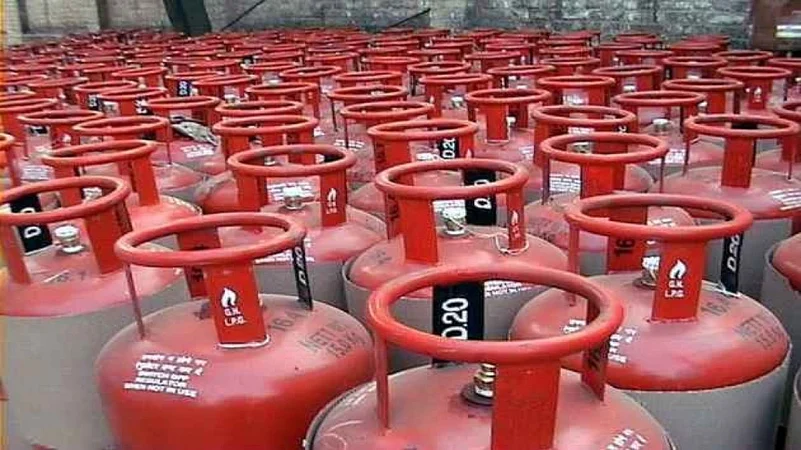
If you’re reading this with a cup of tea that took a little too long to brew this morning, or if you’ve had to tell a customer their favorite sizzler is “unavailable” today, you are not alone. The news is buzzing with headlines about the commercial LPG shortage impacting Indian restaurants, and the situation on the ground is real.

LPG shortage
Over the last 48 hours, our phone lines at RestaurantCoach.in have been buzzing with worried owners from Bengaluru to Mumbai, asking the same question: “What do we do now?” The sudden halt in commercial gas cylinder supplies has thrown a wrench into the operations of thousands of QSRs, dhabas, and fine-dining establishments .
As your restaurant coach, I’m not here to just summarize the news. I’m here to help you navigate it. This isn’t just a supply chain glitch; it’s a stress test for your business resilience. In this article, we’ll break down what’s really happening, how it affects your bottom line, and most importantly, the specific, actionable steps you can take today to keep your kitchen firing and your profits safe.
To fix a problem, you need to understand it. The current crisis isn’t a simple “truck broke down” scenario. It’s a perfect storm of geopolitics and policy.
The Geopolitical Trigger
India imports 55-60% of its LPG requirements, with a significant portion coming from the Middle East . The ongoing conflict in the region has disrupted these supply routes, creating uncertainty in the global energy market .
The Government’s Response
To protect the common household, the central government wisely prioritized domestic LPG cylinders. However, a March 5th order aimed at prioritizing household supply created confusion down the line. Distributors, fearing penalties, interpreted this as a directive to halt commercial supplies entirely . This led to the All India LPG Distributors Federation advising its members to temporarily suspend supplies to “non-essential” establishments like hotels and restaurants .
The Ground Reality
The impact is severe. Industry bodies like the NRAI and AHAR report that:
20% of hotels in some regions like Mumbai have already shut operations .
Restaurants in Bengaluru, Pune, and Delhi NCR are running on fumes, with less than a week’s inventory left .
There are reports of commercial cylinders being sold on the black market for as high as Rs 2,200 in Surat .
The NRAI has issued a formal advisory asking restaurants to implement immediate fuel conservation measures, including rationalizing menus and shifting to electric alternatives .
This is the reality we face. But as we always tell our coaching clients, panic is not a strategy. Let’s look at what this means for your daily operations.
This isn’t just a logistical headache; it hits the three most critical pillars of your restaurant: Menu, Margins, and Reputation.
The most immediate impact is on what you can serve. High-flame cooking, deep-frying, and dishes requiring long simmering (like our beloved daals and shorbas) are the first casualties . Owners are being forced to pivot to “crisis menus” featuring tandoor items or faster-cooking dishes . Imagine being a South Indian specialty restaurant that can’t make dosa because it requires a hot, flat griddle for too long—that’s the reality for many right now .
Your cost of goods sold (COGS) is going haywire. If you find gas on the black market, your fuel cost doubles or triples, eroding your profit margin on every dish. If you switch to induction, your electricity bill is going to spike. One Mumbai owner told us he had to spend Rs 6,300 on an emergency electric stove just to stay open . These are unplanned capital expenditures that hurt cash flow.
Kitchens are slowing down. Chefs are spending time figuring out how to cook with new tools (like electric ovens or coal bhattis) rather than focusing on quality and speed. This leads to longer ticket times, which directly impacts customer satisfaction and table turnover rates .
This is the silent killer. If you suddenly can’t serve half your menu, or the food takes 40 minutes to arrive, customers won’t care about a geopolitical crisis. They will remember that your restaurant had bad service or limited options. Protecting your brand reputation during this time is paramount.
At RestaurantCoach.in, we specialize in turning challenges into opportunities for optimization. Here is your 7-point action plan to survive and even strengthen your business during this LPG shortage.
Walk into your kitchen right now. Count every commercial cylinder you have. Calculate how many hours of cooking that translates to based on your average daily usage. This gives you a hard deadline. Without this data, you are flying blind.
This is your most powerful lever. Don’t just randomly remove items. Strategically redesign your menu.
Go Tandoor Heavy: If you have a tandoor, pivot to items that use charcoal or wood. Customers love the smoky flavor, and it saves your LPG .
Batch Cooking: Pre-soak grains and legumes to reduce cooking time. Cook daals and rice in large batches using pressure cookers, which are significantly more fuel-efficient .
Temporarily Cut High-Usage Items: Suspend dishes that require deep frying or long simmering until the supply stabilizes. Promote this as a “limited-time special menu” rather than a crisis measure.
You don’t need to replace your entire kitchen, but a few strategic investments can save you.
Induction Cooktops: Perfect for gravies, curries, and boiling. They are surprisingly efficient for certain tasks .
Electric Rice Cookers & Ovens: Take the strain off your gas by using electric appliances for specific, high-volume items .
Coal/ Wood Bhattis: As seen in Mumbai, a simple coal bhatti (costing around Rs 2,000) can be a lifesaver for specific items .
Train your kitchen staff immediately.
Switch Off Pilot Lights: Ensure all pilot flames on gas ranges are off when not in active use .
Use Lids: A simple lid on a utensil can reduce cooking time by 20%. Train your team to cover everything .
Right-Sized Burners: Don’t use a massive flame for a small pan. Match the burner size to the utensil to prevent flame wastage .
Put up a small, polite sign or add a note to your menu: “Due to the temporary industry-wide supply chain situation, we are proud to present our special ‘Tandoor & Curries’ menu, crafted to bring you the best flavors with minimal waste.” This turns a negative into a positive and sets the right expectations.
This is a tough one, but it’s smart. If your non-peak hours are slow, consider closing for a short period between lunch and dinner. This consolidates your cooking into two high-efficiency shifts and saves a significant amount of fuel .
Keep a log of which dishes you suspended, what alternatives you used, and how much you saved. This data is gold. Once the crisis passes, you’ll know exactly which changes actually improved your efficiency and should be kept permanently.
In my years of coaching restaurant owners across India, from bustling cafes in Gurugram to high-end restaurants in South Mumbai, I’ve seen that the businesses that survive shocks aren’t necessarily the biggest—they are the most adaptable.
This LPG crisis is a stark reminder of a fundamental truth: your supply chain is only as strong as its most fragile link.
At RestaurantCoach.in, we always advise our clients to build “redundancy” into their kitchen infrastructure. This doesn’t mean being wasteful; it means having a Plan B. The owners who already had an induction plate in the back for “just in case” are the ones sleeping a little better tonight.
We are also seeing a potential long-term trend here. The government’s push to prioritize household gas might be a sign of things to come. The future of the Indian restaurant industry may rely less on subsidized commercial LPG and more on electrification. Investing in high-quality, energy-efficient electric equipment isn’t just a crisis reaction; it’s a long-term strategy for margin protection .
Look at this as a fire drill for your business. Yes, it’s stressful. But it’s exposing the inefficiencies in your kitchen. Once you’ve navigated this, you will emerge with a leaner, smarter, and more profitable operation.
The commercial LPG shortage is a serious challenge, but it is not an insurmountable one. By staying calm, rationalizing your menu, embracing alternative cooking methods, and communicating transparently with your customers, you can protect your business and your reputation.
Remember, the goal isn’t just to survive the next two weeks. It’s to learn lessons that will make your restaurant stronger for the next five years.
Need expert guidance to navigate these industry changes? Our restaurant coaching programs at RestaurantCoach.in help food entrepreneurs build profitable, sustainable businesses. We work with you one-on-one to create custom strategies for cost control, menu engineering, and operational efficiency.
[Click here to book your free discovery call] and let’s transform your restaurant vision into reality—even in challenging times.
Previous Post
Next Post
The Indian food and beverage (F&B) industry is buzzing with news that has significant implications…
Maharashtra PNG Supply Hike: A Restaurant Coach’s Guide to Relief and Resilience For restaurant owners…
The Fast-Food Diabetes Link: What Telangana’s Health Warning Means for Your Restaurant’s Future As a…
As restaurant business coaches in India, we at RestaurantCoach.in spend a lot of time in commercial kitchens.…

Founded in 2015 by seasoned restaurant professionals who understood the challenges faced by food entrepreneurs in India, Restaurant Coach began as a vision to democratize restaurant success.

Founded in 2015 by seasoned restaurant professionals who understood the challenges faced by food entrepreneurs in India, Restaurant Coach began as a vision to democratize restaurant success. After witnessing countless talented chefs and passionate food lovers struggle with business aspects of restaurant operations, our founders decided to bridge the gap between culinary passion and business acumen.