Demos
Demos  Colors
  Docs
Docs  Support
Home 15
Newly Added

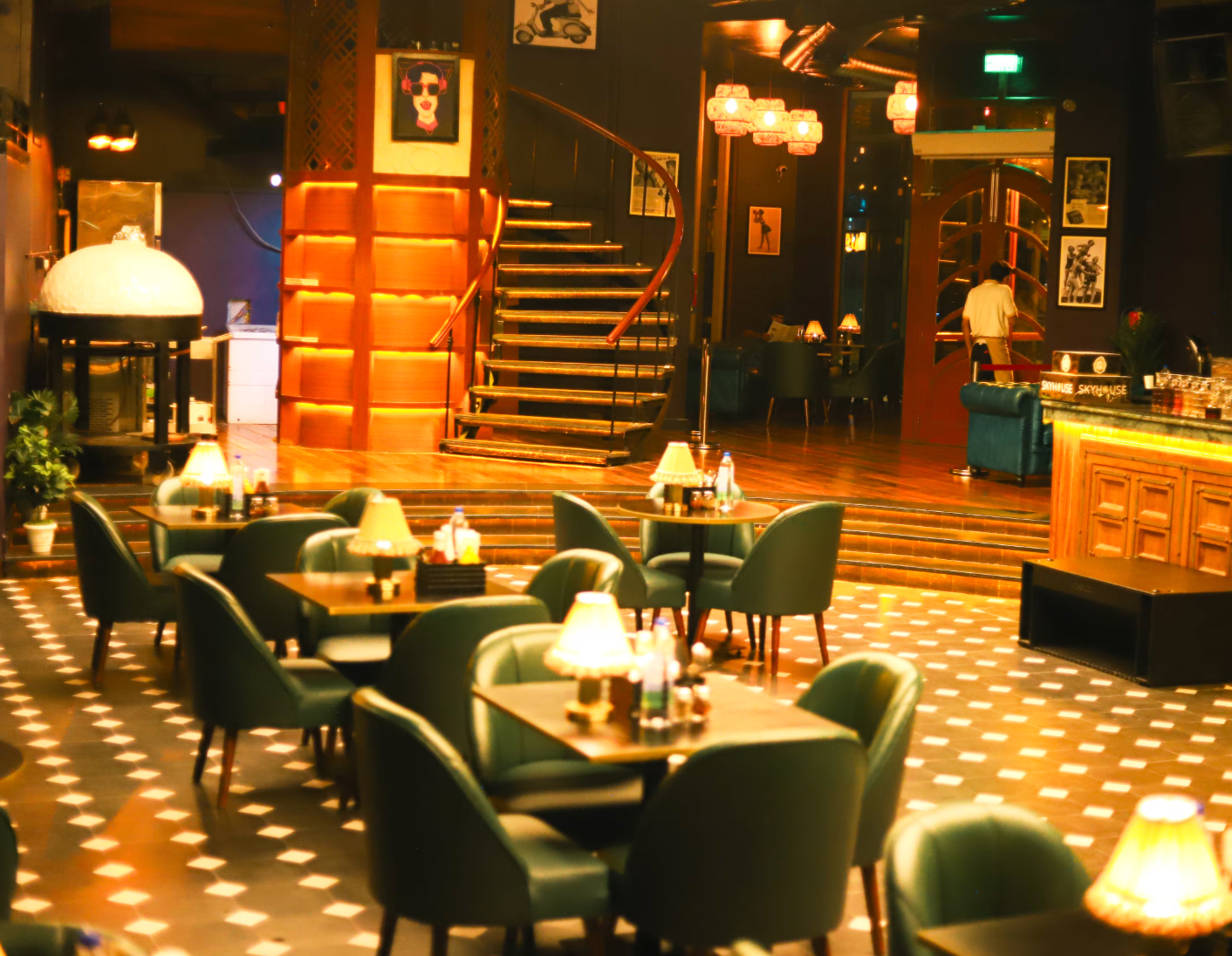

If you’re running a cloud kitchen, a QSR, or dreaming of launching your own food brand, a major shift in our industry demands your attention. Bombay Meri Jaan, a successful cloud kitchen brand famous for its Bombay street food, has just announced a pivotal move: they are shifting gears to open nine company-owned physical stores in Delhi NCR by FY2025-26, with a staggering vision of 200+ stores across India and internationally by 2028-29[citation:0].

BOMBAY 1
This isn’t just news; it’s a strategic blueprint. For years, cloud kitchens have been hailed as the low-cost, high-efficiency future of food service. Yet, here is a brand that mastered the cloud model—racking up 24,000 to 30,000 monthly orders from six Delhi NCR kitchens—and is now investing heavily in physical real estate[citation:0]. Why?
In our coaching experience at RestaurantCoach.in, this move signals a critical evolution in the Indian restaurant playbook. It reveals that while cloud kitchens are powerful for validation and scale, physical stores are irreplaceable for building lasting brand power and sustainable profit. This article will break down the “why” behind this shift and, more importantly, provide you with a clear, actionable framework to assess and execute your own growth path, whether you’re in Mumbai, Bangalore, or a thriving tier-2 city.
Let’s look at the core strategies behind Bombay Meri Jaan’s expansion, as they offer more lessons than the expansion itself.
First, their foundation is process-driven standardization. Chef-Owner Om Nayak explicitly models his kitchens on giants like McDonald’s, with “stringent recipes and SOPs” to ensure every Vada Pav or Dabeli is consistent[citation:0]. This operational rigor is what allowed them to scale reliably in the cloud. Their promise of “plastic-free, fresh, and not frozen” food prepared in under eight minutes is a brand promise built on process[citation:0].
Second, their expansion is strategically phased. They are not franchising but opening company-owned outlets[citation:0]. This gives them tight control over quality and customer experience during this crucial growth phase. Their first nine stores will target high-street markets, malls, and food courts in Delhi NCR—a market they already understand deeply from their cloud operations[citation:0].
Finally, their ambition is fundamentally brand-led. The emotional pull of “Bombay” over “Mumbai,” and the effort to perfect their own pav bread in North India, shows a deep investment in brand identity and customer connection[citation:0]. This transition from a convenient delivery option to a beloved destination is the heart of their strategy.
This move is not an isolated event. It reflects a broader, data-backed trend in India’s F&B sector and directly impacts every owner’s strategic choices.
Cloud kitchens revolutionized access to the market, especially for entrepreneurs. By some estimates, starting a cloud kitchen can require 65-70% lower initial capital than a traditional restaurant, as you save on prime rent, lavish interiors, and extensive front-of-house staff. The model offers incredible flexibility to test menus and reach a wide delivery radius.
However, challenges emerge as you scale:
High Platform Dependency: Reliance on Swiggy and Zomato can mean 25-30% of your revenue goes to commissions, squeezing already thin margins.
The “Invisible Brand” Problem: Without a storefront, building memorable brand loyalty is tough. You risk becoming just another anonymous icon on an app, competing only on price and discounts.
Limited Profit Levers: As one seasoned operator shared, pausing promotions on aggregator apps often leads to an instant sales crash, creating a cycle of dependency.
This is where physical stores change the game. A storefront is not an expense; it’s a marketing and brand-building asset.
Profitability & Control: Physical stores allow you to capture direct walk-in sales and higher-margin beverage sales, reducing reliance on aggregators. You control the entire customer experience.
Brand as an Asset: As Bombay Meri Jaan understands, a physical space makes your brand tangible. It builds trust and turns customers into brand advocates. A study of the US market shows how upscale Indian restaurants like Semma and Bungalow have built cult followings and months-long waitlists by offering immersive, signature experiences.
Hybrid is the New Default: The future isn’t cloud or physical; it’s cloud and physical. A physical store becomes a flagship kitchen for local delivery, improving efficiency and marketing your delivery business. The Indian food service market, headed toward ₹10 lakh crore by 2030, will be led by businesses that master this hybrid reach.
The strategic choice between starting with a cloud kitchen or a physical store depends on your current resources and primary goal.
Inspired by this case study? Here is your step-by-step action plan to build a resilient, “phygital” food business.
Before investing in real estate, solidify your backend. Ask yourself:
Do I have bulletproof SOPs? Can a new cook use your recipe cards to make your signature dish perfectly every time? Document everything.
Is my supply chain reliable? Can you maintain ingredient quality and cost at 5x your current volume?
What does my data say? Use your cloud kitchen data to identify your top 3 location clusters for customer density. This data is gold for choosing your first physical store location.
Don’t leap blindly. Follow a staged approach:
Phase 1: Validate & Refine (Cloud-Only). Use the low-cost cloud model to prove your concept, refine your menu based on real sales data, and build a loyal digital customer base. This is your research and development phase.
Phase 2: Flagship Launch (Physical Anchor). Open your first, modestly-sized physical store in a high-visibility location within your strongest delivery zone. Use it as a marketing hub, a quality-controlled kitchen for local delivery, and a direct sales channel.
Phase 3: Synchronized Scale (Hybrid Network). Use the brand credibility and operational learnings from your flagship to open more stores, each supporting and being supported by a dedicated cloud kitchen network.
For Your Physical Store: Factor in FSSAI licensing, GST registration, and local municipal permits from day one. Design a compact, efficient kitchen. Your dining space should create an experience, not just seat people.
For Your Cloud Operations: Use technology to integrate operations. A unified Point of Sale (POS) system can manage inventory and orders across both channels. Start building a direct ordering channel via your own website or app to save on aggregator commissions.
Your brand is what makes people choose you. Invest in it.
Tell Your Story: Why does your food exist? Bombay Meri Jaan taps into nostalgia[citation:0]. Maybe yours is about health, a family legacy, or a regional cuisine.
Focus on Unboxing: For delivery, your packaging is your “storefront.” Invest in sturdy, eco-friendly packaging that keeps food hot and presents it beautifully. Sustainability is a major 2025 trend that builds customer goodwill.
Engage Directly: Use social media not just for promotions, but to show your kitchen’s hygiene, introduce your team, and share customer stories. Build a community.
Seeing dozens of restaurant journeys at RestaurantCoach.in, one pattern is clear: the most profitable, saleable businesses are brands, not just kitchens. A cloud kitchen is a brilliant, capital-efficient tool to start, but it is rarely the endpoint for empire builders.
The move by Bombay Meri Jaan aligns with a global trend where successful food concepts ultimately crave a physical expression to build deeper value. In India, the market is uniquely positioned for this. We have a booming delivery culture and a deep-seated appreciation for communal, experiential dining. The winning entrepreneurs will be those who blend technological efficiency with human-centric hospitality.
Furthermore, this “phygital” model is your strongest defense against competition. It creates a virtuous cycle: the physical store builds brand trust, which boosts delivery orders from its vicinity. The delivery data, in turn, informs where to open the next store. This creates a defensible business moat that a pure-play cloud kitchen or a traditional restaurant alone cannot easily replicate.
The Indian food and beverage (F&B) industry is buzzing with news that has significant implications…
Maharashtra PNG Supply Hike: A Restaurant Coach’s Guide to Relief and Resilience For restaurant owners…
The Fast-Food Diabetes Link: What Telangana’s Health Warning Means for Your Restaurant’s Future As a…
As restaurant business coaches in India, we at RestaurantCoach.in spend a lot of time in commercial kitchens.…

Founded in 2015 by seasoned restaurant professionals who understood the challenges faced by food entrepreneurs in India, Restaurant Coach began as a vision to democratize restaurant success.

Founded in 2015 by seasoned restaurant professionals who understood the challenges faced by food entrepreneurs in India, Restaurant Coach began as a vision to democratize restaurant success. After witnessing countless talented chefs and passionate food lovers struggle with business aspects of restaurant operations, our founders decided to bridge the gap between culinary passion and business acumen.