Demos
Demos  Colors
  Docs
Docs  Support
Home 15
Newly Added

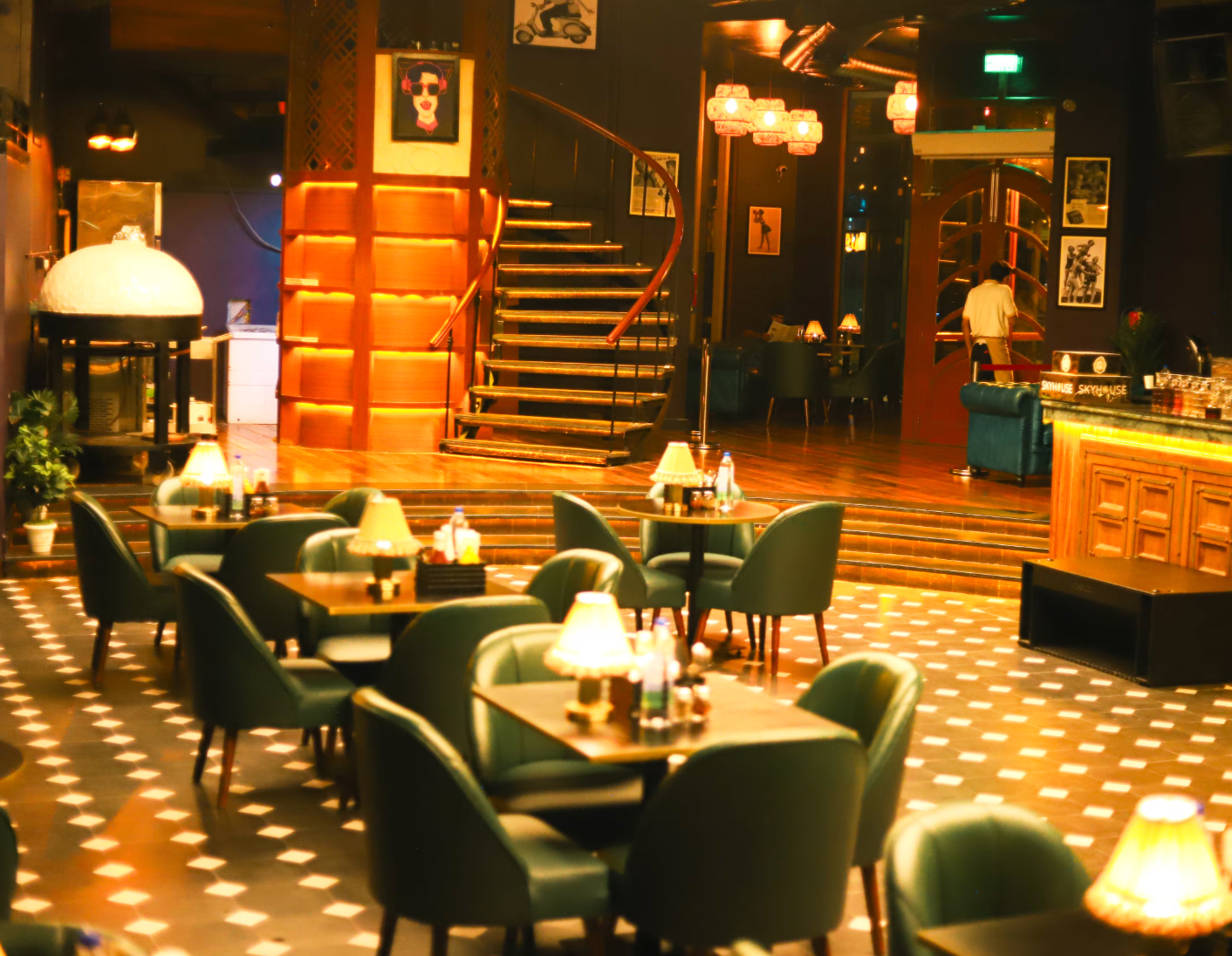

The recent buzz around Indiranagar, Bangalore—where several popular cafes are reportedly restricting laptop usage—has sparked a massive conversation. As a restaurant coach, I see this not just as a viral social media moment, but as a critical operational dilemma facing the modern Indian food business.

laptop
For years, the “work-from-cafe” culture has been a blessing for remote workers and a curse for restaurant owners trying to manage table turnover. The viral post by a Bengaluru woman highlighting that she had to leave multiple Indiranagar cafes (like Concu and Araku) because laptops weren’t allowed, only to end up at Third Wave Coffee, raises a fundamental question: Who is your ideal customer?
At RestaurantCoach.in, we believe that every policy you implement—whether it’s banning laptops, offering Wi-Fi passwords, or limiting seating time—is a form of marketing. It tells a story about your brand. If you don’t define your strategy clearly, you risk alienating your core audience.
In this article, we will break down the news from a business perspective, analyze how this impacts your bottom line, and provide actionable steps to create a sustainable seating policy that maximizes your revenue without turning away loyal patrons.
Let’s set the stage. A woman named Manju took to X (formerly Twitter) to express her frustration. After visiting several popular spots in Indiranagar—specifically Concu and Araku Coffee—she discovered that laptops were not welcome. Her eventual solution was to go to a chain, Third Wave Coffee, to get her work done.
The response from the cafes was swift. Concu clarified that the restriction is not a blanket ban but rather a policy aimed at weekends and peak hours. Their reasoning was simple: during busy times, seating is a premium asset. A single person nursing a single cup of coffee for four hours while working on a laptop prevents four to six other customers (who might order full meals) from sitting down.
This isn’t just a Bangalore problem. From Mumbai’s Bandra to Delhi’s Hauz Khas, cafe owners are grappling with the “cafe as a co-working space” phenomenon. While it brings footfall during slow hours (weekday mornings and afternoons), it can cripple profitability during the golden hours of the weekend.
The social media reaction was mixed. Some users supported the cafes, citing “loss of business” as a valid reason. Others mocked the situation, suggesting the woman should work at a gym instead. But as a business owner, you cannot rely on social media validation; you need data and a strategy.
You might be thinking, “I don’t own a cafe in Indiranagar, so why should I care?”
Whether you run a fine-dine restaurant in Gurugram, a QSR in Pune, or a cloud kitchen in Hyderabad, this news is a mirror reflecting a universal challenge in the Indian food service industry: The Battle for Table Turnover.
Here is how this specific news impacts your business strategy:
A cafe is a business, not a public library. However, the “vibe” or “atmosphere” is often your biggest selling point. If you implement strict “no laptop” policies, you risk alienating the millennial and Gen Z demographic who see cafes as a third place (neither home nor office). If you allow unlimited laptop usage, you might turn into a co-working space with a coffee machine, killing your average revenue per seat.
Notice that the woman ended up at Third Wave Coffee. Large chains have the infrastructure to manage high volumes and the real estate to dedicate specific zones (e.g., “no laptop zone” or “work zone”). Independent cafe owners often lack the square footage to segment their audience. If you are an independent owner, you are competing against chains that can afford to host laptop users and dining families simultaneously. You need a smarter strategy than simply copying the chain’s policy.
This is the crux of the Indiranagar issue. Let’s do some quick math:
Laptop User: Orders 1 coffee (₹250) and sits for 3 hours. Revenue per seat per hour = ₹83.
Dining Couple: Orders 2 coffees, 2 desserts, and maybe a sandwich (₹1,200) and sits for 45 minutes. Revenue per seat per hour = ₹800.
If you do not manage your laptop policy during peak hours, you are essentially renting out your most valuable real estate at a fraction of the price.
Your customers didn’t come to your restaurant to hear the clacking of keyboards during their date night. If your cafe becomes a default office hub, you risk losing your “dining” customers. Conversely, if you ban laptops entirely, you lose the “work-from-home” crowd that often fills the seats during otherwise dead afternoon hours.
At RestaurantCoach.in, we don’t believe in black-and-white solutions. The answer is not “ban laptops” or “allow everything.” The answer is strategic segmentation. Here are 7 actionable steps to implement immediately:
Don’t apply the same rule all day. If you ban laptops on a Tuesday at 11:00 AM, you are shooting yourself in the foot. Use your POS data to identify:
Off-Peak: 10:00 AM – 4:00 PM (Weekdays). Allow laptops freely. This fills the restaurant.
Peak: 6:00 PM – 10:00 PM & Weekends. Restrict laptops. This maximizes revenue per seat.
Instead of banning laptops outright, implement a “minimum spend per hour” policy during peak times. This is common in high-end cafes globally.
Example: “During weekend brunch (Sat-Sun, 11 AM-4 PM), a minimum spend of ₹500 per person is required for table usage exceeding 1 hour.”
This allows laptop users to stay, but ensures your revenue stream is protected.
If your space allows, segment your cafe.
The “Work Zone”: Near the back, near plug points. Lower tables, higher tolerance for noise, but perhaps a service charge or higher minimum spend.
The “Dining Zone”: Prime real estate near the window or open areas. Strictly for families and groups looking to dine. Staff should be trained to politely direct laptop users to the designated zone.
The biggest fear for restaurant owners is a negative Google review because a customer was “kicked out.” The Indiranagar story highlights a lack of clarity. Train your staff to communicate policies before the customer sits down.
Script: “Welcome! Just so you know, our seating policy allows laptops in the back area, but during the weekend, we request a limit of 90 minutes to ensure we can accommodate all our guests.”
If you are banning laptops on weekends, you must have the service infrastructure to support high turnover. You need a menu designed for speed (fewer complex dishes) and a kitchen that can handle high-volume bursts.
Instead of seeing Third Wave Coffee as competition, learn from them. Why did the customer go there? Because they offer reliable Wi-Fi, power outlets, and a clear policy. If you want the work-from-home crowd on weekdays, invest in better internet and more outlets. It is a low-cost investment for a high-reward weekday audience.
Avoid angry confrontations by posting your policy clearly. A small sign at the entrance or on the table stating, “Laptops Welcome: Mon-Fri 10 AM-5 PM | Dining Focus: Evenings & Weekends” manages expectations before the customer orders.
The shift we are seeing in Bangalore is a microcosm of a larger industry maturation. For a long time, Indian cafes were happy to take any customer that walked in. Today, the market is too competitive for that.
We are entering the era of “Themed Segmentation.”
At RestaurantCoach.in, we’ve helped dozens of restaurant owners pivot from being a “catch-all” cafe to a “focused” food business. The data consistently shows that hybrid models—where you operate as a “work cafe” in the morning and a “dining hotspot” in the evening—yield the highest profitability.
However, you must align your brand identity. If you are a dessert-centric cafe, you likely don’t want students studying for 4 hours. If you are a specialty roaster, you might want to cultivate the remote worker community.
My advice to Indian restaurant owners is this: Do not react emotionally to a viral tweet. Analyze your data. If your “dwell time” is high during lunch hours but your “average check” is low, you have a problem. If your afternoons are empty, allowing laptops is a free marketing tool.
Remember, your seating policy is a business decision, not a moral one. It must serve your bottom line while respecting the customer’s needs.
The story of the Bengaluru woman hopping between Indiranagar cafes is more than just a social media trend; it is a case study in operational strategy.
Whether you decide to ban laptops or welcome them, the key is consistency and communication. Your customers don’t like surprises. When a policy changes abruptly (like during a busy weekend), customers feel frustrated. But when policies are communicated clearly—via signage, social media, and staff training—they become part of your brand’s charm.
By implementing the action steps above—zoning, time-based restrictions, and minimum spends—you can protect your revenue during peak hours while maintaining a welcoming atmosphere for your community.
Need expert guidance to navigate these industry changes? Building a profitable restaurant requires more than just great food; it requires smart systems. Our restaurant coaching programs at RestaurantCoach.in help food entrepreneurs build sustainable businesses that thrive regardless of market trends. From staffing strategies to profitability analysis, we transform your restaurant vision into reality.
[Contact us today] or visit RestaurantCoach.in to learn how we can help you optimize your operations and maximize your profits.
Q1: Will banning laptops reduce my footfall significantly?
A: It depends on your location and target audience. If you are located in a business district, banning laptops might kill your weekday sales. If you are in a residential or high-footfall tourist area, you will likely retain dining customers. We recommend a time-based restriction rather than a full ban to test the waters.
Q2: How do I handle negative online reviews if I enforce a laptop policy?
A: Respond professionally and restate your policy. For example: “We apologize for the inconvenience. To ensure we provide the best experience for all guests, we reserve our dining area for meals during peak hours. We’d love to host you during our work-friendly hours (Mon-Fri 10 AM-4 PM).”
Q3: Is it legal to enforce a minimum spend in Indian cafes?
A: Yes, as long as it is clearly communicated to the customer before they occupy the table (usually via signage or hostess announcement). It is a private business’s right to manage its seating as long as it doesn’t violate any discrimination laws.
Q4: What if I run a small cafe (less than 300 sq ft)?
A: For small cafes, zoning is difficult. The best strategy is strict time-based rules. Use a token system or simply inform customers of a “90-minute seating limit” during busy hours to ensure turnover.
Next Post
The Indian food service industry is witnessing a fascinating shift. Homegrown brands are no longer…
As a restaurant business coach working with food entrepreneurs across India, I’ve seen a recurring…
The Indian restaurant industry thrives on energy, passion, and a connection with its customers. So,…
The Indian Quick Service Restaurant (QSR) landscape just witnessed a landmark moment. Homegrown brand Burger Singh…

Founded in 2015 by seasoned restaurant professionals who understood the challenges faced by food entrepreneurs in India, Restaurant Coach began as a vision to democratize restaurant success.

Founded in 2015 by seasoned restaurant professionals who understood the challenges faced by food entrepreneurs in India, Restaurant Coach began as a vision to democratize restaurant success. After witnessing countless talented chefs and passionate food lovers struggle with business aspects of restaurant operations, our founders decided to bridge the gap between culinary passion and business acumen.