Demos
Demos  Colors
  Docs
Docs  Support
Home 15
Newly Added

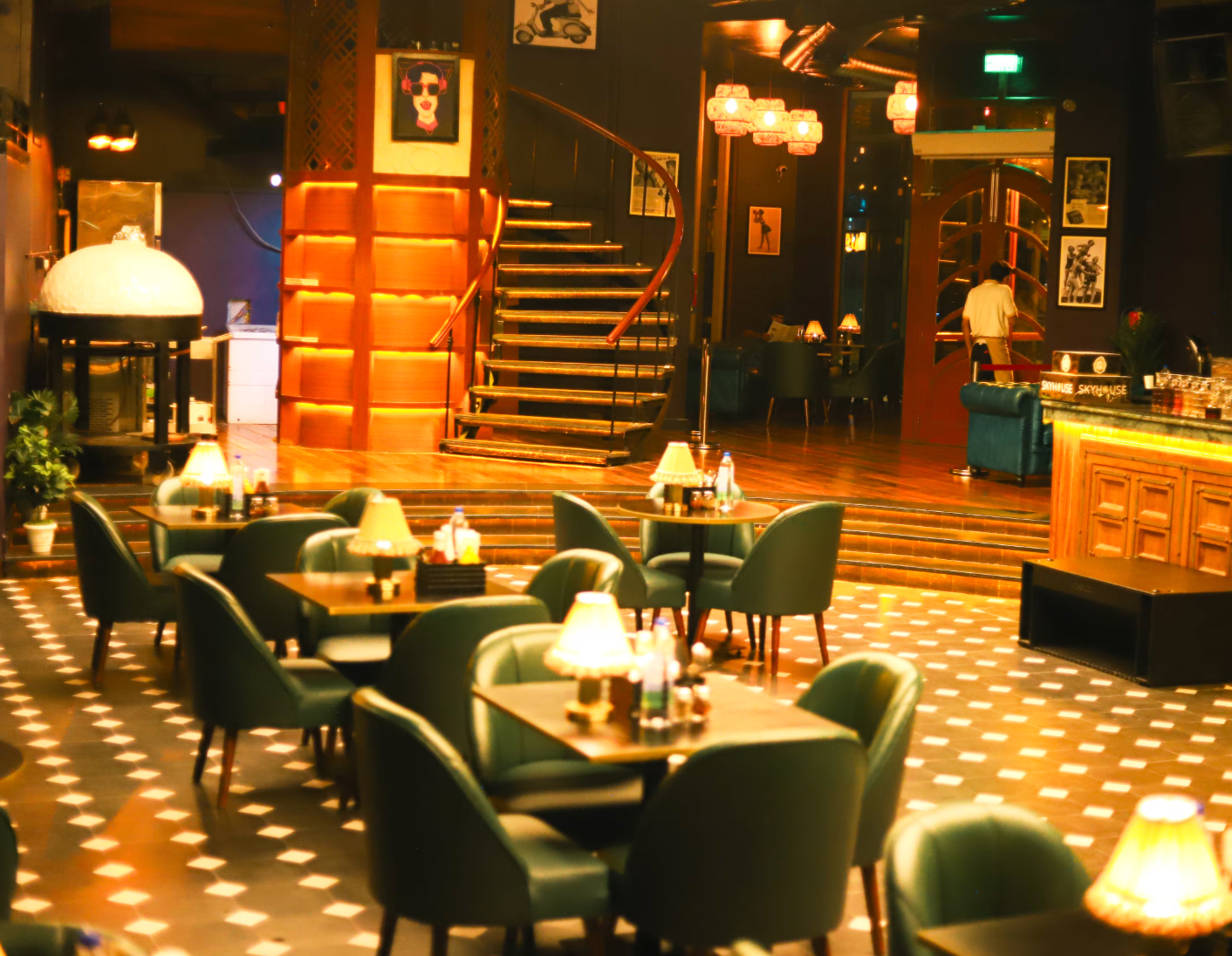

The news of Burgrill’s 10-year milestone isn’t just about the number of burgers sold or outlets opened. The real headline is the how. In an industry where “growth at all costs” is often the mantra, Burgrill’s founders anchored their vision in three non-negotiable pillars: sustainable growth, operational discipline, and strong unit economics .

burgrill
What makes their story particularly relevant for Indian entrepreneurs is their strategic use of a hybrid expansion model (COCO + FOCO) . This approach allowed them to maintain brand integrity while still leveraging the local market knowledge of franchise partners . They used their Company-Owned Company-Operated (COCO) stores as innovation hubs—testing new recipes and processes—while their Franchise-Owned Company-Operated (FOCO) stores accelerated growth with committed local entrepreneurs.
Furthermore, their product strategy offers a critical lesson. Rather than copying Western giants, they focused on differentiation: grilled, flavour-packed burgers specifically designed for the Indian palate, without compromising on global quality standards . This “glocal” approach is exactly what we advocate for at RestaurantCoach.in—building a brand that feels both premium and familiar.
As they step into their next decade, their focus is clear: structured expansion, technology integration, loyalty programs, and “cluster expansion” to grow smarter, not just bigger . This is the blueprint of a business built to last.
Burgrill’s success isn’t just an isolated event; it’s a reflection of major shifts in the Indian QSR market that directly impact your business. Here’s what this news signals for you:
Burgrill successfully filled the gap between cheap fast food and expensive casual dining . This “mass-premium” segment is where Indian consumers are increasingly spending. They want better quality than McDonald’s but at a price point that isn’t intimidating. If you can offer “affordable aspiration,” you can capture a loyal, high-frequency customer base.
The Burgrill hybrid model shows that franchising isn’t just about selling a name; it’s about building a partnership ecosystem. However, the landscape is shifting. Interestingly, while Burgrill used franchising to scale, they are now reportedly pivoting to raise funds and transition to more company-owned stores to maintain control . This highlights a key tension: franchising accelerates reach, but company ownership ensures control and higher margins. You must decide which phase your brand is in.
Competition in the QSR space is brutal. Global giants like McDonald’s and KFC have 100% penetration in metros, and the competition is now eating into growth . To survive, you cannot be a “me-too” brand. Burgrill’s focus on “grilled” (not fried) and Indian flavours gave them a distinct hook. What is your unique hook?
Burgrill proved that you don’t need millions in funding to grow. They focused on making each outlet profitable before opening the next. In our coaching experience, we see too many restaurant owners obsessed with top-line revenue while ignoring store-level profitability. Burgrill’s journey is a testament to the power of positive unit economics. According to industry reports, Jubilant FoodWorks (Domino’s) achieved significant margin lifts by focusing on the variance between ideal and actual food costs—a lesson for every operator .
Burgrill’s co-founder openly admitted that during off-peak seasons, aggregator discounts can make the business “not viable,” which is why they focus on driving 60% of their business from dine-in . This is a critical insight. Over-reliance on Zomato and Swigky is a risk. Building a strong dine-in culture and loyalty program, as Burgrill is now investing in, is essential for long-term health .
Enough analysis—here are 7 specific, actionable steps you can implement this week, inspired by Burgrill’s journey.
Don’t just open outlets randomly. Decide on your expansion model.
Action: Map your current markets. Identify 2-3 prime locations for a “flagship” COCO store where you can test new menu items and train staff. For other Tier-2/3 locations, create a franchisee recruitment playbook. Look for “operator-owners,” not just passive investors, as successful chains like Burger Singh have done .
Action: Conduct a menu audit this month. Identify your top 5 best-sellers. Can you add an “Indianised” twist to a new item? It doesn’t have to be a desi masala burger; it could be a grilled paneer wrap or a chatpata seasoning on your fries. The key is flavour familiarity with a premium feel.
Profitability is often lost in the kitchen, not the boardroom. Unintentional employee behaviors like over-portioning, poor inventory tracking, and lack of portion control are silent profit killers .
Action: Implement a strict First-In, First-Out (FIFO) system. Conduct surprise portion checks this week. If you have 70 outlets or just 1, tracking your Actual Food Cost vs. Ideal Food Cost is non-negotiable. A variance of even 2-3% can wipe out your entire profit margin .
Since aggregator discounts are a reality, make your physical space an experience.
Action: Create a simple loyalty program. It doesn’t need an expensive app—a stamp card works. “Buy 9 burgers, get the 10th free.” Secondly, train your staff to upsell. Suggesting a milkshake or a side of fries can increase the dine-in ticket size by 20-30% .
Burgrill is growing smarter by deepening its presence in existing clusters before jumping to a new state .
Action: If you are in Mumbai, don’t open your next outlet in Bangalore. Open it in a neighbouring suburb. Cluster expansion strengthens your supply chain, reduces logistics costs, and makes brand marketing more efficient.
You don’t need a ₹10 lakh ERP system on day one. But you need data.
Action: Ensure your POS system can tell you your best-selling items by day-part and your table turnover rate. Use this data to schedule staff, reducing labor costs during slow hours. This is the first step toward the kind of operational intelligence that big players use .
Action: Write down your brand’s “reason for being” in one sentence. If it sounds like any other restaurant’s mission, scrap it. Are you the “healthiest” burger joint? The “spiciest”? The “best value”? Pick one attribute and own it.
From my years of coaching restaurant owners, I can tell you that the era of “growth at all costs” is over for the Indian QSR market. Investors are now demanding profitability, and consumers are demanding authenticity.
The brands that will win the next decade are those that adopt what I call the “Burgrill Triad”:
Product Integrity: Food that tastes great and is designed for the local market.
Operational Sanity: Tight control over costs, especially food and labor, ensuring every dish sold contributes to the bottom line .
Financial Maturity: Growing only when the economics of the existing units support it.
The Indian food services market is projected to grow significantly, with the QSR segment leading the charge . But this growth will attract even more competition. We are already seeing homegrown heroes like Burger Singh and Biggies Burger expand aggressively . To stand out, you need a clear vision and an unrelenting focus on execution.
This is where expert guidance makes all the difference. At RestaurantCoach.in, we specialize in helping food entrepreneurs like you build these systems. Whether it’s sharpening your concept, fixing your operational leaks, or planning a profitable expansion, having a coach who has seen the pitfalls can save you years of trial and error.
Burgrill’s 10-year journey is more than just a success story; it’s a validation of the fact that you can build a significant, profitable restaurant brand in India without outside funding. It requires discipline, a deep understanding of your customer, and an obsession with unit-level economics.
The key takeaways are clear: differentiate your product, control your costs ruthlessly, balance your growth model, and protect your dine-in business.
Are you ready to apply these lessons to your restaurant but unsure where to start? Do you have a specific challenge—like high food costs, low footfall, or a stalled expansion plan—that you need help solving?
Need expert guidance to navigate these industry changes? Our restaurant coaching programs at RestaurantCoach.in help food entrepreneurs build profitable, sustainable businesses. We work with you one-on-one to create a customized roadmap for success. [Contact us today] to transform your restaurant vision into reality.
Next Post
The Indian food service industry is witnessing a fascinating shift. Homegrown brands are no longer…
The recent buzz around Indiranagar, Bangalore—where several popular cafes are reportedly restricting laptop usage—has sparked…
As a restaurant business coach working with food entrepreneurs across India, I’ve seen a recurring…
The Indian restaurant industry thrives on energy, passion, and a connection with its customers. So,…

Founded in 2015 by seasoned restaurant professionals who understood the challenges faced by food entrepreneurs in India, Restaurant Coach began as a vision to democratize restaurant success.

Founded in 2015 by seasoned restaurant professionals who understood the challenges faced by food entrepreneurs in India, Restaurant Coach began as a vision to democratize restaurant success. After witnessing countless talented chefs and passionate food lovers struggle with business aspects of restaurant operations, our founders decided to bridge the gap between culinary passion and business acumen.