Demos
Demos  Colors
  Docs
Docs  Support
Home 15
Newly Added


The Indian Quick Service Restaurant (QSR) landscape just witnessed a landmark moment. Homegrown brand Burger Singh
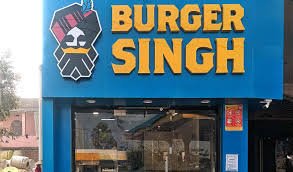
burger singh
has secured ₹82 Crore in Series B funding, led by Artal Asia, valuing the company at a staggering ₹520 Crore .
As restaurant coaches in India, we at RestaurantCoach.in see this as more than just a funding announcement. It is a clear signal that the rules of the game are changing. With over 200 stores already operating and FY25 revenues hitting ₹117 Crore, Burger Singh is doubling down on a “franchise-first” model .
But what does this mean for you—the independent restaurant owner, the budding entrepreneur, or the small cafe operator in Mumbai, Delhi, or Gurugram?
This news isn’t just about one brand’s success; it is a blueprint for the future of the Indian food business. In this article, we will dissect this development, explore how it impacts your bottom line, and provide you with a concrete action plan to ensure your restaurant not only survives but thrives in this evolving ecosystem.
Let’s break down what actually happened. Burger Singh isn’t just taking this money to open more company-owned outlets. Instead, they are building what they call “India’s most scalable franchise-first restaurant growth platform” .
Kabir Jeet Singh, Founder and CEO, put it perfectly: “India has no shortage of entrepreneurs. What it lacks is enough high-quality operating platforms that allow those entrepreneurs to succeed… We are not just opening outlets; we are building the platform Indian entrepreneurs can plug into.” .
The ₹82 Crore infusion will be deployed to strengthen:
Supply Chain Integration: Ensuring a “Singh” fries tastes the same in Amritsar as it does in Bengaluru.
Training Systems: Creating standard operating procedures (SOPs) that are easy to replicate.
Tech and Store Design: Building the digital infrastructure to support franchise partners .
This is a significant shift. For decades, organized QSR growth in India was driven by massive master franchise arrangements (like Domino‘s or KFC) or company-owned burners. Burger Singh is betting on the local entrepreneur—you—by providing the scaffolding to succeed.
You might be thinking, “I don’t own a Burger Singh, so why should I care?” Here is why this news directly affects your business strategy.
The days of competing with just the “dhaba” next door or a standalone restaurant are fading. Brands like Burger Singh are using institutional money to create professional operating platforms. This means your competition is becoming faster, more consistent, and more data-driven. If you are a standalone cafe in Pune, you are now indirectly competing with a franchisee who has access to a central kitchen, a national supply chain, and a marketing team.
Burger Singh’s growth is not just limited to metros. They are aggressively moving into emerging cities. Data shows that Tier-2 and Tier-3 markets are the new goldmine for QSRs, driven by rising disposable incomes and aspirational dining habits . Rents in these areas can be as low as ₹20-50 per square foot compared to ₹150+ in metros .
The Impact: If you are an established player in a Tier-2 city, a standardized, well-funded brand might soon open next door. If you are an entrepreneur in these cities, it validates that now is the perfect time to enter the market.
The biggest takeaway from this funding is the validation of the “Platform” model. In the past, opening a restaurant meant reinventing the wheel—finding your own suppliers, designing your own kitchen layout, and creating your own recipes.
Now, brands like Burger Singh are offering a “plug-and-play” ecosystem. This lowers the barrier to entry for new restaurateurs but also raises the bar on professionalism. You are no longer just selling food; you are managing a tech-enabled business unit.
So, how do you, as a smart restaurant owner, respond to this market shift? Based on our coaching experience at RestaurantCoach.in, here are five immediate actions you should take.
Burger Singh is getting funding to build systems. They are investing in training manuals, operating discipline, and supply chain tech .
Your Action: Sit down this week and write down your three most critical processes (e.g., “How to make your signature dish,” “How to handle a delivery rush,” “How to onboard a new staff member”).
Next Step: If you can’t write it down, you can’t scale it. Create simple checklists. This is the first step to building your own “platform,” even if you only have one outlet.
While the big boys build scale, you have agility. Burger Singh succeeds because of Indianised products like “Udta Punjab 2.0” . You can do this even better at a hyper-local level.
Your Action: Look at the top 5 best-sellers in your area on Swiggy/Zomato. Can you create a “Coimbatore Special” or a “Jaipur Paneer” version of your best dish?
Data Point: Research suggests a 40% uplift in trial rates when menus mirror local staples . Use this to your advantage.
If you are a multi-unit operator or planning to expand, look at the Franchise-Owned, Company-Managed (FOCM) model . This is where you own the brand and the IP, but a franchise partner invests, and you manage operations.
Your Action: Calculate your current store EBITDA. Can a franchisee make a healthy return if you take a management fee? If the math doesn’t work for them, it won’t work for you.
The market is dynamic. Recently, India faced LPG supply constraints that hurt smaller, unorganized players, while QSRs with electric equipment sailed through .
Your Action: Evaluate your kitchen equipment. Can you shift high-volume items to electric or hybrid models? This insulates you from fuel price shocks and supply chain disruptions, making your business more robust and “franchise-ready.”
Big brands are using AI and data to forecast demand. You don’t need a ₹82 Cr fund to do the basics.
Your Action: Ensure your billing software tracks what sells and what gets wasted. If you’re not using a cloud-based POS system that gives you reports on your phone, you’re flying blind.
At RestaurantCoach.in, we’ve helped dozens of restaurant owners navigate challenges just like these. We see a future where the Indian restaurant industry bifurcates into two distinct categories: Platform Brands and Experiential Niches.
Platform Brands (Like Burger Singh): These are scalable, consistent, and system-driven. They will dominate the “fill the stomach” and convenience segments.
Experiential Niches (That’s You): This is where the independent restaurateur wins. You cannot beat the system at its own game by trying to be a cheaper burger joint. You win by offering an experience they cannot replicate—unique ambiance, a specific regional cuisine your family is famous for, or a personal connection with your customers.
Your job is to build a “moat.” A moat is what protects your business from competition.
For a franchise-first platform, the moat is capital and consistency. For you, the moat is unique identity and agility.
A Word of Caution: The biggest mistake we see is the “Me-Too” trap. When a brand like Burger Singh raises funding, everyone wants to open a burger shop. Don’t. Instead, look at what they are not doing. Are they ignoring traditional thalis? Are they weak in authentic South Indian breakfast? That is your opening.
Burger Singh’s ₹82 Crore funding is a victory for the entire “Brand India” restaurant story. It proves that with the right systems, Indian entrepreneurs can build world-class QSR platforms.
For you, the independent restaurant owner, it is a wake-up call to systemize your operations, leverage your local advantage, and build a business that has value beyond just your four walls.
The future of food business in India is bright, but it belongs to the prepared.
Need expert guidance to navigate these industry changes? Our restaurant coaching programs at RestaurantCoach.in help food entrepreneurs build profitable, sustainable businesses. Whether you want to systemize your existing restaurant or launch a new scalable concept, let’s talk. [Contact us today] to transform your restaurant vision into reality.
Previous Post
Next Post
The Indian food service industry is witnessing a fascinating shift. Homegrown brands are no longer…
The recent buzz around Indiranagar, Bangalore—where several popular cafes are reportedly restricting laptop usage—has sparked…
As a restaurant business coach working with food entrepreneurs across India, I’ve seen a recurring…
The Indian restaurant industry thrives on energy, passion, and a connection with its customers. So,…

Founded in 2015 by seasoned restaurant professionals who understood the challenges faced by food entrepreneurs in India, Restaurant Coach began as a vision to democratize restaurant success.

Founded in 2015 by seasoned restaurant professionals who understood the challenges faced by food entrepreneurs in India, Restaurant Coach began as a vision to democratize restaurant success. After witnessing countless talented chefs and passionate food lovers struggle with business aspects of restaurant operations, our founders decided to bridge the gap between culinary passion and business acumen.