Demos
Demos  Colors
  Docs
Docs  Support
Home 15
Newly Added


If you’re running a restaurant in India today, you’re not just competing with the eatery across the street. You’re competing with evolving consumer habits, strategic real estate decisions by major brands, and the shifting definition of “convenience.” The recent news that Bercos, The Barbeque Company, and Domino’s have leased significant space at SKA Arcadia in Wave City, Ghaziabad, is not just a real estate update. It’s a strategic playbook being executed in plain sight.
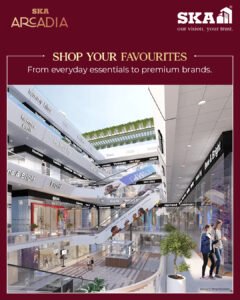
ska 1
As your restaurant coach, I see this as a critical case study. When giants like these invest thousands of square feet in a “neighbourhood-focused retail centre,” they’re signaling where the market is heading. This move impacts every independent restaurateur, QSR operator, cloud kitchen founder, and food entrepreneur in India. Let’s break down why this news matters far beyond Ghaziabad and what you must do to ensure your restaurant isn’t left behind.
Let’s first understand the move in simple terms. SKA Group, a developer, has secured three established food brands for its commercial project, SKA Arcadia, within the growing Wave City township.
The Players: Bercos (5,859 sq ft), The Barbeque Company (6,948 sq ft), and Domino’s (1,800 sq ft).
The Location: A prominent spot at the entrance of Wave City on NH-24, serving residents of Ghaziabad, Indirapuram, and daily commuters.
The Strategy: This isn’t a high-street or a mega-mall. It’s a “neighbourhood-focused retail centre” designed for daily needs and convenience. They already have an anchor like Haldiram’s, and are now adding a mix of mid-sized dine-in (Bercos, BBQ Co.) and delivery-focused QSR (Domino’s).
The developer’s statement is telling: they aim to create a “vibrant ecosystem” with “everyday convenience” and “quality dining.” What they’re really building is a captive ecosystem for food consumption. Residents don’t need to travel far; their weekly dining-out and ordering-in needs are met within their township. This is the modern galli or market, but organized, branded, and strategically curated.
You might think, “This is a large developer and big brands. What does it have to do with my 40-seater restaurant in Pune or my cloud kitchen in Bangalore?”
Everything.
This trend encapsulates the three major shifts in the Indian foodservice landscape:
The Rise of the Captive Catchment: Restaurants are no longer just destination spots. Success is increasingly tied to being hyper-relevant to a specific, densely populated catchment—a residential township, a university area, a large office complex. Your marketing radius is shrinking, but the demand within it is deepening.
The Convenience Economy is King: The project’s focus on “daily needs” and “convenience-led retail” highlights that consumers prioritize ease and time-saving. This isn’t just about location; it’s about offering frictionless experiences—quick dine-in, efficient takeaway, and seamless delivery.
The Ecosystem over Isolation: A single restaurant standing alone faces an uphill battle. Being part of a cluster or a “food destination” (even a small one) drives collective footfall. These brands chose SKA Arcadia not in isolation, but because Haldiram’s is already there pulling in crowds. Synergy is a strategy.
For High Street & Mall Restaurants: You may face increased competition from these convenient, closer-to-home options. Your value proposition must be strong enough to pull customers away from their immediate neighbourhood.
For Cloud Kitchens & QSRs: Your location strategy must evolve. Being near residential hubs, not just cheap industrial areas, is crucial for faster delivery times and lower costs. Domino’s taking 1,800 sq ft in a residential project is a masterclass in delivery-centric location planning.
For Aspiring Food Entrepreneurs: Your business plan must address “Where is your captive catchment?” and “How are you integrating convenience?”
For All Restaurant Owners: It raises the bar. You’re competing with the operational excellence, branding, and deep pockets of national chains. Your differentiator must be crystal clear.
Don’t just watch the trend—adapt to it. Here is your action plan, derived from the core strategies visible in this news.
1. Redefine Your “Location” Beyond an Address.
Your location is your delivery radius and your community. Map out your primary 3-5 km radius. Who lives there? What do they do? Use tools like Google My Business insights and Swiggy/Zomato backend data to understand your true catchment. At RestaurantCoach.in, we help owners analyze this data to make informed marketing decisions.
2. Build a Hyper-Local Community, Not Just a Customer List.
Engage deeply within your neighbourhood. Sponsor local events, collaborate with resident welfare associations (RWAs), run targeted social media ads for your postal code. Become the beloved local expert, not just a restaurant.
3. Master the Multi-Format Model.
Look at the tenant mix: dine-in (BBQ Co.), casual dining (Bercos), and delivery (Domino’s). Can your business adapt?
Can your fine-dining place offer a simplified, delivery-friendly “home feast” menu?
Can your cloud kitchen experiment with a small, grab-and-go counter in a residential complex?
Audit your revenue streams: Dine-in, Takeaway, Delivery, Catering. Are you over-reliant on one?
4. Forge Strategic Alliances (The Ecosystem Play).
You don’t need a developer to create an ecosystem. Partner with complementary local businesses—a dessert shop, a chaat stall, a microbrewery. Create combo offers. Cross-promote. At RestaurantCoach.in, our coaching programs often involve strategizing such local partnerships that drive mutual growth.
5. Obsess Over Operational Convenience.
Review every touchpoint:
Is your menu easy to order from online? (Clear descriptions, good photos)
Is your packaging travel-friendly and brand-positive?
Is your pick-up process for takeaway swift?
Are you on all the relevant delivery and discovery platforms?
6. Conduct a “Brand Relevance” Audit.
Ask brutally honest questions: Does your brand resonate with the families, young professionals, or students in your immediate vicinity? Does your pricing match the catchment’s spending power? The brands at SKA Arcadia were chosen for their wide demographic appeal. Does yours need tweaking?
7. Future-Proof Your Real Estate Decisions.
If you’re looking to open a new outlet, prioritize emerging residential townships and mixed-use developments with high future occupancy. Look for places where “everyday convenience” is the selling point. The footfall will follow.
In our years of coaching at RestaurantCoach.in, a constant theme among successful restaurateurs is anticipatory adaptation. They don’t react to trends; they prepare for them.
This SKA Arcadia story is a symptom of a larger shift: India’s consumption is becoming organized, localized, and experience-driven. The unorganized dhaba now competes with a branded one. The local bakery competes with a chain.
The winning formula now is “Community-Centric Convenience.” Your food must be excellent, but that’s the price of entry. Your real competitive edge comes from being an indispensable, convenient, and loved part of your customer’s daily life.
We’ve helped clients pivot from being just a restaurant to becoming a neighbourhood food hub—by adding breakfast for school-goers, tiffin services for working families, or special Sunday brunches for the community. This is the kind of strategic thinking that insulates you from competition, big or small.
The Indian culinary landscape is about to witness a seismic shift. When a chef of…
From Restaurant to Retail: Turning Your Signature Flavors Into a New Revenue Stream In today’s…
Dreaming of launching your own restaurant but worried about the massive capital required? You’re not…
If you’re running a restaurant, bar, or lounge in India’s competitive hospitality landscape, a major…

Founded in 2015 by seasoned restaurant professionals who understood the challenges faced by food entrepreneurs in India, Restaurant Coach began as a vision to democratize restaurant success.

Founded in 2015 by seasoned restaurant professionals who understood the challenges faced by food entrepreneurs in India, Restaurant Coach began as a vision to democratize restaurant success. After witnessing countless talented chefs and passionate food lovers struggle with business aspects of restaurant operations, our founders decided to bridge the gap between culinary passion and business acumen.