Demos
Demos  Colors
  Docs
Docs  Support
Home 15
Newly Added



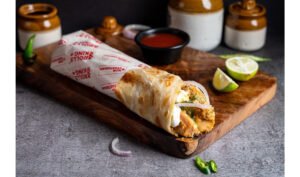
The Indian food service industry is witnessing a fascinating shift. Homegrown brands are no longer just surviving; they are strategizing to conquer. The recent news of Rolls King’s ambitious plan to expand from 135 to over 200 stores across India, with a sharp eye on global markets in the next two years, is a testament to this evolution.
rolls king
But what does this mean for you, the restaurant owner, the food entrepreneur, or the cloud kitchen operator reading this? It’s not just a news headline. It is a masterclass in strategic growth, operational efficiency, and brand positioning.
At RestaurantCoach.in, we’ve spent years helping Indian restaurant owners navigate the complexities of this industry. We don’t just look at the news; we analyze the blueprint behind it. Today, we are going to dissect the Rolls King journey, not as a spectator, but as a coach, extracting actionable lessons you can apply to your own food business starting tomorrow.
Let’s rewind to 2011. Before Zomato and Swiggy became household names, a simple food truck in Noida identified a gap in the market. The founders weren’t armed with complex data sheets; they were driven by an instinctive understanding of the Indian consumer’s need for quick, hygienic, and tasty food on the go. That was the humble beginning of Rolls King.
Their breakthrough didn’t come from a marketing blitz, but from a classic validation of product-market fit. When employees at DLF Mall of India noticed the food truck’s consistency and popularity, they offered the brand a permanent food court space. This single step propelled them from a mobile unit to an organized QSR.
Over the years, Rolls King has strategically navigated the market. They initially scaled through franchising but made a crucial pivot during the pandemic—buying back franchises to regain control over quality. Today, with 70% of their revenue coming from delivery platforms and a streamlined kitchen prep time of just six minutes, they have mastered the art of the “grab-and-go” model. Their vision is clear: to become the undisputed king of Indian-flavored fast food, first in India and then globally in markets like Europe and the Middle East.
This isn’t just a success story; it’s a strategic roadmap. For Indian restaurant owners, this news highlights several critical shifts in the market that you must understand.
One of the most profound lessons from the Rolls King story is their disciplined focus. As Arjun Toor, the Co-Founder, wisely put it, they don’t want to be the prince of five categories; they want to be the king of one.
How this impacts you: In our coaching sessions at RestaurantCoach.in, we often see entrepreneurs making the mistake of trying to be everything to everyone. A café owner adds biryani to the menu; a South Indian restaurant starts serving pizza. This dilutes your brand and complicates your operations.
Rolls King has doubled down on the “grab-and-go” segment. They innovate within this space (momo rolls, pizza rolls) but resist the temptation to enter unrelated categories like burgers or full meals. This clarity allows for operational mastery and a strong, unshakeable brand identity in the consumer’s mind.
This is a counter-intuitive lesson in a world obsessed with scaling fast. Rolls King intentionally paused franchise growth and started buying back existing ones. Why? To maintain quality and consistency.
How this impacts you: Franchising can be a great way to expand, but it comes with significant risk. If your backend processes, training modules, and quality control systems aren’t rock-solid, you’re not building a brand; you’re just opening more locations that will eventually dilute your reputation.
Rolls King’s move to acquire company-owned stores (the majority of their 135+ outlets) allowed them to perfect their supply chain and operations before scaling up again. This is a crucial lesson: control comes before scale.
With 70% of their revenue coming from online delivery, Rolls King has not just adapted to the digital shift; they’ve built their operations around it. Their “six-minute kitchen prep time” is a direct response to the delivery economy’s demands.
How this impacts you: This isn’t about just listing your restaurant on Zomato or Swiggy. It’s about designing a menu, a kitchen layout, and a packaging strategy that is optimized for delivery. If your average delivery time is 45-50 minutes because your kitchen isn’t designed for it, you will lose to competitors like Rolls King who have optimized their workflow.
As a restaurant business coach, I believe in practical advice. Here are seven specific steps you can take, inspired by the Rolls King journey, to strengthen your own restaurant or cloud kitchen.
Identify Your “One Category”
Action: Look at your menu. What is your best-selling, most profitable item? What do your customers love you for? Double down on that. If you’re a biryani place, be the best biryani place. Don’t start selling pasta. If you’re a café, own the coffee and sandwich space.
Next Step: Analyze your sales data for the last three months. Identify your top 3 revenue-generating items. Consider removing your bottom 5 items to streamline operations.
Perfect Your Delivery Kitchen Flow
Action: Time your kitchen operations. How long does it take to prepare your top-selling items from order to packaging? Aim for a 10-minute prep time, which is a gold standard for delivery-dominant QSRs.
Next Step: Conduct a time-motion study in your kitchen. Create a separate assembly line for delivery orders if possible, just like Rolls King has optimized for its 25-minute delivery promise.
Audit Your Supply Chain
Action: Rolls King’s strength lies in its in-house supply chain. You might not have the scale for a full-fledged production unit, but you can audit your current suppliers. Are they reliable? Is the quality consistent across all your outlets (if you have multiple)?
Next Step: List your top 10 ingredients and identify at least one backup supplier for each. This ensures you’re never caught off guard by supply chain disruptions.
Evaluate Your Franchise Model (If You Have One)
Action: If you are currently franchising, conduct a quality audit of all your franchise partners. Are they maintaining your brand standards? If not, consider the Rolls King approach—pause new franchises and work on a buyback or restructuring plan for the underperforming ones.
Next Step: Develop a comprehensive operations manual for your franchisees if you don’t have one. This is your primary tool for quality control.
Invest in Your “Intelligence”
Action: Rolls King is building an internal system called “Rolls King Intelligence” to connect finance, inventory, and sales. You don’t need a custom system, but you need technology. Are you using a cloud-based POS that integrates with your accounting software?
Next Step: If you’re still managing inventory on Excel sheets, invest in a restaurant management software that can automate your stock levels, identify shrinkage, and connect to your sales data.
Optimize Your Value Proposition
Action: Rolls King differentiates with larger portion sizes at competitive prices. What is your competitive edge? Is it portion size, taste, price, or ambiance? You need to clearly define it and communicate it.
Next Step: Compare your best-selling dish with a direct competitor. Is your portion size visibly larger? Is your price point justified? Adjust your offer to create a clear “value” statement for your customer.
Embrace Gradual, Sustainable Growth
Action: Rolls King plans for 20-25% annual growth, accelerating only if they get external funding. Avoid the trap of hyper-growth without the systems to support it. Build a sustainable growth model.
Next Step: Set a realistic growth target for the next year that aligns with your current operational capacity. Focus on profitability over vanity metrics like the number of outlets.
From my coaching perspective, the Rolls King story is a microcosm of where the Indian QSR industry is heading. We are moving from a “me-too” era to an “own-your-space” era.
The days of launching a generic multi-cuisine restaurant are numbered. The future belongs to brands with a distinct identity, a focused menu, and an operationally excellent backend. The Indian consumer is becoming more discerning. They want quality, speed, and consistency, whether they are eating at a food truck or a high-street outlet.
The ambition to take “kathi rolls to the world” is particularly exciting. It signals a new wave of Indian food brands that are confident enough to globalize their formats. We have seen Indian cuisine succeed globally in the dine-in format. The next decade will be about Indian QSR brands replicating the global success of formats like McDonald’s and Subway, but with a desi twist.
This is why at RestaurantCoach.in, we emphasize building a business that is not just taste-driven but also system-driven. Your recipe is your asset, but your systems—for supply chain, training, and technology—are what turn that asset into a scalable, profitable business.
The Rolls King expansion is more than just business news; it’s a source of inspiration and a practical guide. It proves that with a clear vision, operational discipline, and a deep understanding of the Indian consumer, homegrown brands can not only dominate the domestic market but also have global aspirations.
Don’t just read about their success—learn from their strategy. Whether you are running a single cloud kitchen in Mumbai or a chain of cafés in Delhi, the principles remain the same: own your category, master your operations, and build for the long term.
Need expert guidance to navigate these industry changes? Our restaurant coaching programs at RestaurantCoach.in help food entrepreneurs like you build profitable, sustainable businesses. We don’t just give advice; we partner with you to turn your restaurant vision into reality. Contact us today for a personalized consultation and let’s build your restaurant blueprint together.
Previous Post
Next Post
The recent buzz around Indiranagar, Bangalore—where several popular cafes are reportedly restricting laptop usage—has sparked…
As a restaurant business coach working with food entrepreneurs across India, I’ve seen a recurring…
The Indian restaurant industry thrives on energy, passion, and a connection with its customers. So,…

Founded in 2015 by seasoned restaurant professionals who understood the challenges faced by food entrepreneurs in India, Restaurant Coach began as a vision to democratize restaurant success.

Founded in 2015 by seasoned restaurant professionals who understood the challenges faced by food entrepreneurs in India, Restaurant Coach began as a vision to democratize restaurant success. After witnessing countless talented chefs and passionate food lovers struggle with business aspects of restaurant operations, our founders decided to bridge the gap between culinary passion and business acumen.