Demos
Demos  Colors
  Docs
Docs  Support
Home 15
Newly Added


The news is out: Rajya Sabha MP Raghav Chadha has urged the government to expand the Udan Yatri Cafe initiative across more Indian airports. For the traveling public, this is a win—a cup of tea for ₹10 and a samosa for ₹20 is a dream come true in an environment where a bottle of water can cost a small fortune.
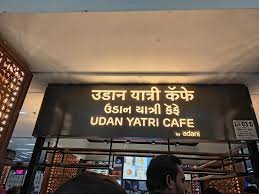
udan yatri cafe
But if you’re a restaurant owner reading this in your kitchen office in Mumbai, Delhi, or Bangalore, you probably aren’t celebrating. You’re thinking, “How does a subsidized government cafe in a secure zone affect my standalone restaurant?”
At RestaurantCoach.in, we’ve spent years helping food entrepreneurs navigate market disruptions. While this news might seem isolated to the aviation sector, it is actually a powerful indicator of where the Indian food and beverage industry is heading. The “Udan Yatri” model is more than a news story; it’s a blueprint for value that will reshape customer expectations across the board.
In this post, we’ll break down the news, analyze its ripple effect on your business, and give you a concrete action plan to not just survive, but thrive, in this new value-conscious era.
To recap, Aam Aadmi Party MP Raghav Chadha recently took to the Rajya Sabha to highlight a gap in a popular government scheme. He praised the Udan Yatri Cafes—the Ministry of Civil Aviation’s initiative to provide affordable, high-quality food at airports .
However, Chadha pointed out a critical “ground reality” issue: these cafes are currently too few and located in the wrong place [citation:original]. Because they are situated before the security check, passengers who have cleared security (where they usually wait to board) cannot access them. He also noted long queues and limited menus, which restrict accessibility during peak hours [citation:original].
His solution? Open more cafes, and likely, position them more strategically. The government’s intent is clear: to democratize airport dining, proving that “affordable” does not have to mean “unavailable.”
You might be thinking, “I don’t have a tender at the airport. Why does this matter to my biryani joint or my cloud kitchen?”
Here is the hard truth we share with our coaching clients at RestaurantCoach.in: This changes the baseline. Here’s how:
For years, airport food was the exception—a place where high prices were expected due to high rents. The Udan Yatri Cafe smashes that expectation. It creates a psychological anchor. When a government-backed entity declares that a cup of tea has a “fair price” of ₹10, the customer’s value perception shifts . Suddenly, the ₹30 tea at the local cafe feels like a premium that needs to be justified. You are no longer just competing with the restaurant next door; you are competing with a government-set benchmark of value.
The Udan Yatri model is a classic high-volume, low-margin operation, backed by the scale of the Airports Authority of India . The Kolkata Udan Yatri Cafe reportedly served 27,000 passengers in its first month . That’s the power of volume. This model proves that Indian consumers are starving for affordable, hygienic options. If you are a QSR or a fast-food operator, this confirms that your portion sizes and pricing are under a microscope.
This isn’t just a one-off cafe. It’s a scalable model. If the government can do this at airports, what stops a similar model at railway stations (already happening), bus depots, or even government office complexes? This signals that deep-pocketed institutional players are willing to enter the food business with a mandate for affordability, potentially eating into the customer base of local vendors .
If a customer can get a ₹10 tea at the airport, why would they pay ₹50 at your restaurant? The answer is Experience. The Udan Yatri Cafe wins on price and basic utility. Your restaurant must win on ambiance, service, consistency, and that “third place” feeling. The gap between the “cheap option” and your offering must be so wide in terms of quality and experience that the customer happily pays the premium.
Feeling the heat? Good. Pressure creates diamonds. Here are 7 actionable steps you can implement starting tomorrow to build a business that can compete with any price-driven competitor.
Don’t try to beat them on every price point. Instead, adopt a barbell strategy. On one end of the bar, have 2-3 “loss leader” items that are aggressively priced (maybe a simple snack or a small tea) to get people in the door. On the other end, have your high-margin, premium signature dishes. The middle of the menu (mid-range items) is often where profits get squeezed. Let the affordable items act as your marketing, and the premium items act as your profit center .
Walk into your restaurant as if you are a customer. Better yet, bring a friend who has never been there.
Is the restroom spotless?
Does the staff greet you within 30 seconds?
Is the music at the right volume?
Is the lighting flattering?
These are the things a basic, high-volume cafe cannot offer. If your basics are not perfect, you leave the door open for customers to choose the cheaper option. Train your team relentlessly on service standards .
A government cafe can subsidize costs because it operates on a public service mandate. You cannot. Therefore, your operations must be perfect.
Action: Conduct a weekly food cost audit. Are your portions consistent? Is there waste in the kitchen? Are you tracking spoilage?
Pro Tip: We’ve helped RestaurantCoach.in clients save 2-5% on costs simply by implementing standard operating procedures (SOPs) for recipe adherence. That 5% could be the difference between profit and loss.
The Udan Yatri Cafe relies on massive, impersonal footfall. You need to rely on loyalty. Stop over-relying on Zomato and Swiggy, where your margins are eroded by commissions.
Action: Start a simple WhatsApp broadcast list or a loyalty program. Offer a “WhatsApp Exclusive” discount—something small, like a free drink with a meal. This brings customers directly to you and builds a relationship that a transactional airport cafe cannot replicate.
You cannot trademark a ₹10 tea. But you can trademark your unique recipe, your ambiance, or your story.
Action: Develop one dish that is undeniably yours. It could be your grandmother’s recipe, a unique fusion, or a signature cooking style. When you have a “hero product,” price comparison becomes secondary to craving .
Airport cafes win on convenience. Your restaurant can win on speed, especially during lunch rushes.
Action: Analyze your “kitchen ticket times.” Can you guarantee a “15-minute meal” for office-goers? Speed of service is a form of value that customers will pay for.
Your waitstaff must be able to articulate why your dish costs what it does. Is it the imported cheese? The grass-fed meat? The organic spices? When a customer hesitates at the price, a well-trained server can add value through storytelling.
Action: Hold a weekly tasting where staff learn the story and ingredients of every dish. An informed server is your best defense against price sensitivity .
In my years of coaching restaurant owners across India, from the QSRs of Gurugram to the fine-dining spots of Bandra, one lesson remains constant: You cannot save your way to prosperity.
The Udan Yatri Cafe is a fantastic initiative for the “aam aadmi.” But for us in the restaurant business, it is a wake-up call. It signals the death of the “location tax”—the idea that you can charge more just because you are in a high-traffic area.
The future belongs to restaurants that understand experiential dining. We are seeing this in our coaching work. The restaurants that are thriving in 2026 aren’t the ones with the lowest prices; they are the ones with the highest “emotional connection.” They are the ones where the owner knows the regulars by name, where the playlist is curated, and where the food tells a story.
The customer who visits your restaurant is looking for more than just calories. They are looking for a break from their routine, a place to connect, and a memory to savor. A subsidized cafe in an airport terminal cannot offer that. But you can.
This is why, at RestaurantCoach.in, our entire methodology is built around systems that free you up to focus on what matters: the guest. When your kitchen runs like a well-oiled machine, you have the mental space to be a gracious host. When your costs are under control, you have the confidence to invest in that small renovation or that new staff uniform that elevates the experience.
Raghav Chadha’s push for more Udan Yatri Cafes is not just political news; it’s a market signal. It tells us that the Indian consumer is hungry for value, and that “value” is being redefined.
Your job as a restaurant owner is not to compete on price, but to compete on value. By tightening your operations, training your team, and focusing relentlessly on the customer experience, you can build a business that is immune to price wars.
If you’re feeling overwhelmed by rising costs, new competitors, and changing customer habits, you don’t have to figure it out alone.
Need expert guidance to navigate these industry changes? Our restaurant coaching programs at RestaurantCoach.in are designed specifically for Indian food entrepreneurs who want to build profitable, sustainable, and fulfilling businesses. We’ll help you build the systems, strategies, and mindset to turn challenges into your biggest growth opportunities.
[Click here to book your free 30-minute restaurant strategy call] and let’s transform your restaurant vision into reality.
Previous Post
The Indian food service industry is witnessing a fascinating shift. Homegrown brands are no longer…
The recent buzz around Indiranagar, Bangalore—where several popular cafes are reportedly restricting laptop usage—has sparked…
As a restaurant business coach working with food entrepreneurs across India, I’ve seen a recurring…
The Indian restaurant industry thrives on energy, passion, and a connection with its customers. So,…

Founded in 2015 by seasoned restaurant professionals who understood the challenges faced by food entrepreneurs in India, Restaurant Coach began as a vision to democratize restaurant success.

Founded in 2015 by seasoned restaurant professionals who understood the challenges faced by food entrepreneurs in India, Restaurant Coach began as a vision to democratize restaurant success. After witnessing countless talented chefs and passionate food lovers struggle with business aspects of restaurant operations, our founders decided to bridge the gap between culinary passion and business acumen.