Demos
Demos  Colors
  Docs
Docs  Support
Home 15
Newly Added


This Women’s Day, the narrative around India’s food and beverage industry shifted significantly. Swiggy’s second annual “She The Change” awards, themed “From Vision to Venture,” recently celebrated 28 remarkable women who are redefining our culinary landscape—from Aditi Dugar of the acclaimed Masque restaurant to Alina Alam of the impactful Mitti Cafe .
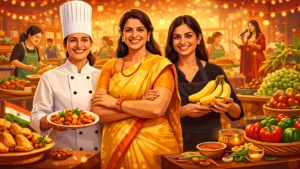
women
As a restaurant coach, I see this not just as a heartwarming news piece, but as a powerful data point. It signals a fundamental shift in the industry’s structure, consumer perception, and entrepreneurial opportunity. At RestaurantCoach.in, we’ve watched this evolution closely. The rise of women-led businesses is injecting new creativity, resilience, and community focus into the market—qualities that every restaurant owner, regardless of gender, needs to study and emulate.
In this post, we’ll break down what this “women-led revolution” means for your bottom line and provide you with a concrete action plan to adapt and thrive in this changing environment.
The event, graced by Union Minister Gajendra Singh Shekhawat and Swiggy CEO Sriharsha Majety, wasn’t just a feel-good ceremony. It was a recognition of a massive economic wave. Currently, over 70,000 women-run restaurants are listed on Swiggy alone . The platform has even committed to onboarding 1,00,000 women-led outlets in the coming years and is actively working to onboard 100,000 female delivery partners by 2030 .
Minister Shekhawat highlighted a crucial point at the event: India is on the cusp of the “industrialisation of its food.” With lifestyles changing and less cooking happening at home, the opportunity for food startups and entrepreneurs is exploding . He specifically pointed to women-led businesses as essential drivers of inclusive economic growth, especially beyond major metropolitan cities.
This isn’t just happening in fine dining. We’re seeing it across the board:
Hyper-local Empowerment: Brands like “Nukkad by The Chatpata Affair” are rolling out franchise models where 80-90% of kiosks are operated by women, generating up to ₹3 lakh in monthly revenue per outlet in residential communities .
Systemic Support: Initiatives like the aahaar bazaar challenge are providing ₹5.25 crore in funding to help home-based women “foodpreneurs” formalize their businesses, upgrade packaging, and access wider markets .
These stories of resilience and creativity are changing how India eats and does business.
You might be thinking, “I’m not a woman entrepreneur, how does this affect me?” The answer is: directly and immediately. Here is how this shift is changing the game for all restaurant owners in India:
Today’s consumers, especially Gen Z and Millennials, don’t just buy food; they buy stories and values. Mitti Cafe, which employs people with disabilities, isn’t successful just because of its food, but because of its powerful mission. Your restaurant now needs a “why” that resonates with the community. The “performative dining” trend is fading, replaced by a demand for authenticity and emotional connection .
As more women enter the workforce as chefs, managers, and eventually, owners, the talent pool diversifies. Restaurants that create inclusive, supportive environments will win the war for talent. This means re-evaluating your HR policies, ensuring safe working conditions, and offering growth paths that appeal to a broader demographic.
Women entrepreneurs are particularly adept at identifying and serving community needs—whether it’s a kiosk inside a housing society or a cloud kitchen focused on healthy tiffin services. This means the “catch-all” multi-cuisine restaurant is under more threat than ever. Specialized, community-focused concepts are where the growth is.
Minister Shekhawat emphasized the need for food processing and packaging to meet international tastes . As more women-led startups enter the packaged foods space, they are driving innovation in local sourcing, supply chain transparency, and quality control—trends that will benefit the entire restaurant ecosystem.
So, how do you, as a restaurant owner, capitalize on this shift? Based on our coaching experience at RestaurantCoach.in, here are 7 actionable steps you can take right now:
1. Audit Your “Why” and Tell Your Story
Action: Sit down and define your restaurant’s core purpose beyond making money. What community do you serve? What problem do you solve?
Next Step: Weave this purpose into your menu, your social media, and your staff training. Train your servers to tell your story. Authenticity sells.
2. Build a Team for the Future
Action: Review your hiring practices. Are you actively encouraging applications from women for leadership roles in your kitchen and management?
Next Step: Create a mentorship program within your restaurant. Pair young, aspiring managers (male or female) with experienced leaders. Invest in skill development, as the industry’s growth depends on it .
3. Go Hyper-Local with Your Marketing
Action: Stop trying to appeal to “everyone in the city.” Identify the 2-3 residential societies or office complexes within a 2km radius.
Next Step: Partner with local resident welfare associations (RWAs) for exclusive delivery deals or community tasting events, similar to the Nukkad model .
4. Embrace Technology for Consistency
Action: If you want to scale or even just maintain quality, you need tech. From inventory management to point-of-sale (POS) systems that track best-sellers.
Next Step: Implement a simple kitchen display system (KDS) to reduce errors. Use your data to forecast demand, which reduces waste and improves margins.
5. Engineer Your Menu for Margin, Not Just Taste
Action: Analyze your best-sellers and your high-margin items. Are they the same?
Next Step: Use the “5 Big Ideas” from the Restaurant India conference: focus on “elevated familiarity” . Give people the comfort food they love (like biryani or dosa) but with a premium, consistent execution that justifies the price.
6. Explore Alternative Revenue Streams
Action: Can you bottle your signature chutney? Offer a DIY kit for your most popular dish?
Next Step: Start small. Test a “grab-n-go” section in your restaurant or a limited D2C (Direct to Consumer) offering on your social media. This is how you “sweat the asset” and create all-day revenue .
7. Create a Safe and Welcoming Physical Space
Action: Walk through your restaurant as if you are a female guest dining alone or a female staff member arriving for a late-night shift. Is the lighting adequate? Is the parking area safe?
Next Step: Small investments in better lighting, trained security, and clear safety protocols build trust with both customers and employees.
As we look at 2026 and beyond, the buzzword is no longer “disruption”—it’s “intentional hospitality” . The noise of discounts and gimmicks is fading. What remains is substance.
The women celebrated at the “She The Change” awards exemplify this. They aren’t just running restaurants; they are curating experiences rooted in purpose. Aditi Dugar’s Masque isn’t just a restaurant; it’s a celebration of Indian ingredients. Alina Alam’s Mitti Cafe isn’t just a food outlet; it’s a movement for inclusion.
In our coaching programs at RestaurantCoach.in, we emphasize that the rules of the game have changed. You can no longer rely on just “good food.” You need:
Operational Rigour: The romance of the restaurant business must be backed by hard math—margins greater than 25% and a relentless focus on return on capital employed (ROCE) .
Clarity of Concept: As one industry leader put it, success lies in “knowing who you are, and who you are not” .
Investment in People: In an era of high attrition, your team is your only sustainable competitive advantage.
The rise of women entrepreneurs isn’t a trend to be observed from the sidelines; it’s a masterclass in resilience, community-building, and purpose-driven business that every restaurateur should study.
The Indian food services market is projected to grow from $126.4 billion in 2026 to over $282 billion by 2034 . This growth will be powered by entrepreneurs who are innovative, inclusive, and intentional.
Whether you are just starting your culinary journey or looking to revitalize an existing brand, the time to act is now. The stories of the 28 women we discussed aren’t just inspiring—they are a blueprint for the future.
Need expert guidance to navigate these industry changes and build a restaurant that is both profitable and purpose-driven? Our restaurant coaching programs at RestaurantCoach.in help food entrepreneurs like you turn their vision into a thriving reality. [Click here to schedule a free consultation] and let’s transform your restaurant business together.
Previous Post
Next Post
The Indian food and beverage (F&B) industry is buzzing with news that has significant implications…
Maharashtra PNG Supply Hike: A Restaurant Coach’s Guide to Relief and Resilience For restaurant owners…
The Fast-Food Diabetes Link: What Telangana’s Health Warning Means for Your Restaurant’s Future As a…
As restaurant business coaches in India, we at RestaurantCoach.in spend a lot of time in commercial kitchens.…

Founded in 2015 by seasoned restaurant professionals who understood the challenges faced by food entrepreneurs in India, Restaurant Coach began as a vision to democratize restaurant success.

Founded in 2015 by seasoned restaurant professionals who understood the challenges faced by food entrepreneurs in India, Restaurant Coach began as a vision to democratize restaurant success. After witnessing countless talented chefs and passionate food lovers struggle with business aspects of restaurant operations, our founders decided to bridge the gap between culinary passion and business acumen.