Demos
Demos  Colors
  Docs
Docs  Support
Home 15
Newly Added


If you’re running a restaurant, café, or cloud kitchen in India right now, you’re witnessing one of the most dynamic periods in our country’s food service history. The recent launch of Frank’s Hot Dogs’ 14th outlet in Gurugram isn’t just another franchise opening—it’s a signal flare illuminating the future of our industry. Positioned strategically on the high-traffic Dwarka Expressway to serve corporate professionals, business travelers, and commuters, this French QSR brand’s expansion plan targeting 300 outlets nationwide in just five years represents a fundamental shift in how food businesses scale in India.
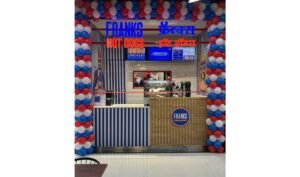
franks hot dog
What does this mean for you, the independent restaurateur or food entrepreneur? Everything. At RestaurantCoach.in, we’ve helped dozens of restaurant owners navigate similar competitive landscapes, and we’ve identified clear patterns in how successful businesses adapt when national and international chains accelerate their growth. The Indian QSR market is projected to surge to a staggering $43.5 billion by 2030, growing at a compound annual rate of 9.36%. This growth is fueled by urbanization, rising disposable incomes, busier lifestyles, and an increased preference for global flavors. Frank’s Hot Dogs, with its unique “Roll-Dogs”—gourmet sausages in artisan-baked, sauce-infused bread—is riding this wave perfectly, but their expansion creates both challenges and opportunities for every food business owner in the country.
Let’s break down what’s really happening with Frank’s Hot Dogs’ aggressive growth. Founded in France in 2020, the brand has already expanded to over 75 outlets globally. Their India story is particularly revealing. Starting in major urban markets including Bengaluru, Mumbai, Hyderabad, Chennai, Chandigarh, and Pune, they’ve now reached their 14th outlet in Gurugram. But what’s most significant is their announced target: 300 outlets across India in five years.
This isn’t just random expansion. The brand operates on a Franchise Owned Franchise Operated (FOFO) model, which provides franchise partners with a proven business model and strong operational support. According to available information, the total investment for a Frank’s franchise is approximately INR 20 lakhs, with the company promising an average annual ROI of less than 100% and a payback period of under a year. These numbers are particularly attractive to aspiring entrepreneurs and explain why the brand can expand so rapidly.
The Gurugram location is strategically telling—positioned at Elan Miracle Mall on Dwarka Expressway to capture high-traffic consumer segments. As Gaurav Marya, Founder and Chairman of Franchise India (the advisory firm behind the expansion) noted, “Franks Hot Dogs is the new-age QSR Indian consumers love—globally inspired, efficient, and value-driven”. This insight captures exactly what today’s consumers want: international culinary experiences delivered quickly at reasonable price points.
Frank’s Hot Dogs is far from alone in its expansion ambitions. Consider these parallel developments:
BoC (Burger or Chai) announced plans to scale to 1,000 franchise outlets by 2030, positioning itself as a “desi-first” QSR chain with its tagline “Kyu Khao Videshi, Jab Hai Desi”
Wow Momo is discussing a $130-150 million funding round to fuel expansion to 1,000 outlets
Mad Over Donuts is negotiating funding to expand its store network
International chains like Subway, The Belgian Waffle, and multiple coffee chains are also actively expanding
What this means for you is a rapidly professionalizing market where operational excellence and brand differentiation become survival requirements rather than competitive advantages. As these chains expand, they bring:
Standardized customer experiences that raise consumer expectations across the board
Aggressive marketing budgets that can drown out smaller players
Supply chain efficiencies that may challenge independent operators on pricing
Real estate competition for premium high-traffic locations
The target demographic for these expanding QSRs—millennials, Gen Z, and urban professionals—represents a significant portion of the dining-out and food delivery market. Their preferences are reshaping our industry:
Table: Comparative Business Models in India’s Expanding QSR Sector
| Brand | Expansion Target | Key Differentiator | Target Consumer |
|---|---|---|---|
| Frank’s Hot Dogs | 300 outlets in 5 years | French-inspired “Roll-Dogs” | Urban professionals, Gen Z |
| BoC (Burger or Chai) | 1,000 outlets by 2030 | Desi-first positioning | Value-conscious, culturally rooted consumers |
| Wow Momo | 1,000 outlets (next year) | Indian street food premiumization | Millennials, families |
What can you offer that chains cannot? Is it hyper-local flavors, personalized service, community connection, or culinary innovation? Frank’s Hot Dogs competes on consistent global flavors, but your strength might be regional authenticity or chef-driven creativity. Document what makes your restaurant truly unique and build your marketing around this.
Chains succeed through systematization. At RestaurantCoach.in, we emphasize creating Standard Operating Procedures (SOPs) even for single-location restaurants. This includes:
Recipe costing cards for every menu item
Inventory management systems
Staff training protocols
Customer service standards
The modern QSR model thrives on omnichannel presence: dine-in, takeaway, and delivery. Market estimates forecast home delivery will account for 40.81% of the QSR market by FY 2027. Ensure you’re optimized for all three:
Dine-in experience: Atmosphere, service, amenities
Takeaway efficiency: Packaging, speed, order accuracy
Delivery optimization: Partner management, packaging integrity, delivery time
The market is segmenting. Some brands like Ministry of Eggs succeed with niche concepts (80+ egg varieties), while others like Biryani Queen use distinctive presentation (biodegradable mud pots). Consider whether your future lies in:
Niche specialization (becoming famous for one thing)
Collaboration with complementary businesses
Premium positioning versus value positioning
While chains focus on metro expansions initially, Tier 2 and 3 cities represent significant growth opportunities with lower competition and operational costs. Brands like Ajay’s Café have successfully expanded to over 165 outlets across 42 cities using this strategy.
With franchise models promising ROIs within 12-18 months, independent restaurants must be equally financially disciplined. Focus on:
Food cost percentage (aim for 28-35% depending on concept)
Labor cost optimization (ideally 20-30% of revenue)
Prime cost control (food + labor = 55-65% maximum)
Profit margin targets (15-20% net for sustainability)
In our coaching practice at RestaurantCoach.in, we’re seeing a clear divergence between restaurants that merely react to market changes and those that proactively shape their destiny. The expansion of brands like Frank’s Hot Dogs represents a broader professionalization of India’s food industry that ultimately benefits consumers but challenges unprepared operators.
The most successful restaurant owners we work with understand that scalability begins with systems, not size. Before Frank’s Hot Dogs could plan 300 outlets, they needed a replicable model—from their “Roll-Dog” preparation to their franchise support structure. Similarly, BoC (Burger or Chai) developed its Brand-Operated, Finance-Partner Franchise (BOFP) model specifically to address operational consistency challenges.
Your takeaway shouldn’t be intimidation but inspiration. These expanding chains validate the market potential while also highlighting gaps they cannot fill. The future belongs to food businesses that blend the soul of independent restaurants with the systems of chains.
Consider this: while Frank’s Hot Dogs offers global flavors, there’s growing consumer interest in health-conscious offerings and regionally rooted concepts. While they expand in metros, there’s opportunity in smaller cities. While they standardize, there’s demand for culinary storytelling and authenticity.
The launch of Frank’s Hot Dogs’ 14th outlet in Gurugram and their plan for 300 outlets is more than a business news item—it’s a roadmap to where India’s restaurant industry is heading. The QSR market’s projected growth to $43.5 billion by 2030 means there’s abundant opportunity, but capturing it requires strategic thinking, operational excellence, and authentic differentiation.
Successful restaurants in this new landscape will be those that:
Understand their unique value beyond what chains can replicate
Systematize their operations without losing their soul
Adapt to omnichannel consumer behavior
Make strategic choices about location, format, and positioning
Maintain financial discipline comparable to franchise models
Need expert guidance to navigate these industry changes? Our restaurant coaching programs at RestaurantCoach.in help food entrepreneurs build profitable, sustainable businesses. Contact us to transform your restaurant vision into reality amidst India’s dynamic QSR expansion.
Q: How much investment is typically required for a QSR franchise like Frank’s Hot Dogs?
A: According to available information, Frank’s Hot Dogs requires approximately INR 20 lakhs as total investment for a franchise, with promised ROI of less than 100% annually and payback within a year. Other brands offer different investment ranges, with some models starting as low as ₹50,000-₹1 lakh for compact formats.
Q: What are the key trends in India’s QSR sector that independent restaurants should know?
A: Key trends include: expansion into Tier 2 and 3 cities, demand for health-conscious offerings, popularity of regional and niche concepts, adoption of compact store formats (some as small as 200 sq. ft.), and the necessity of omnichannel presence (dine-in, takeaway, delivery).
Q: How are established Indian food companies responding to QSR growth?
A: Traditional players are diversifying. For instance, Haldiram’s is exploring entry into western-style QSRs through potential partnerships, while also investing in brands like Wow! Momo. The Haldiram’s restaurant division already operates over 150 outlets nationwide.
Q: What makes the FOFO (Franchise Owned Franchise Operated) model successful?
A: The FOFO model, used by Frank’s Hot Dogs, combines local ownership with brand systems. This typically includes proven business models, operational support, training programs, and marketing assistance, creating a balance between brand consistency and owner engagement.
Q: How important is technology for competing with expanding QSR chains?
A: Extremely important. Technology enables efficient operations, data-driven decisions, and seamless customer experiences across ordering channels. As delivery is projected to reach 40.81% of the QSR market by FY27, tech integration for delivery optimization becomes particularly critical.
Previous Post
Next Post
The Indian food service industry is witnessing a fascinating shift. Homegrown brands are no longer…
The recent buzz around Indiranagar, Bangalore—where several popular cafes are reportedly restricting laptop usage—has sparked…
As a restaurant business coach working with food entrepreneurs across India, I’ve seen a recurring…

Founded in 2015 by seasoned restaurant professionals who understood the challenges faced by food entrepreneurs in India, Restaurant Coach began as a vision to democratize restaurant success.

Founded in 2015 by seasoned restaurant professionals who understood the challenges faced by food entrepreneurs in India, Restaurant Coach began as a vision to democratize restaurant success. After witnessing countless talented chefs and passionate food lovers struggle with business aspects of restaurant operations, our founders decided to bridge the gap between culinary passion and business acumen.