Demos
Demos  Colors
  Docs
Docs  Support
Home 15
Newly Added



Hello, restaurant owners and food entrepreneurs. If you’ve ever wondered how to take your beloved food concept from a local favourite to a scalable, fundable brand, the recent success story of Babai Tiffins is a masterclass. As your coach at RestaurantCoach.in, I don’t just see this as another funding headline. I see a blueprint—a powerful set of lessons every Indian restaurant owner, from a humble cafe in Mumbai to a cloud kitchen in Gurugram, can learn from.
The news is this: Bengaluru-based Babai Tiffins, a pure-vegetarian Andhra cuisine QSR, has successfully raised INR 15.5 Crore in funding. This capital will fuel their expansion from 3 to 10 outlets and launch a line of packaged foods like podis and pickles. What’s truly astounding? They achieved an annual revenue run rate of nearly INR 50 Crore from just three outlets, handling close to 2 lakh monthly orders.
This isn’t just a win for them; it’s a signal flare for the entire industry. It tells us that deep, authentic regional cuisine, when packaged with the right strategy, holds immense national potential. Let’s break down why this matters for you and what you should do next.
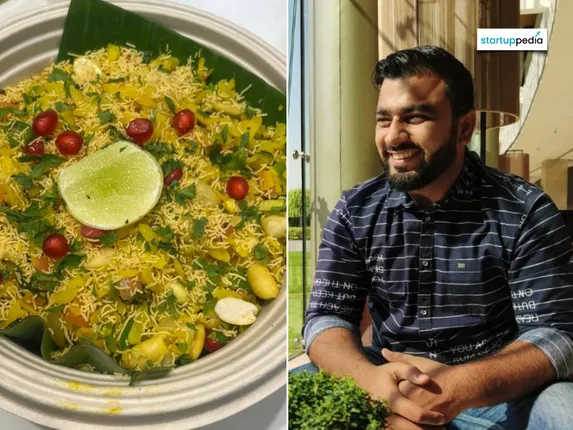
First, let’s move beyond the numbers and understand the strategy behind Babai Tiffins’ success. Founded by Allu Siva Rama Krishna Reddy and Ravi Morampudi, they began with a focused offering: Andhra-style breakfast. This initial clarity—dominating a specific daypart and cuisine—allowed them to build a fiercely loyal customer base.
Their journey highlights several critical, coachable strategies:
From Niche to National: They didn’t start as a “pan-Indian vegetarian restaurant.” They championed a specific, underrepresented cuisine (pure-veg Andhra) with passion and authenticity. This gave them a strong, defendable market position.
The Power of Story & Scalable Systems: Appearing on Bharat Ke Super Founders wasn’t just about raising funds. It was about national storytelling. It validated their model to millions of viewers and investors. Crucially, their backend operations (handling 2 lakh orders/month from 3 stores) show they built robust, scalable systems before aggressively scaling front-end outlets—a principle we stress heavily in our coaching.
Hybrid Revenue Model: Their plan to use the funding for both physical QSR expansion and packaged FMCG products (podis, pickles) is brilliant. It creates multiple revenue streams from the same core IP—their authentic recipes. This de-risks the business and leverages brand equity far beyond their restaurant walls.
So, how does a single brand’s funding round impact your restaurant or food business? The implications are profound and direct.
Validation of Regional & Veg-Centric Concepts: For decades, the “safe bet” was often North Indian or Chinese. Babai Tiffins proves there’s massive, investable appetite for hyper-regional, pure-vegetarian fare. If you’re running a specialty Kerala sadya restaurant, a Rajasthani thali joint, or a Maharashtrian misal pav stall, your concept is now more attractive than ever.
Blurring Lines: Restaurant + FMCG = Future: The move into packaged foods is not an afterthought; it’s the future. It turns your kitchen from a cost centre into a product R&D lab. Your signature chutney, spice blend, or ready-to-cook curry can become a consumer product, generating revenue 24/7, independent of dine-in footfall.
Performance Over Presence: Their key metric—Annual Recurring Revenue (ARR) run rate—speaks volumes. Investors today care less about how many outlets you have and more about how efficiently you monetise each one. High-volume, high-efficiency operations from fewer locations are a powerful proof of concept. This is excellent news for cloud kitchens and focused QSRs.
The New Funding Playbook: The mix of equity, venture debt (like from Recur Club), and strategic angel investment (from figures like Dr. A Velumani of Thyrocare) shows a mature approach to capital. It’s no longer just about finding one investor; it’s about building a strategic consortium that brings money, networks, and expertise.
Inspired? Let’s translate this inspiration into action. Here are 5 concrete steps you can take, starting this quarter, to build a more scalable, attractive, and profitable business.
Action: Audit your menu. Identify the 3-5 dishes that are truly unique, authentic to your roots, and garner the most loyal following. Feature them as your “Heritage Specials” with better storytelling on your menu, website, and social media.
Next Step: Conduct a simple customer survey (in-person or via Google Forms) asking: “Which dish reminds you most of authentic home-style cooking?” Let your customers define your signature.
Action: Document everything. Create Standard Operating Procedures (SOPs) for your top 10 recipes, inventory management, and customer service protocols. Use simple video recordings of your head chef making a dish to ensure consistency.
Next Step: This week, start with one thing: document your best-selling recipe in precise detail (weights, timings, brand of ingredients). This is the first brick in your scalable system. At RestaurantCoach.in, we provide templated SOP frameworks that have helped dozens of owners systematise their operations for growth.
Action: Look at your menu and identify 1 product that is already “packagable.” Is it your secret spice blend? A killer garlic pickle? A premix for your signature drink?
Next Step: Get a small batch professionally packaged (even just 50 units) with simple labels. Test-sell it at your counter or to your most loyal customers. Gauge demand before making a large investment. This is exactly the kind of innovation strategy we workshop with our coaching clients.
Action: Calculate your key metrics: Average Order Value (AOV), Customer Acquisition Cost (CAC), and Revenue per Square Foot. A highly efficient single outlet is a more compelling story to future partners than three struggling ones.
Next Step: Use a simple dashboard (Google Sheets works) to track these monthly. Be able to articulate, “My one outlet in [Your City] does [X] revenue with [Y] profitability because…” This clarity is what attracts smart capital.
Action: You don’t need a TV show to tell your story. Start building your brand’s narrative today.
Next Step:
Document Your Journey: Share behind-the-scenes reels of recipe creation on Instagram.
Engage Locally: Host a special tasting for local food bloggers or business communities.
Explore Platforms: Look at startup pitch competitions or platforms that connect businesses with investors. Visibility attracts opportunity.
In my years of coaching through RestaurantCoach.in, a pattern emerges: the winners are those who marry soul with system. Babai Tiffins has the soul of Andhra in every dish, but the system of a modern QSR in its operations.
The big trend this underscores is **“Premiumisation of Authenticity.” The Indian diner is no longer just seeking fuel; they seek a story, a connection to heritage, and uncompromising quality. They are willing to pay for the real deal. Your task is to deliver that authenticity consistently, at scale.
Furthermore, the future of a successful food brand is multi-format. Your restaurant is the flagship, the experience centre. Your cloud kitchen is the delivery and data hub. Your packaged goods are the brand ambassadors in the customer’s home. Building this “brand ecosystem” is the ultimate path to sustainable growth and valuation.
The story of Babai Tiffins is not an anomaly; it’s a signpost. It shows that the Indian food market is maturing, rewarding depth over breadth, authenticity over imitation, and strategic scaling over haphazard expansion.
Your unique culinary heritage is your greatest asset. The question is, are you building the business and systems around it to let it shine on a larger stage?
Ready to Build Your Restaurant’s Success Story?
The journey from a great kitchen to a great business requires a map and a guide. At RestaurantCoach.in, we provide both. Our tailored coaching programs are designed for Indian restaurant owners like you, helping you refine your concept, build unbreakable systems, explore new revenue streams, and prepare for sustainable growth.
Don’t just run a restaurant. Build a legacy brand.
Contact us at RestaurantCoach.in today for a consultation, and let’s craft your growth blueprint.
Q1: I run a single outlet. Is this kind of growth and funding relevant to me?
A: Absolutely. In fact, it’s more relevant. Babai Tiffins’ high revenue from just 3 outlets proves that mastering unit economics at a smaller scale is the strongest foundation for growth. Focus on making your one outlet incredibly efficient and profitable first. That performance is what makes you fundable or ready for expansion.
Q2: How can I identify which of my recipes could become a packaged FMCG product?
A: Look for three things: 1) High Customer Demand: The item people constantly rave about or ask to buy separately. 2) Stability & Shelf-Life: It should be able to retain quality when packaged (dry mixes, pickles, podis, simmer sauces are great starts). 3) Unique Story: It should connect to your brand’s core identity.
Q3: Do I need to appear on a TV show to get investor attention?
A: Not at all. While great for visibility, consistent, grassroots brand building is more sustainable. A strong social media presence, features in local food media, excellent customer reviews, and most importantly, solid financial metrics are what serious investors ultimately look for. Build a track record of profitability.
Previous Post
Next Post
It’s happened again. Just as we were all getting used to the last round of…
The Indian food business is often romanticized, but the reality is that it’s a battlefield…
The news is out, and it’s creating quite a buzz in the Indian food and…
Swiggy vs Zomato Q3 Results: What It Means for Restaurant Owners The latest quarterly results…

Founded in 2015 by seasoned restaurant professionals who understood the challenges faced by food entrepreneurs in India, Restaurant Coach began as a vision to democratize restaurant success.

Founded in 2015 by seasoned restaurant professionals who understood the challenges faced by food entrepreneurs in India, Restaurant Coach began as a vision to democratize restaurant success. After witnessing countless talented chefs and passionate food lovers struggle with business aspects of restaurant operations, our founders decided to bridge the gap between culinary passion and business acumen.