Demos
Demos  Colors
  Docs
Docs  Support
Home 15
Newly Added



If you’ve been feeling the pinch of competition or wondering how to scale your food business, a piece of news from January 2026 should grab your attention. Uncle Peter’s Pancakes, a brand that started as a single café in Bangalore in December 2019, has officially crossed 100 outlets across India. With 110 outlets already running and 40 more nearly ready to launch, this pancake-focused Quick Service Restaurant (QSR) has grown into a national network in just over six years.
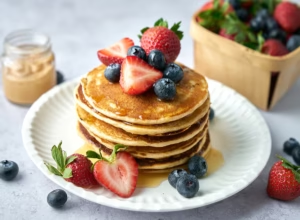
uncle pater’s pan cake
For us at RestaurantCoach.in, this isn’t just another business milestone to skim over. It’s a powerful case study unfolding in real-time, offering critical lessons for every Indian restaurant owner, cafe proprietor, and food entrepreneur. In a market where many struggle to open a second location, how did a brand centered on a non-traditional food item like pancakes achieve such scale? This article breaks down their success formula and, more importantly, translates it into actionable strategies you can implement in your own business to drive growth, improve systems, and build a brand that lasts.
Let’s first understand what Uncle Peter’s Pancakes has actually achieved. Founded in late 2019, the brand had the challenging task of introducing and popularizing a dedicated “pancake culture” in the diverse Indian food landscape. Starting from one outlet in Bangalore, it now operates in over 40 cities. This transition from a cozy café to a recognizable QSR name highlights a well-executed growth playbook.
A closer look reveals the pillars of their strategy:
Franchise-Led Scaling: The brand’s “plug-and-play” franchise model has been the engine of its rapid expansion. By offering comprehensive support to partners, they have managed to scale swiftly while maintaining control over service, design, and food quality. This model lowers the capital burden on the brand itself and leverages the local market knowledge and investment of franchise partners.
Strategic Menu Engineering: While “pancakes” is the hero, the menu is strategically broad. It includes waffles, shakes, coffee, and savory items, making it an all-day dining destination that appeals to students, professionals, and families alike. This moves the brand beyond a niche breakfast spot.
Relentless Focus on Consistency: The brand emphasizes training, design uniformity, and customer service to ensure a standardized experience whether a customer visits an outlet in Kolkata or Bangalore. In the franchise business, consistency is the currency of trust.
Localized Global Flavors: They’ve focused on developing recipes that offer global flavors but with a local touch, ensuring the brand remains relatable to the Indian consumer. For instance, they emphasize their 100% eggless pancake batter, a crucial adaptation for the Indian market.
This milestone is more than just a number; it’s a signal of shifting currents in India’s F&B sector. Here’s how this news directly impacts you as a restaurant owner or entrepreneur:
1. Proof of Concept for Niche Categories: The success of a pancake-dedicated QSR proves that well-executed niche concepts have immense potential. The Indian consumer’s palate is rapidly evolving, driven by exposure to global cuisines and a desire for novel experiences. This opens doors for entrepreneurs to explore specialized segments—whether it’s regional Indian breakfasts, health-forward bowls, or artisanal desserts—with confidence.
2. The Undeniable Power of the Franchise Model: For owners looking to scale, the franchise route is becoming increasingly sophisticated and attractive. The merger of major operators like Devyani International and Sapphire Foods for Yum! Brands in India underscores a trend toward consolidation and professionalization in franchising. For individual owners, this means that associating with or building a franchise system with strong support can be a faster path to growth than going it alone.
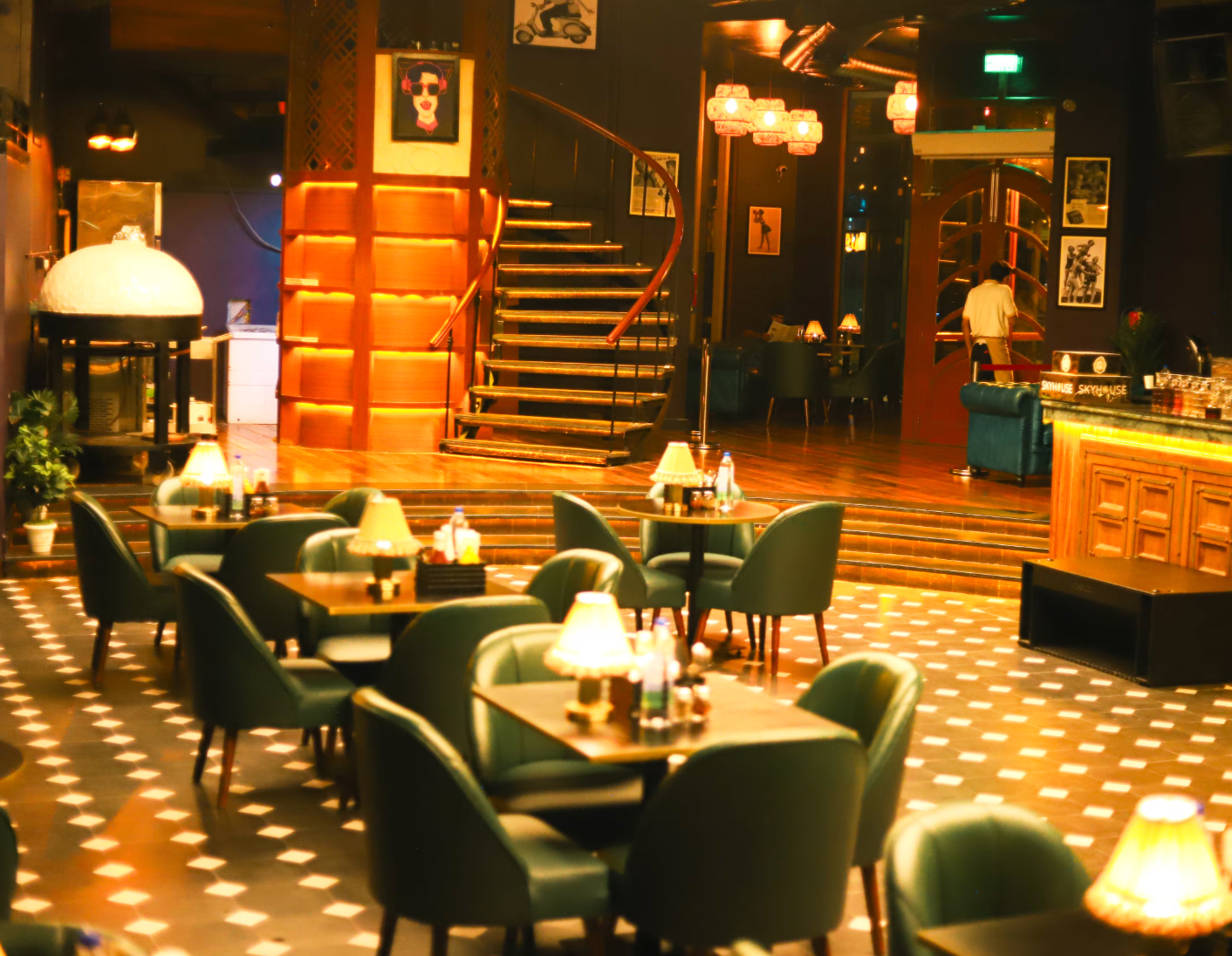
3. Experience is the New Competitive Battleground: Uncle Peter’s creates a “warm, contemporary aesthetic” that appeals to a broad audience. This aligns with a major 2026 trend where dining is firmly part of the experience economy. Customers today seek more than just food; they seek memorable moments. Your restaurant’s ambiance, storytelling, staff interaction, and overall vibe are now critical differentiators.
4. Tier-2 and Tier-3 Cities are Growth Goldmines: With a presence in over 40 cities, Uncle Peter’s growth isn’t limited to metros. This reflects the broader franchise boom moving into cities like Jaipur, Lucknow, and Indore. Rising disposable incomes and aspirational consumption in these markets present a massive opportunity for brands willing to adapt their models and menus for local preferences.
Watching another brand succeed is one thing; creating your own success story is another. Here is a concrete, step-by-step action plan derived from this analysis:
1. Conduct a “Scalability Audit” of Your Current Operations.
Before thinking about a second outlet, scrutinize your first. Is every process—from procuring potatoes to plating a dish—documented and systematized? Could a new manager run the kitchen using your manuals? Standardization is the non-negotiable first step to scaling. At RestaurantCoach.in, we help owners create these essential operating systems that form the backbone of any multi-outlet business.
2. Explore a Multi-Format Strategy.
You don’t need to replicate your flagship 80-seater restaurant everywhere. Consider flexible models:
Express/QSR Format: A compact, high-efficiency version for high-footfall areas.
Cloud Kitchen: A delivery-only model to test new neighborhoods with lower overhead.
Food Court Kiosk: A minimal-menu, high-volume point in malls or transit hubs.
Designing these formats now gives you adaptable options for different locations and investment levels.
3. Build a Franchise-Ready Proposition (Even If You Don’t Franchise).
Ask yourself: What would I offer a potential franchise partner? Your answer should include:
A proven and profitable unit economics model.
Comprehensive training programs for staff and management.
Centralized supply chain support for key ingredients.
A detailed marketing and branding toolkit.
Building this discipline makes your business stronger, more profitable, and ready for any growth opportunity.
4. Double Down on “Conscious Consumption” Trends.
Diners in 2026 care deeply about provenance, health, and sustainability. Proactively integrate this:
Highlight local and indigenous ingredients on your menu. As one expert notes, luxury in 2026 is about knowing exactly where your food comes from.
Develop healthier iterations of your best-sellers—think millet-based dishes, gluten-free options, or “less-oil” preparations.
Communicate your ethical sourcing and sustainability practices clearly. This isn’t just marketing; it’s building lasting trust.
5. Master Hybrid Service Models.
The future is omnichannel. Ensure your business thrives across all touchpoints:
Optimize your in-dine experience for hospitality and memorability.
Streamline your delivery and takeaway operations with packaging that preserves quality.
Use technology not just for orders, but for data-led personalization—remembering customer preferences and creating integrated loyalty programs.
6. Infuse Your Brand with Cultural Confidence.
A powerful 2026 trend is Indian cuisine “stopping explanation and starting assertion”. If your concept is rooted in Indian flavors, present them with pride and depth. Be the curator of your culinary tradition. If you run a global concept like a pancake cafe, find authentic ways to localize and make it relevant, just as Uncle Peter’s did with its eggless batter.
7. Prioritize Leadership and Culture.
Scaling a business is a test of leadership. Your role will evolve from head chef or manager to a leader who inspires teams, safeguards culture across locations, and makes strategic decisions. Invest in your own development as a business leader. This is the single most important factor that determines whether a business scales successfully or collapses under its own growth.
In our years of coaching at RestaurantCoach.in, we’ve seen many “hot” brands flare up and fizzle out. What makes Uncle Peter’s Pancakes noteworthy isn’t the speed of growth alone, but the apparently systematic approach underpinning it. Their focus on a franchise-friendly, consistent model suggests they are building for durability, not just rapid store count multiplication.
The broader industry trend this signals is market maturation. The era of winning with just a great recipe or a prime location is fading. Winning now requires a triangular focus on Product, Process, and People. You need a great product (differentiated menu), iron-clad processes (to ensure consistency at scale), and excellent people (to deliver the experience).
Furthermore, the merger of large franchise operators like Devyani and Sapphire points to an incoming wave of consolidation. For independent owners, this means the competitive landscape will feature larger, more efficient players. Your strategic response should be to fortify your unique value proposition and operational excellence. Perhaps your advantage isn’t in becoming a 100-outlet chain, but in being the undisputed, beloved champion of your locality or niche.
The journey of Uncle Peter’s Pancakes from 1 to 100+ outlets offers a masterclass in niche branding, systematic scaling, and franchise-led growth. For the astute restaurant owner, the key takeaways are clear: systematize your operations, understand that experience is as important as the food, and strategically consider if and how a franchise model could accelerate your goals.
However, decoding the strategy is one thing; implementing it in the unique context of your business, with its specific challenges and opportunities, is another. This is where expert guidance can make the difference between stagnation and transformative growth.
Are you ready to build a restaurant business that’s not just busy, but built to scale and last? At RestaurantCoach.in, we partner with food entrepreneurs like you to do exactly that. We provide tailored coaching to help you build robust systems, craft compelling brands, and develop leadership skills for scalable growth.
Don’t just watch the success stories—create your own. Contact RestaurantCoach.in today for a consultation and let’s design a strategic roadmap for your restaurant’s future.
Q1: How big is the restaurant franchise market in India in 2026?
The Indian food services market is a massive opportunity, projected to cross ₹6 trillion, with franchising accounting for a significant share of this organized growth.
Q2: I have no hospitality management experience. Can I still run a successful franchise?
Absolutely. Many brands now offer Franchise-Owned, Company-Managed (FOCM) models, where you invest and own the outlet, while the franchisor’s professional team handles day-to-day operations, staffing, and quality control. This significantly lowers the barrier to entry.
Q3: What’s the typical ROI period for a restaurant franchise?
While it varies by model, location, and brand, most well-run franchise outlets in India aim to achieve a return on investment within 18 to 36 months. Detailed financial modeling during the planning stage is crucial.
Q4: Is it better to expand with my own brand or join an established franchise?
This depends on your goals, capital, and risk appetite. Building your own brand offers full control and potential for higher long-term equity but involves greater risk and effort in building systems from scratch. Joining a franchise offers a proven model, brand recognition, and support, but with less operational freedom and ongoing royalty fees. A hybrid approach is to first perfect and systematize your own brand as if it were a franchise, making it ready for either path.
The Indian food service industry is witnessing a fascinating shift. Homegrown brands are no longer…
The recent buzz around Indiranagar, Bangalore—where several popular cafes are reportedly restricting laptop usage—has sparked…
As a restaurant business coach working with food entrepreneurs across India, I’ve seen a recurring…

Founded in 2015 by seasoned restaurant professionals who understood the challenges faced by food entrepreneurs in India, Restaurant Coach began as a vision to democratize restaurant success.

Founded in 2015 by seasoned restaurant professionals who understood the challenges faced by food entrepreneurs in India, Restaurant Coach began as a vision to democratize restaurant success. After witnessing countless talented chefs and passionate food lovers struggle with business aspects of restaurant operations, our founders decided to bridge the gap between culinary passion and business acumen.