Demos
Demos  Colors
  Docs
Docs  Support
Home 15
Newly Added


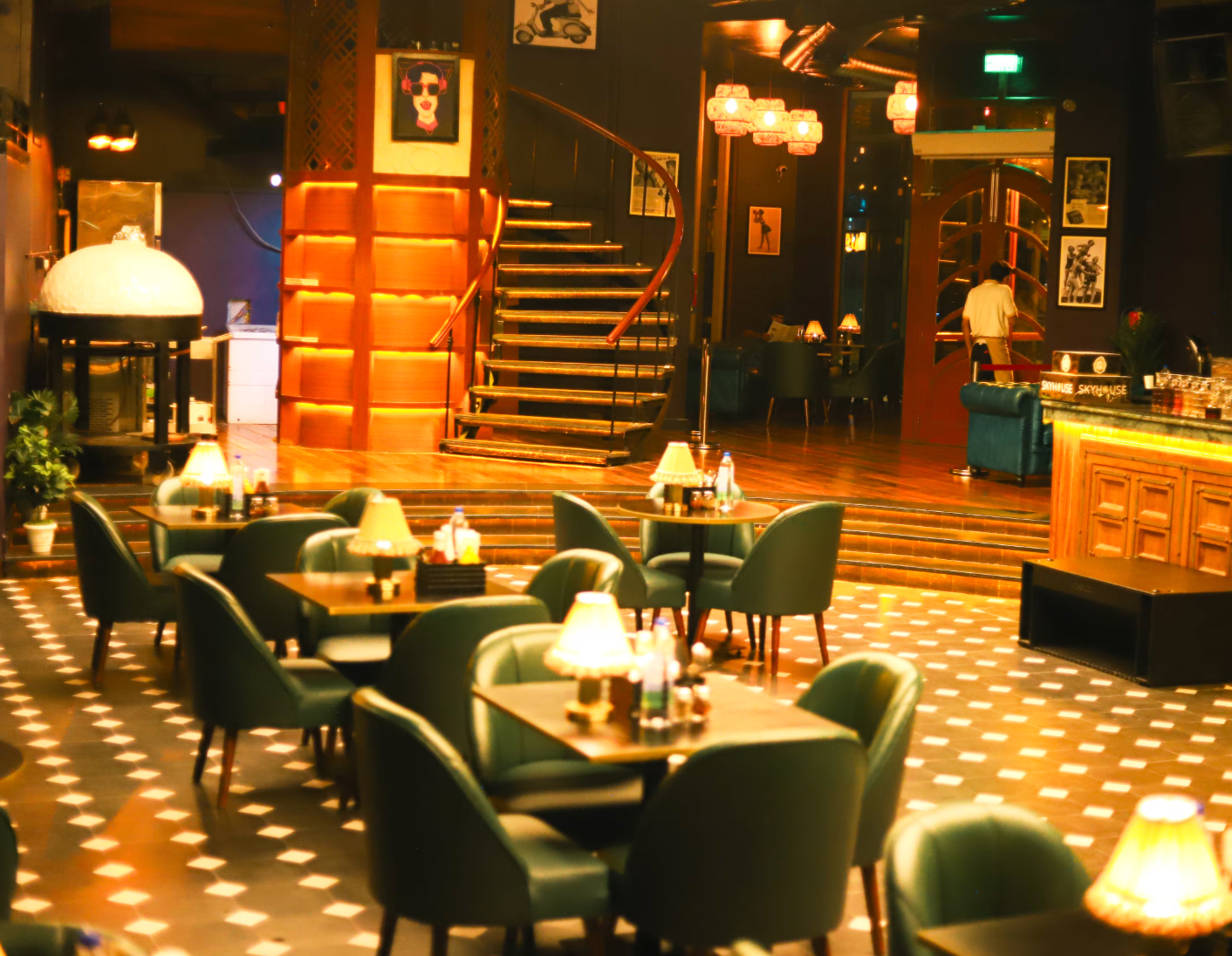

As a restaurant coach, I don’t just see headlines; I see strategic business moves that offer free lessons for every food entrepreneur in India. The recent news about Burma Burma opening its 21st outlet—and sixth in Mumbai—at Sky City Mall, Borivali, is one such golden opportunity. At first glance, it’s a simple expansion story. But for the astute restaurant owner, it’s a masterclass in measured growth, strategic scaling, and deep market penetration.
burma burma
Why should you, a restaurant owner in Delhi, a café proprietor in Bangalore, or a cloud kitchen founder in Gurugram, care about a vegetarian Burmese chain in Mumbai? Because the principles behind their success are universal. Their playbook reveals how to build a resilient, scalable, and profitable food business in India’s competitive landscape. In our coaching sessions at RestaurantCoach.in, we break down exactly these kinds of case studies to extract actionable frameworks you can apply to your own venture.
Let’s move beyond the news and into the strategy room.
Burma Burma is not just opening restaurants; they are executing a precise geographical and brand strategy. Their new outlet in Borivali’s Sky City Mall is a calculated move that speaks volumes.
First, this marks their sixth outlet in Mumbai alone. Instead of scattering their energy across ten new cities, they are digging deeper into a market they already understand. This is “cluster expansion”—saturating a high-potential city to achieve operational efficiencies, build stronger brand recall, and optimize marketing spends. For them, Mumbai is not just a city; it’s a portfolio of micro-markets.
Second, the choice of location is deliberate. Borivali, in Mumbai’s western suburbs, represents a high-growth residential hub with evolving consumer spending power. By entering a destination mall like Sky City, they tap into built-in, high-quality footfall—families, young professionals, and shoppers already in a “spend mode.” This reduces customer acquisition costs significantly compared to a standalone high-street location.
Finally, they are sticking to their proven format. The Borivali outlet remains a vegetarian Burmese restaurant and tea room. This consistency is key to scaling. They aren’t confusing the market with a new concept; they are replicating a successful model in a new catchment area, ensuring that what works in Bandra can also win in Borivali.
You might think, “That’s great for them, but I run a single outlet dosa joint / a cloud kitchen / a fine-dining place in Pune. How does this affect me?” The impact is indirect but profound. Burma Burma’s expansion signals broader industry trends that are reshaping your competitive environment.
Premium and established brands are aggressively moving into organized retail spaces like malls and mixed-use developments. This drives up rental costs and increases competition for the attention of quality customers in these spaces. If you’re considering expansion, your location calculus just got more complex.
The era of haphazard, one-off expansions is fading. Successful chains are proving that deep dominance in a few cities (like Mumbai, Delhi NCR, Bangalore) is more profitable and sustainable than thin presence across many. This strategy creates logistical advantages and a louder brand voice in key markets.
As chains like Burma Burma provide consistent, curated experiences in convenient locations, your customers begin to expect the same from you—whether you’re a chain or not. Consistency, accessibility, and a complete experience are no longer luxuries; they are table stakes.
The focus is shifting from crowded, expensive CBDs (Central Business Districts) to high-density residential suburbs. This is where the real volume and repeat customer base lives. Your expansion or marketing strategy must account for this geographical shift.
Learning is useless without action. Here is your coach-prescribed playbook to respond to these market shifts and plan your own growth.
Before dreaming of other states, map your own city like a general.
Action Step: Get a city map. Mark all areas with demographics that match your target customer (age, income, family size). Identify 3-5 potential “clusters” or suburbs where a second or third outlet could thrive. Use tools like Google Trends location data and local municipal planning reports.
Burma Burma can replicate because their model is profitable and streamlined. Can you?
Action Step: Calculate your Customer Lifetime Value (CLTV) and Cost of Customer Acquisition (CAC). Your CLTV must be significantly higher than your CAC. If not, fix your unit economics before even thinking about a new location. This is a core module we work on with our clients at RestaurantCoach.in.
Should you be in a mall, on a high street, or inside a residential complex?
Action Step: Create a simple decision matrix. List your options (Mall, High Street, Corporate Park, etc.). Score them (1-5) on key parameters: Rent as % of Sales, Footfall Quality, Operating Hours, Competition, and Alignment with Your Brand Vibe. The highest score wins.
Your brand promise must be deliverable identically at outlet #1 and outlet #21.
Action Step: Document every process: recipes (with gram-perfect measurements), service scripts, cleaning schedules, inventory ordering triggers. Create an Operations Manual. This becomes your bible for training staff at any new outlet, ensuring the customer gets the same experience every time.
When you enter a new suburb like Borivali, you must talk to that community.
Action Step: For your next location or even to boost your current one, plan a 90-Day Localised Launch Plan. Partner with local influencers (not just mega-celebs), engage with community Facebook/WhatsApp groups, sponsor a local school event, and run offers for residents of nearby apartment complexes.
Why should people choose you? Malls work because they offer more than shopping.
Action Step: Audit your customer journey. What can you add to make dining with you an experience? It could be a live counter (like Burma Burma’s tea room), a chef’s table, a unique plating style, or a curated playlist. Give people a reason beyond just food to visit.
More outlets mean more dependency on consistent supply.
Action Step: Diversify your key ingredient suppliers now. Build relationships with at least two suppliers for your top 10 inventory items. This protects you from price shocks and shortages, which can cripple a multi-outlet operation.
In my years of coaching, I’ve seen countless restaurants expand too fast, driven by ego rather than economics. What stands out in Burma Burma’s journey is their patience and precision. They are demonstrating what we call “Strategic Scalability.”
The biggest trend I see here, and one we emphasise heavily in our programs at RestaurantCoach.in, is the move from Geographic Growth to Demographic Density. It’s not about how many cities you’re in; it’s about how deeply you penetrate the psyche of your core customer in your chosen cities. This builds a moat around your business that competitors cannot easily cross.
Another critical insight is format discipline. They haven’t used their success to launch a Burmese fast-food spin-off or a burger chain. They’ve deepened their expertise in one niche. For an entrepreneur, this is a tough discipline—the temptation to pivot or add is strong—but it is often the foundation of iconic brands.
Burma Burma’s 21st outlet is a milestone, but their journey is built on thousands of small, correct decisions—on site selection, menu engineering, cost control, and brand building. Your path may not involve 21 outlets, but the principles for sustainable, profitable growth remain the same.
Start by dominating your current location. Become the undisputed leader in your catchment area. Systemise your operations until they run without you. Understand your finances inside out. Then, and only then, look at the map for your next move.
The Indian food and beverage (F&B) industry is buzzing with news that has significant implications…
Maharashtra PNG Supply Hike: A Restaurant Coach’s Guide to Relief and Resilience For restaurant owners…
The Fast-Food Diabetes Link: What Telangana’s Health Warning Means for Your Restaurant’s Future As a…
As restaurant business coaches in India, we at RestaurantCoach.in spend a lot of time in commercial kitchens.…

Founded in 2015 by seasoned restaurant professionals who understood the challenges faced by food entrepreneurs in India, Restaurant Coach began as a vision to democratize restaurant success.

Founded in 2015 by seasoned restaurant professionals who understood the challenges faced by food entrepreneurs in India, Restaurant Coach began as a vision to democratize restaurant success. After witnessing countless talented chefs and passionate food lovers struggle with business aspects of restaurant operations, our founders decided to bridge the gap between culinary passion and business acumen.