Demos
Demos  Colors
  Docs
Docs  Support
Home 15
Newly Added




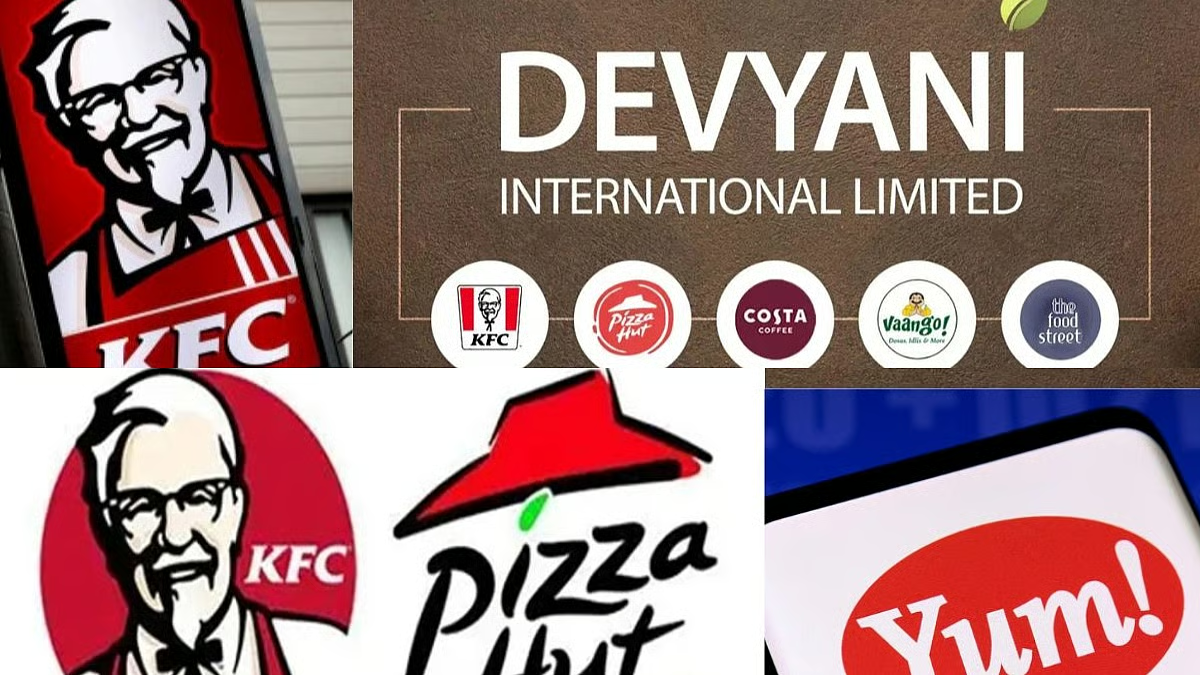
If you run a restaurant, cloud kitchen, or food business in India, you might wonder why a corporate merger between two giant franchise operators should concern you. The answer is simple: when giants consolidate, the entire ecosystem feels the tremors. The recent announcement that Devyani International (operator of KFC and Pizza Hut) will merge with rival Sapphire Foods creates India’s largest Yum! Brands franchisee, controlling over 3,000 outlets.
From our coaching experience at RestaurantCoach.in, we’ve seen that major industry consolidations don’t just affect stock prices—they change competitive dynamics, supplier relationships, customer expectations, and market opportunities for businesses of all sizes. This merger comes at a critical time when India’s Quick Service Restaurant (QSR) market faces slowing same-store sales, margin pressures from rising costs, and evolving consumer behaviors.
What makes this particularly relevant for independent operators is the scale advantage the merged entity will achieve—expected annual synergies of ₹210-225 crore, improved bargaining power with suppliers, and unified technology platforms that could raise industry standards. Whether you operate in Mumbai, Delhi, Bangalore, or emerging Tier 2 cities, understanding these shifts isn’t optional—it’s essential for your survival and growth in India’s rapidly transforming food service landscape.
Let’s break down this corporate move in simple terms that matter to your restaurant business. Two of India’s largest franchise operators for global brands KFC and Pizza Hut have decided to combine forces through a share-swap merger. Under the agreement, Devyani International will issue 177 shares for every 100 shares of Sapphire Foods, creating a single entity that will control all KFC and Pizza Hut operations across India for the first time.
The numbers tell a compelling story of scale: The combined entity will operate over 3,000 restaurants with consolidated revenue exceeding ₹7,800 crore. More importantly for restaurant owners, the merger unlocks significant cost synergies—management expects savings of ₹210-225 crore annually starting from the second year of integration. These savings will come from lower royalty costs to Yum! Brands, reduced corporate overheads, and scale benefits in procurement and supply chain.
The strategic implications are profound:
Unified operations for KFC and Pizza Hut across India
Stronger bargaining power with suppliers, delivery aggregators, and landlords
Accelerated expansion plans, particularly for KFC
Technology integration that could set new industry standards
Revitalization efforts for Pizza Hut, which trails Domino’s in market share
The timeline for completion is approximately 12-15 months, pending regulatory approvals. This gives independent restaurant owners valuable time to assess and adapt their strategies before the merged entity fully flexes its combined muscle.
You might be thinking, “This is a corporate deal between giant operators—how does it affect my family-run restaurant or cloud kitchen?” The impact will be felt across multiple dimensions of your business. Based on our coaching work with dozens of restaurant owners across India, here’s what you should anticipate:
Heightened Competitive Pressure in Key Markets
The merged entity plans accelerated expansion, particularly for KFC. This means more global-brand outlets appearing in your trading areas, competing directly for your customers. With their combined marketing power and standardized operations, they’ll likely intensify competition in urban centers and increasingly in Tier 2/3 cities, which are emerging as key growth markets.
Supply Chain and Cost Implications
When a player of this scale negotiates with suppliers, they secure better pricing and terms. While this might temporarily create some pricing pressure on certain ingredients, it also presents opportunities for savvy restaurant owners to renegotiate their own supplier contracts or explore alternative sourcing strategies we often help clients implement at RestaurantCoach.in.
Technological and Service Standard Shifts
The merger will likely accelerate technology adoption across ordering, delivery, and customer relationship management. As one analyst noted, the deal provides “synergies in terms of improved decision-making, new innovations, use of tech, and better sourcing efficiencies”. This raises customer expectations for all food businesses—your patrons will increasingly expect the seamless digital experiences that large chains can afford to develop.
Delivery Platform Dynamics
With greater scale, the merged entity will have increased bargaining power with delivery aggregators like Swiggy and Zomato. While this might put pressure on commission structures, it could also encourage the development of alternative delivery models, including direct ordering platforms—a trend we’re already helping many of our coaching clients implement successfully.
The Talent Market Squeeze
Unified operations mean standardized training and potentially more attractive career paths within the merged organization. This could make it more challenging to recruit and retain skilled kitchen and front-of-house staff, particularly in competitive markets like Bangalore, Mumbai, and Delhi. Investing in your team’s development and workplace culture becomes even more critical.
Don’t just watch this merger unfold—take proactive steps to strengthen your position. Based on our experience helping restaurant owners navigate industry shifts, here are specific actions you can implement:
1. Double Down on Your Unique Niche and Authenticity
While giants compete on scale and standardization, your advantage lies in authenticity, local flavor, and personalized experiences.
Menu Engineering: Introduce limited-time offerings that reflect local tastes or seasonal ingredients
Storytelling: Share your restaurant’s story, sourcing practices, or family traditions through your marketing
Hyper-Localization: Adapt your menu to neighborhood preferences rather than taking a one-size-fits-all approach
2. Master Operational Efficiency and Cost Control
With the merged entity targeting significant cost synergies, you must optimize your own operations.
Conduct a thorough cost analysis: Identify your top 3-5 cost centers and develop reduction strategies
Implement inventory management systems: Reduce waste through better forecasting and portion control
Renegotiate supplier contracts: Leverage local relationships or join buying groups for better pricing
Cross-train staff: Maximize productivity during peak and off-peak hours
3. Build Direct Customer Relationships Beyond Aggregators
Reduce dependency on platforms charging 15-30% commissions.
Develop a simple direct ordering system: WhatsApp-based ordering, a basic website, or a lightweight app
Create a loyalty program: Reward repeat customers with personalized offers
Collect customer data ethically: Use it to personalize communications and offers
Explore ONDC (Open Network for Digital Commerce): This emerging platform offers an alternative to dominant aggregators
4. Differentiate Through Experience and Community
Physical restaurants have what cloud kitchens and large chains often lack: the ability to create memorable experiences.
Host community events: Cooking classes, tasting sessions, or local artist showcases
Enhance dine-in ambiance: Even small touches in presentation, music, or service create differentiation
Develop signature rituals: Unique serving styles, tableside preparations, or interactive elements
Focus on “vibe-matching”: Create an emotional connection that aligns with your target customers’ values
5. Explore Smart Collaboration and Alternative Models
Consider partnerships that expand your reach without massive investment.
Cloud kitchen extensions: Test new concepts or dayparts with lower risk
Strategic pop-ups: Partner with complementary businesses to access new customer segments
Meal kit or subscription options: Diversify revenue streams beyond traditional dine-in and delivery
Catering for local businesses: Develop corporate lunch programs or event catering
As restaurant business coaches who have guided food entrepreneurs through various industry cycles, we see this merger as part of several larger trends that will shape India’s restaurant landscape in coming years:
Consolidation Wave in Organized Segment
This merger likely signals the beginning of further consolidation in India’s QSR sector. Smaller franchise operators may seek partnerships or mergers to compete with scale players. For independent owners, this underscores the importance of building distinctive brands that cannot be easily replicated by chains. Our coaching programs at RestaurantCoach.in increasingly focus on helping owners identify and amplify their unique value propositions.
Rise of Experience-Driven Dining
Even as delivery grows, our experience shows that dine-in experiences offering emotional connection are gaining value. Yum! Brands’ own research indicates customers increasingly seek “vibe-matching”—brands that align with their identity and mood. This represents a significant opportunity for independent restaurants that can create authentic, memorable experiences that large chains struggle to replicate at scale.
Technology as Differentiator, Not Just Utility
The merged entity will leverage technology for efficiency, but independent restaurants can use technology for personalization and relationship-building. Simple CRM systems, personalized marketing automation, and feedback loops can help smaller businesses compete on intimacy rather than scale.
Blurring Formats and Hybrid Models
The lines between QSR, casual dining, cloud kitchens, and cafes continue to blur. Successful restaurants increasingly adopt hybrid models—combining dine-in with robust delivery, offering grab-and-go options alongside full service, or operating multiple virtual brands from a single kitchen. Flexibility and adaptability become key competitive advantages.
The Sustainability Imperative
While not directly related to this merger, environmental consciousness is becoming a differentiator, especially among younger demographics. Initiatives around responsible sourcing, reduced packaging waste, and energy efficiency can enhance brand reputation and sometimes reduce costs.
The Devyani-Sapphire merger represents more than a corporate transaction—it signals accelerated change in India’s restaurant industry. The combined entity’s scale advantages in procurement, technology, and marketing will raise competitive standards across the sector. However, scale also brings limitations in flexibility, localization, and authentic experiences—areas where independent restaurants can excel.
Your immediate action plan should include:
Conduct a competitive audit of how this merger might affect your specific market
Identify your defensible differentiators—what can you offer that chains cannot easily replicate?
Strengthen direct customer relationships to reduce platform dependency
Optimize operations to improve margins amid rising cost pressures
Explore strategic adaptations like hybrid models or new revenue streams
Remember that industry shifts create both challenges and opportunities. The same market dynamics prompting this merger—evolving consumer preferences, digital transformation, and growth in food delivery—also create openings for agile, customer-focused restaurants that understand and serve their communities better than any corporate giant ever could.
Need expert guidance to navigate these industry changes? Our restaurant coaching programs at RestaurantCoach.in help food entrepreneurs build profitable, sustainable businesses. Contact us today to transform your restaurant vision into reality.
The Indian food service industry is witnessing a fascinating shift. Homegrown brands are no longer…
The recent buzz around Indiranagar, Bangalore—where several popular cafes are reportedly restricting laptop usage—has sparked…
As a restaurant business coach working with food entrepreneurs across India, I’ve seen a recurring…

Founded in 2015 by seasoned restaurant professionals who understood the challenges faced by food entrepreneurs in India, Restaurant Coach began as a vision to democratize restaurant success.

Founded in 2015 by seasoned restaurant professionals who understood the challenges faced by food entrepreneurs in India, Restaurant Coach began as a vision to democratize restaurant success. After witnessing countless talented chefs and passionate food lovers struggle with business aspects of restaurant operations, our founders decided to bridge the gap between culinary passion and business acumen.