Demos
Demos  Colors
  Docs
Docs  Support
Home 15
Newly Added


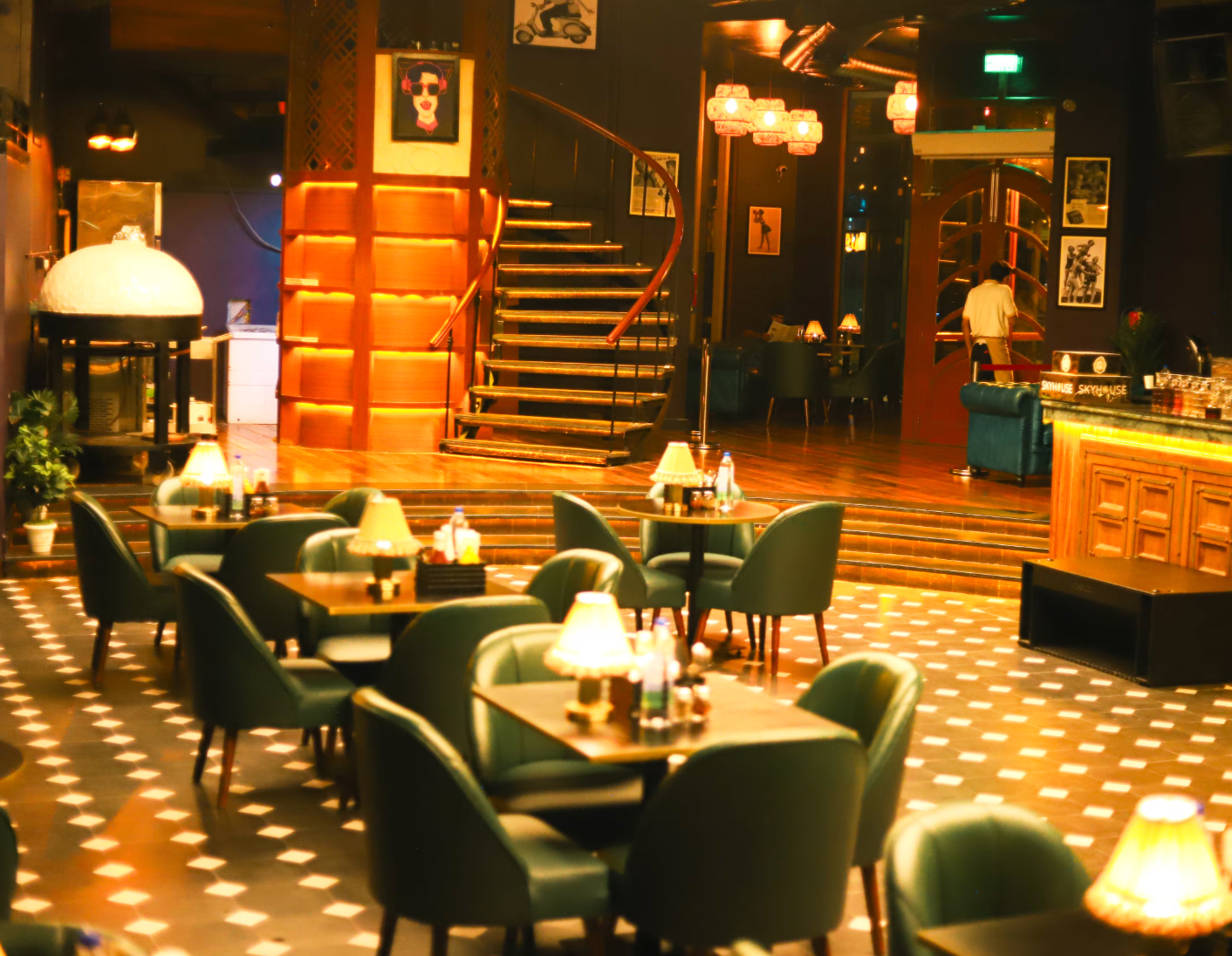

In the fast-paced world of Indian food and beverage, a single executive hire can signal a major industry shift. The recent news that Sandeep Malik, a veteran with 25+ years in fashion and lifestyle retail, has been appointed CEO of Drunken Monkey is one such signal.
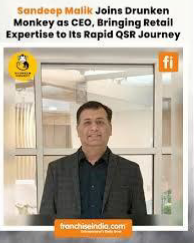
drunkin monkey’s ceo
At first glance, this might seem like just another corporate update. But for us at RestaurantCoach.in, where we work closely with restaurant owners across Mumbai, Delhi, Bangalore, and beyond, this move speaks volumes. It’s a clear indicator of a fundamental change in how successful food businesses are being built in India.
Why should a restaurant owner in Jaipur, a café entrepreneur in Pune, or a cloud kitchen founder in Gurugram care? Because this hire is a masterclass in strategic scaling. It shows that to win in today’s competitive market, you need more than just great food. You need retail discipline, franchise system expertise, and operational rigor. This article will break down the news, explain its direct impact on your business, and give you a actionable playbook to apply these lessons immediately.
Let’s unpack the original story. Drunken Monkey, a smoothie-led QSR café chain with over 43 franchise outlets, has brought on Sandeep Malik as its CEO. His background is not in kitchens or hospitality, but in scaling retail giants like Bestseller India and Raymond.
His mandate? To build a “disciplined, scalable QSR organisation.” The key focus areas are:
Strengthening the Franchise Model: Making it more profitable and efficient for franchisees.
Improving Unit Economics: Ensuring each outlet is a strong, profitable unit on its own.
Delivering Consistent Customer Experience: A hallmark of successful retail chains.
This is a pivotal move as the brand eyes 100 stores in India and international expansion into the UAE. The message is clear: the “growth-at-all-costs” phase is over; the “profitable, system-driven scale” phase has begun.
This isn’t just about one brand. It’s a trend that affects every food business owner in India. Here’s how this news directly impacts you:
1. The Bar for Scaling Has Been Raised. Gone are the days when a popular single outlet could easily become a chaotic multi-city chain. Investors and markets now demand retail-like precision in expansion. A charismatic founder-chef is no longer enough; you need a leadership team that understands unit economics, supply chain logistics, and franchisee relationships with the same depth as a major retail chain.
2. Franchising is Getting Professionalized. For many Indian restaurateurs, franchising is an attractive growth lever. However, a broken franchise system can destroy your brand’s reputation. Malik’s hire indicates a shift towards structured, supportive, and financially sound franchise models. If you’re franchising or plan to, you must now compete with this level of professional system design.
3. Profitability Trumps Pure Top-Line Growth. The emphasis on “unit economics” is the biggest takeaway. It doesn’t matter if you have 50 outlets if 30 of them are barely breaking even. The focus is now on ensuring each location is a profit center. This philosophy protects your brand during economic downturns and makes your business fundamentally stronger.
4. Customer Experience is Systematized. In retail, consistency is king. Whether you walk into a store in Chennai or Chandigarh, the experience is largely uniform. Applying this to F&B means creating systems so that your burger, coffee, or biryani tastes and feels the same every single time, irrespective of which location or shift it comes from. This builds immense brand trust.
You don’t need to hire a retail CEO to implement these principles. Here are 5 concrete steps you can take this quarter:
1. Audit Your Unit Economics Like a Retailer.
Action: Don’t just look at overall P&L. Create a separate, detailed profit & loss statement for each outlet or vertical (dine-in, delivery, takeaway).
Key Metrics to Track: Cost of Goods Sold (CoGS) per outlet, labour cost as a percentage of sales per location, footfall-to-conversion rate, average transaction value.
Next Step: Identify your weakest and strongest units. What is the best-performing outlet doing that others aren’t? Systemize that.
2. Systemize One Core Customer Experience.
Action: Pick one non-negotiable aspect of your customer journey. Is it the temperature of your coffee? The crispness of your fries? The greeting protocol?
Create a “Retail-Style” SOP: Document it in extreme detail with checklists and quality controls. Train every team member, and audit compliance weekly.
Next Step: At RestaurantCoach.in, we use the “Signature Consistency Framework” with our clients. It starts with nailing one thing perfectly before moving to the next.
3. Professionalize Your Expansion Model.
If you franchise: Is your Franchisee Operating Manual a living document? Do you have a dedicated support team for franchisees? Is your fee structure designed for their success, not just your royalty?
If you own multiple outlets: Do you have a playbook for new store openings? A dedicated training squad? A centralized supply chain negotiation strategy?
Next Step: Treat your expansion model as a product that needs to be refined and improved constantly based on franchisee/manager feedback.
4. Bring Data to the Forefront.
Action: Move beyond gut feeling. Use your POS data to identify top-selling items, peak hours, and customer preferences. Use delivery platform analytics to understand geography-wise demand.
Simple Start: Generate just three reports weekly: Sales by Item, Sales by Hour, and Customer Count vs. Average Bill Value. Look for trends.
Next Step: Make one small menu or staffing change based on this data and measure the result.
5. Build a Leadership Team with Complementary Skills.
Action: Honestly assess your own strengths. Are you the visionary creator? If yes, you might need a partner or key hire who excels at operations, finance, and systems.
Think Beyond Traditional F&B Roles: Consider talent from organized retail, QSR chains, or even FMCG for roles in supply chain, marketing, and operations.
Next Step: Write down the 3 key business functions you are weakest at. Start networking to find advisors or potential hires who fill those gaps.
In our coaching practice at RestaurantCoach.in, we’ve seen this transition firsthand. The most successful food entrepreneurs today are those who embrace this hybrid mindset—the soul of a restaurateur combined with the mind of a retailer.
The Drunken Monkey hire validates a crucial trend: the institutionalization of Indian F&B. The market is maturing. Access to capital is tied to scalable models and clear paths to profitability. Consumers, flooded with choices, default to brands they trust to deliver consistency.
This doesn’t mean your restaurant loses its heart. It means the heart (your food, your ambiance, your brand story) needs a strong, reliable body (your systems, operations, finances) to carry it forward. One of our clients, a successful cloud kitchen chain in Delhi NCR, achieved 40% growth after shifting their focus from adding more kitchens to deeply optimizing the profitability of their existing three. They worked on vendor contracts, packaging costs, and delivery radius efficiency—pure retail tactics applied to food.
The future belongs to restaurateurs who can be both artists and architects.
The appointment of Sandeep Malik at Drunken Monkey is a powerful case study. It underscores that sustainable success in the Indian restaurant industry requires:
Disciplined Unit Economics over vanity metrics.
System-Driven Consistency in customer experience.
Professionalized Scaling Models, especially for franchising.
Leadership that blends culinary passion with operational excellence.
This shift presents both a challenge and a massive opportunity. The playing field is being leveled by strategy and systems, not just by deep pockets.
Need expert guidance to navigate this new landscape and build a restaurant business that’s both passionate and profitable? Our tailored coaching programs at RestaurantCoach.in are designed for Indian food entrepreneurs like you. We help you build the systems, strategies, and leadership approach to scale with confidence.
[Book a Free Strategy Session with Our Coaches Today] to transform your restaurant vision into a scalable, sustainable reality.
Q1: I’m a single outlet owner. Is this news relevant to me?
A: Absolutely. The principles of unit economics and systematized customer experience are the foundation of a resilient business, whether you have 1 outlet or 100. Mastering them now makes any future expansion smoother and more successful.
Q2: I come from a culinary background, not business. How do I develop this “retail mindset”?
A: Start by partnering or seeking mentorship. You don’t have to do it alone. Focus on your strengths (product, brand) and proactively look for a business partner, hire a strong operations manager, or work with a coach who can complement your skills. Many successful chefs partner with business-savvy operators.
Q3: Won’t too much systemization make my restaurant feel sterile and corporate?
A: Good systems are invisible to the customer. They ensure the coffee is always hot and served on time, giving your staff more freedom to deliver genuine hospitality. Systems protect quality and free you up to focus on creativity and customer connection.
The Indian food service industry is witnessing a fascinating shift. Homegrown brands are no longer…
The recent buzz around Indiranagar, Bangalore—where several popular cafes are reportedly restricting laptop usage—has sparked…
As a restaurant business coach working with food entrepreneurs across India, I’ve seen a recurring…

Founded in 2015 by seasoned restaurant professionals who understood the challenges faced by food entrepreneurs in India, Restaurant Coach began as a vision to democratize restaurant success.

Founded in 2015 by seasoned restaurant professionals who understood the challenges faced by food entrepreneurs in India, Restaurant Coach began as a vision to democratize restaurant success. After witnessing countless talented chefs and passionate food lovers struggle with business aspects of restaurant operations, our founders decided to bridge the gap between culinary passion and business acumen.