Demos
Demos  Colors
  Docs
Docs  Support
Home 15
Newly Added



If you’re an ambitious restaurant owner in India, you’ve likely asked the question: “When will an Indian restaurant win a Michelin star?” The truth might surprise you and, more importantly, reveal a tremendous business opportunity for your restaurant. Let’s clear the air: India has no Michelin-starred restaurants because the Michelin Guide does not publish a guide for India. It’s not a judgement on Indian cuisine’s quality, but a business decision by a foreign company. While diners in Delhi, Mumbai, and Bangalore search for the “best restaurants in India,” they aren’t looking for a tire company’s validation—they’re looking for an unforgettable experience. This article will flip the script. Instead of viewing this as a lack, we’ll explore how you can leverage this reality to build a more profitable, resilient, and celebrated restaurant on your own terms.
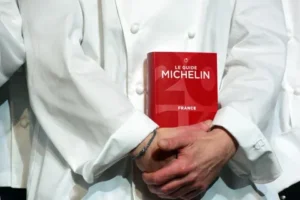
The Michelin Mystery
First, let’s demystify the core issue. The Michelin Guide is, at its heart, a marketing tool for the Michelin tire company. It began in 1900 to encourage road travel (and thus tire sales) in France. Its expansion globally is a strategic, commercial process. For a guide to be launched in a country, Michelin must deem it commercially viable for their brand and believe there’s a market for their guidebooks.
While Indian cuisine enjoys global acclaim, and cities like Mumbai and Delhi boast incredible culinary diversity, Michelin hasn’t entered the market. This is likely due to a complex mix of factors: the vastness and regional diversity of India’s food scene, different dining-out cultures, and perhaps a focus on other expanding markets first. The key takeaway? The absence of the Michelin Guide in India is not a report card on Indian restaurants. It’s a gap in a foreign publication, not a gap in Indian excellence.
Here’s the coaching perspective we share with every client at RestaurantCoach.in: This isn’t a problem; it’s a strategic advantage. Chasing a Michelin star can be astronomically expensive and can distort a restaurant’s true identity.
You Avoid the “Michelin Bubble.” Internationally, the pursuit of a star leads to immense pressure: exorbitant ingredient costs, unsustainable staffing ratios, and menu engineering aimed solely at critics, not necessarily loyal guests. Without this pressure, you can focus on profitability and authenticity.
Define Excellence on Your Terms. You are not forced to conform to a specific (and often Eurocentric) fine-dining template. You can excel at what you do best, whether it’s sublime street food, hyper-regional thali, or innovative Indian fusion.
Your Customer is Your True Critic. In the age of social media and Zomato/Google reviews, your guests hold more immediate power than any anonymous inspector. Building raving fans is more valuable for your bottom line than a single badge.
Forget waiting for Michelin. Aim for these recognitions that actually move the needle with your local and national customer base:
Times Food Awards & Other Media Accolades: These are highly visible and influence domestic diners directly. Being named “Best Restaurant in Bangalore” or “Best North Indian in Delhi” carries significant marketing weight.
NRAI Recognition: The National Restaurant Association of India is your industry body. Their recognition, through forums, awards, and advocacy, validates you within the ecosystem that matters most—your peers and the supply chain.
Regional & Hyperlocal Guides: Guides like Condé Nast Traveller’s lists, Luxe Digital, or even curated Instagram pages by respected food influencers are the new-age bibles for experienced diners.
Social Media & Review Authority: This is the most democratic and powerful standard in 2025. A consistent 4.8+ rating on Google, a strong “Top 3” position on Zomato in your category, and an engaged Instagram community are tangible, daily drivers of business. A “Michelin-worthy” online reputation is often more valuable than a star.
This is where the real work—and fun—begins. Let’s build a restaurant so excellent that if Michelin ever arrives, you’re already operating at that standard. Here is our actionable framework:
A flawless guest experience is built on invisible systems. At RestaurantCoach.in, we help owners implement:
Standard Operating Procedures (SOPs) for EVERYTHING: From how a lemon is cut to how a table is reset in 90 seconds. Consistency is the foundation of trust.
Robust Kitchen Management Systems: Inventory control, food cost tracking, and waste management. Profitability isn’t an accident; it’s a system.
Data-Driven Decision Making: Use your POS data to understand your best-selling dishes, peak times, and customer preferences. Don’t guess.
A one-time amazing meal is luck. The same amazing meal on a Tuesday lunch and a packed Saturday night is world-class. This requires:
Recipe Standardization: Exact weights, measures, brands, and plating guides.
Rigorous Staff Training: Continuous, documented training for FOH and BOH.
Quality Control Checks: Implement a “passport” system where a manager must check every plate before it leaves the kitchen.
Michelin inspectors look for “the complete experience.” So should you. Map your customer’s journey:
Pre-Visit: Is your online presence (website, Google My Business) impeccable? Is booking easy?
Arrival & Seating: Is the greeting warm? Is the table perfect?
Service Flow: Is service knowledgeable, anticipatory but not intrusive?
The Moment of Truth (The Food): Does it look and taste exceptional?
Departure & Memory: Is the billing smooth? Is there a genuine thank you? Do you have a system to follow up?
Your staff are your ambassadors. Invest in them.
Product Knowledge: They must taste and understand every dish and ingredient.
Hospitality Mindset: Shift from “service” to “hospitality”—creating emotional connections.
Upskill Regularly: Sponsor barista courses, wine appreciation sessions, or communication workshops.
Consider a restaurant like Indian Accent in New Delhi. It consistently ranks among Asia’s 50 Best Restaurants, commands premium pricing, and has global acclaim—all without a Michelin star. Its success is built on culinary innovation rooted in Indian tradition, impeccable service, and a fiercely consistent brand experience. They didn’t wait for validation; they built a benchmark.
Similarly, iconic establishments like Bukhara or regional gems like Paradise for Biryani in Hyderabad have built legacies and customer loyalty that transcend any foreign guide. They are pillars of their culinary landscapes.
We’ve distilled this philosophy into a clear framework for our coaching clients:
| Pillar | Focus | Your Action Item |
|---|---|---|
| Pillar 1: Strategic Foundation | Concept, Market Positioning, Financial Model | Define your “why” and your unique value proposition. |
| Pillar 2: Operational Rigor | Systems, SOPs, Cost Controls | Implement a daily checklist and weekly inventory audit. |
| Pillar 3: Culinary & Product Integrity | Menu Engineering, Consistency, Sourcing | Standardize 5 core recipes perfectly this month. |
| Pillar 4: Guest Experience & Brand | Journey Mapping, Service Culture, Marketing | Secret-shop your own restaurant and fix 3 pain points. |
| Pillar 5: Team & Leadership | Training, Culture, Owner’s Mindset | Conduct one meaningful training session with your team weekly. |
This system, which we deploy in our personalized coaching programs at RestaurantCoach.in, ensures you build a holistic, excellent business, not just a kitchen chasing a trophy.
Spoiler: If you follow the principles above, you’ll be ready. More importantly, you’ll have a thriving business that doesn’t need the star to survive. If the guide launches, view it as a potential marketing bonus, not a lifeline. Your foundation will be so strong that adapting to any new critic’s criteria will be a minor tweak, not a soul-destroying overhaul.
The emotional hook for every Indian restaurateur is this: Stop waiting for a foreign tire company to validate you. Start building a restaurant that your customers rave about, your team is proud of, and your balance sheet celebrates—TODAY.
Your market is here. Your customers are here. The opportunity is now. The lack of a Michelin Guide in India isn’t holding you back; it’s freeing you to define what true excellence means for your brand and your guests.
Need expert guidance to navigate these industry standards and build a legendary restaurant? Our restaurant coaching programs at RestaurantCoach.in help food entrepreneurs like you build profitable, sustainable, and celebrated businesses. Book a free strategy consultation with us today to transform your restaurant vision into a tangible, thriving reality.
Q1: Are there any Michelin-starred Indian restaurants anywhere?
A1: Yes, but they are all outside India. There are approximately 17 Indian restaurants worldwide with Michelin stars, located in places like London, New York, Dubai, and Bangkok. This proves the global respect for Indian cuisine’s potential to meet those standards.
Q2: What is the Indian equivalent of the Michelin Guide?
A2: There isn’t a single direct equivalent. However, platforms like the Times Food Awards, NRAI Food Awards, and curated lists by Condé Nast Traveller India serve as influential benchmarks for fine dining and quality within the Indian subcontinent.
Q3: Should I design my restaurant as if a Michelin inspector were coming?
A3: Design it as if your most discerning, regular customer is coming every day. Focus on consistency, ingredient quality, service warmth, and overall experience. These principles align with global standards anyway and, more importantly, ensure customer loyalty and profitability.
Q4: How can I improve my restaurant’s standards without huge investment?
A4: Start with systems and training. Document your top 10 SOPs, invest in weekly staff huddles for feedback, and implement a rigorous daily opening/closing checklist. Often, the highest ROI comes from refining existing processes, not spending new money.
The Indian food and beverage (F&B) industry is buzzing with news that has significant implications…
Maharashtra PNG Supply Hike: A Restaurant Coach’s Guide to Relief and Resilience For restaurant owners…
The Fast-Food Diabetes Link: What Telangana’s Health Warning Means for Your Restaurant’s Future As a…
As restaurant business coaches in India, we at RestaurantCoach.in spend a lot of time in commercial kitchens.…

Founded in 2015 by seasoned restaurant professionals who understood the challenges faced by food entrepreneurs in India, Restaurant Coach began as a vision to democratize restaurant success.

Founded in 2015 by seasoned restaurant professionals who understood the challenges faced by food entrepreneurs in India, Restaurant Coach began as a vision to democratize restaurant success. After witnessing countless talented chefs and passionate food lovers struggle with business aspects of restaurant operations, our founders decided to bridge the gap between culinary passion and business acumen.