Demos
Demos  Colors
  Docs
Docs  Support
Home 15
Newly Added


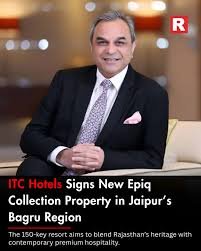
If you think a new luxury hotel opening in Jaipur in 2030 is just news for hoteliers, think again. The recent announcement that ITC Hotels is launching the 150-key Epiq Collection on a sprawling 12-acre property in Bagru, Jaipur, is a flare shot into the sky for every restaurant owner, café proprietor, and food entrepreneur in India. This isn’t just another hotel; it’s a statement about the future of Indian hospitality and, crucially, the future of dining.
itc r1
From our decade of experience coaching restaurants across India at RestaurantCoach.in, we see this as a pivotal moment. When a giant like ITC invests in a “tranquil resort” that promises “regionally inspired architecture” and “intuitive hospitality,” they are validating a massive consumer trend. They are betting that the modern Indian diner—and the global traveler—no longer wants just a meal. They crave a “sense of place and discovery”.
This blog post will break down what the Epiq Collection Jaipur truly means for your food business. We’ll move beyond the headlines to give you a clear analysis of the shifting landscape and, most importantly, provide you with a practical, actionable playbook to ensure your restaurant isn’t just competing but leading in this new era.
Let’s look past the basic facts—the 150 rooms, the 12 acres, the 2030 opening date. The real story is in the language used by ITC’s leadership, which reveals the strategic blueprint for the future.
Anil Chadha, Managing Director of ITC Hotels, didn’t just talk about rooms and occupancy. He highlighted Jaipur’s unique intersection of “heritage, tourism and modern aspirations” and identified a “clear demand for thoughtfully curated guest experiences”. Meanwhile, Mohammad Farooq of Basalt Infrastructure emphasized creating a “new benchmark in hospitality and cuisine expertise“.
The message is unambiguous. The Epiq Collection is being built on three core pillars that should be a wake-up call for every restaurant owner:
Hyper-Regional Authenticity: It’s not “Indian” food; it’s the specific, storied cuisine of Rajasthan, woven into the very fabric of the guest experience.
Immersive Experience: The goal is to move beyond transactional dining to create emotional connection and discovery.
Cultural Narrative: Every element, from architecture to the plate, tells a story of local heritage.
This aligns perfectly with global trends. In the US, award-winning Indian restaurants like Semma and Bungalow are achieving phenomenal success by focusing on hyper-regional specificity (like Tamil Nadu cuisine) and creating destination-worthy experiences, with reservations selling out in seconds. The Epiq Collection is bringing this exact same elevated, narrative-driven dining philosophy to the heart of India.
You might run a cloud kitchen in Bangalore, a café in South Delhi, or a QSR in Mumbai. How does a luxury resort in Jaipur affect you? The impact is indirect but profound, as it reshapes customer expectations nationwide. The strategies deployed by high-profile players like ITC trickle down, conditioning what all customers consider a “good” dining experience.
The Bar for “Authenticity” is Being Raised: Generic “North Indian” and “South Indian” sections on your menu are becoming obsolete. The trend is toward hyper-regional flavors. When a luxury hotel builds its brand on deep cultural storytelling, diners will start seeking that same specificity and credibility from standalone restaurants. They’ll want to know the story behind your Chettinad chicken or your Kashmiri nadru yakhni.
Experience is the New Currency: The Epiq Collection is selling “intuitive hospitality” and a “sense of place”. This translates to a massive shift from viewing a restaurant as a place to eat to seeing it as a venue for an immersive experience. Your competition is no longer just the restaurant down the street; it’s any business that offers memorable, Instagram-worthy moments. Diners, especially younger generations, are actively seeking these unique experiences.
The Rise of the Informed, Value-Conscious Diner: Today’s customer does more research. A staggering 94% of diners check online reviews before choosing where to eat. They can easily compare your offering, your story, and your perceived value against the best in the country. A weak online presence or inconsistent quality is more costly than ever.
The stark reality is that the Indian restaurant industry is fiercely competitive, with a high failure rate often linked to a lack of differentiation and poor operational planning. The entry of concept-driven giants like the Epiq Collection raises the stakes, making it imperative for independent owners to strategically carve out their unique space.
Seeing this trend is one thing; acting on it is another. Here are five concrete, actionable steps you can take, starting today, to align your business with this new paradigm.
Your food has a story. Your ingredients have a story. Your chef has a story. It’s time to tell them. Action: Gather your team and ask: “What is our unique narrative?” Is it a family recipe from a specific village? A focus on ancient grains like millets? A modern twist on street food? Document this story and weave it into every customer touchpoint: your menu descriptions, your social media posts, and your staff’s greeting spiel.
Instead of a vast, generic menu, consider a curated, regional-focused offering. Action: Identify one or two Indian states or communities whose cuisine aligns with your strengths. Create a “Chef’s Regional Special” section that rotates quarterly. For example, dedicate a season to the tangy seafood of the Konkan coast or the robust vegetarian dishes of Rajasthan. This reduces inventory complexity, increases kitchen efficiency, and gives you a powerful marketing hook.
You don’t need a 12-acre property to create immersion. Action: Design one repeatable, bookable experience. This could be:
A weekly “Kitchen Table” tasting menu where the chef explains each dish.
A weekend “Dosa & Filter Coffee” live counter breakfast experience.
A themed dinner paired with local art or music.
Price it as a premium offering and market it as an “experience,” not just a meal. This builds tremendous value and word-of-mouth.
Intuitive hospitality means staff who can connect and narrate. Action: Invest in product knowledge training that goes beyond the menu. Train your servers to confidently explain the origin of key spices, the significance of a cooking technique, or the personal story behind a signature dish. This transforms service from an order-taking function to a key part of the guest’s discovery journey.
Use your POS and customer data intelligently. Action: Implement a simple digital loyalty program. Use customer order history to send personalized offers—for example, a complimentary dessert for a regular vegetarian customer on their next visit. A small, tech-enabled personal touch can foster the “intuitive” feeling that large hotels strive for.
| Traditional Approach | Future-Proof Strategy (The Epiq Lesson) |
|---|---|
| Generic “Indian Restaurant” branding | Niche, regional, or story-driven identity |
| Long, complex menu with high waste | Curated, seasonal menu with narrative |
| Transactional customer service | Experiential, storytelling-based hospitality |
| Marketing focused on price discounts | Marketing focused on unique value & experience |
| Technology as just a billing tool | Technology as a tool for personalization & efficiency |
In our coaching sessions at RestaurantCoach.in, we often see passionate restaurateurs hesitant to niche down, fearing it will limit their customer base. The success of concepts like the Epiq Collection and the fine-dining Indian wave in the US proves the opposite is true. In a crowded market, specificity is your greatest weapon.
This news isn’t a threat; it’s a validation. It confirms that the path to profitability and sustainability for Indian restaurants lies in moving from commodity to community, from service to story, and from a restaurant to a destination.
The trends are clear: sustainability is moving from buzzword to business imperative, with diners appreciating eco-friendly practices. Health-conscious menus featuring Ayurvedic principles and ancient grains are on the rise. And technology, from AI-driven menu suggestions to streamlined cloud kitchen operations, is enabling this shift toward smarter, more focused businesses.
The journey for the Epiq Collection Jaipur began with a signing and will culminate in an opening in 2030. Your journey to transform your restaurant can begin today. You have the advantage of agility and authentic passion that large chains often struggle to replicate.
The announcement of the Epiq Collection Jaipur is a signal. It tells us that the future of successful hospitality in India belongs to those who offer depth, authenticity, and memorable moments. It’s a future where your restaurant’s unique story is its most valuable asset.
You now have a clear view of the landscape and a practical playbook with five strategies to implement. The question is no longer what to do, but how to execute it effectively for your specific concept, location, and team.
Feeling inspired but unsure how to translate these strategies into a concrete plan for your restaurant?
At RestaurantCoach.in, we’ve helped dozens of restaurant owners navigate similar pivots—from validating a hyper-regional concept to engineering profitable experiential dining models. Our systematic approach covers everything from concept analysis and menu engineering to staff training and launch marketing.
Let’s build your restaurant’s future, together. Book a free 30-minute consultation with our expert coaches to discuss how you can transform your vision into a thriving, future-proof business. [Contact us via our website] to get started.
Q: My restaurant is in a tier-2 city. Do these experience-driven trends still apply?
A: Absolutely. While the pace may vary, consumer expectations are being shaped by national and global trends accessible through social media and travel. Offering a unique, authentic local experience can make you the destination in your city.
Q: I run a cloud kitchen. How can I create an “experience” without a dine-in space?
A: The experience shifts to the unboxing and the narrative. Focus on exquisite, sustainable packaging. Include a beautifully designed note card telling the story of the dish. Create themed meal kits (e.g., “A Taste of Kashmir Night”) with simple heating instructions that make the customer feel like a participant.
Q: Is it expensive to implement these changes?
A: Not necessarily. Many are about mindset and communication (like staff training and storytelling). Menu focus can actually reduce costs by cutting waste and simplifying inventory. Start with one small, high-impact change, like introducing a single weekly experiential special, and scale from there.
Hookah and Food are Separate Supplies Under GST: What This Landmark Ruling Means for Your…
The Indian hospitality landscape is shifting. It’s no longer just about metro cities and business…
This week, news broke that Barbeque Nation has opened its doors at CP67 Mall in Mohali.…
The Indian food service industry is witnessing a fascinating shift. While dine-in traffic recovers, the…

Founded in 2015 by seasoned restaurant professionals who understood the challenges faced by food entrepreneurs in India, Restaurant Coach began as a vision to democratize restaurant success.

Founded in 2015 by seasoned restaurant professionals who understood the challenges faced by food entrepreneurs in India, Restaurant Coach began as a vision to democratize restaurant success. After witnessing countless talented chefs and passionate food lovers struggle with business aspects of restaurant operations, our founders decided to bridge the gap between culinary passion and business acumen.