Demos
Demos  Colors
  Docs
Docs  Support
Home 15
Newly Added



India’s QSR (Quick Service Restaurant) industry is evolving at a rapid pace, and every major global chain that enters the Indian market raises the competitive bar for restaurant owners. The latest development? Haldiram Group is reportedly in talks with US-based Inspire Brands to bring the iconic American sandwich chain Jimmy John’s to India.
This move is not just another international brand launching here; it is a signal of where the Indian food services market is heading—faster formats, premium quick meals, strong delivery operations, and western-style café models targeted at young consumers.
As restaurant coaches at RestaurantCoach.in, we closely track major industry shifts like this because they directly influence menu trends, customer expectations, staffing models, and pricing strategies across India. Whether you run a cloud kitchen in Bangalore, a café in Mumbai, or a QSR in Delhi, moves by giants like Haldiram’s reshape the entire competitive landscape.
In this article, we break down what the Jimmy John’s entry truly means, how it affects Indian restaurant owners, and what strategic actions you must take to stay ahead of the changing market.

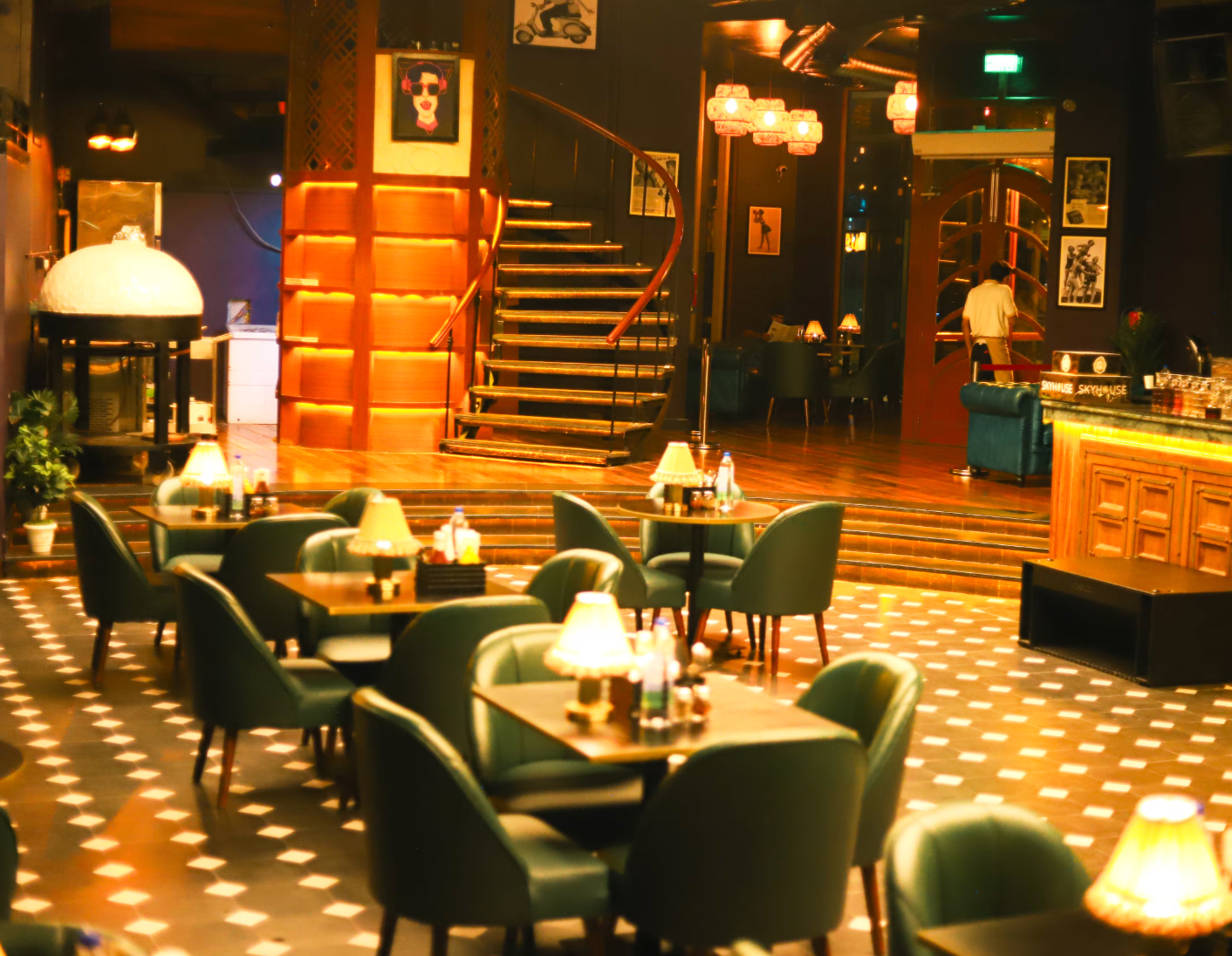
A modern Indian high-street with a new international QSR storefront (sandwich café style), young customers, vibrant signage, and a fast-casual dining vibe.
Haldiram Group—known for dominating India’s ethnic snacks and casual dining space—is now exploring a major expansion into western-style QSR formats. According to reports, the group is in active discussions with Inspire Brands, the US-based owner of Jimmy John’s, with the intention of bringing the well-known sandwich brand to India.
Jimmy John’s is a powerhouse in the American QSR world, operating 2,600+ outlets across the US, UAE, Canada, and South Korea. Their brand is built on speed, consistency, and a simple menu of freshly made sandwiches. In the US, they are considered the largest delivery-focused sandwich brand, generating over $2.6 billion in systemwide sales.
Inspire Brands, their parent company, is no small player either—its portfolio includes Dunkin’, Arby’s, Sonic, Buffalo Wild Wings, and Baskin Robbins. With 33,000+ restaurants globally, Inspire Brands is aggressively expanding through international franchising, and India is a high-priority market because of its young population and fast-growing food delivery ecosystem.
Haldiram’s founding family reportedly aims to compete directly with brands like Subway and Tim Hortons, tapping into the aspirational café-going urban consumer. Importantly, this new QSR business will be separate from Haldiram’s existing FMCG division, allowing a clean entry into western formats without diluting its core Indian identity.
This move also aligns with market trends highlighted by the National Restaurant Association of India (NRAI), which projects food services in India to grow from ₹5.69 lakh crore (FY24) to ₹7.76 lakh crore (FY28), driven by Gen Z, millennials, and delivery-first dining habits.
Long story short:
Jimmy John’s coming to India is not simply a brand launch—it is a strategic signal that the Indian QSR market is entering a new phase of competition.
Whether you run a QSR, café, cloud kitchen, fine dine, or even a small takeaway outlet—this news impacts you. Here’s how:
Jimmy John’s is globally known for speed (“freaky fast delivery”), consistent quality, and a simple menu. After their launch, Indian consumers will expect:
Faster delivery times
Fresher sandwich-style offerings
Higher-quality bread and ingredients
Premium fast-casual experiences
If your menu includes burgers, wraps, sandwiches, subs, or rolls—you must prepare for a shift in expectations.
Brands like Subway, Tim Hortons, and Café Coffee Day already compete in this space. Jimmy John’s entry backed by Haldiram’s capital, supply chain, and real estate expertise will add a serious competitor in:
High streets
Malls
Food courts
Tech parks
Delivery-first zones
Cloud kitchens serving sandwiches/bowls/wraps may feel the pressure first.
Haldiram’s has deep pockets and strong real estate access. Expect:
Higher rental bidding in prime locations
Faster expansion of western QSR formats
More competition for mall spaces
Independent restaurateurs must strengthen feasibility studies to avoid risky locations.
The partnership may enhance:
Access to better cold cuts
Premium bakery products
Import standards
Distribution networks
This will improve ingredient availability for entire industry players, including small restaurants.
With the growth of food delivery platforms and café culture, younger consumers prefer quick, clean-label, grab-and-go meal options. This will accelerate:
Sandwiches
Bowls
Salads
Fresh bakes
Beverage pairings (coffee, shakes, cold brews)
Restaurants must adapt menus to stay relevant.
Here are 7 practical steps you can take immediately to stay ahead:
Brands like Jimmy John’s succeed with lean, focused menus.
You should:
Remove slow-moving, low-margin dishes
Strengthen hero items
Optimize for delivery-friendly SKUs
Customers expect fast service.
Operational improvements:
Pre-prep stations
Mise-en-place optimization
Quick-assembly counters
Delivery batching systems
At RestaurantCoach.in, we often help clients reduce service time by 25–40% with simple workflow changes.
With new QSR players entering, you need clearer differentiation:
Are you the value brand?
The premium artisanal brand?
The healthy brand?
The local Indian fusion brand?
Define your niche or global players will overshadow you.
Jimmy John’s excels in delivery. You must:
Revisit packaging
Improve delivery speed
Train staff on dispatch processes
Optimize Swiggy/Zomato menu layout
Consumers are becoming brand-savvy.
Use:
Better bread
High-quality sauces
Fresh vegetables
Cleaner protein cuts
This improves both customer satisfaction and retention.
Your staff must deliver faster, friendlier, more consistent service.
Focus on:
Speed drills
Assembly training
Customer interaction
Upselling scripts
Our coaching clients at RestaurantCoach.in often see sales increase simply through improved team training.
Use:
Instagram Reels
Local influencer tie-ups
WhatsApp marketing
Retail sampling
Office catering partnerships
Global brands spend heavily on promotions—you must match them strategically.
From a coaching standpoint, Jimmy John’s potential entry is more than just market news—it reflects a bigger industry evolution.
Over the last decade, we’ve seen:
The rise of cloud kitchens
Faster delivery expectations
Premium casual dining
Café-style QSR formats
Young consumers driving western food trends
India’s food services industry is maturing, and global brands are accelerating this shift.
At RestaurantCoach.in, we’ve helped dozens of restaurants adapt to this new landscape. Our top-performing clients succeed because they:
Keep menus tight
Maintain consistency
Build strong local branding
Leverage data from Swiggy/Zomato
Train their teams regularly
Understand unit economics
Large global brands operate with strong SOPs, high discipline, and scientific decision-making. For Indian restaurant owners to compete, adopting these principles is essential.
The good news?
Independent restaurants can still outperform big chains—if they position themselves strategically and execute well. You have the advantage of local flavors, faster innovation, and stronger community relationships.
But to thrive in the next 3–5 years, Indian restaurant owners must professionalize their operations, manage costs better, and focus on customer experience from end to end.
Jimmy John’s entry into India—if finalized—will intensify competition in the QSR and café space. But for smart Indian restaurant owners, it also opens massive opportunities. With rising consumer expectations and global brands entering, this is the perfect time to improve your operations, clarify your positioning, upgrade your menu, and strengthen your brand.
You don’t have to navigate this industry shift alone.
Need expert guidance to stay ahead of competition?
Our restaurant coaching programs at RestaurantCoach.in help food entrepreneurs build profitable, scalable, and future-ready businesses.
Ready to grow?
👉 Visit RestaurantCoach.in to transform your restaurant vision into reality.
The Indian food and beverage (F&B) industry is buzzing with news that has significant implications…
Maharashtra PNG Supply Hike: A Restaurant Coach’s Guide to Relief and Resilience For restaurant owners…
The Fast-Food Diabetes Link: What Telangana’s Health Warning Means for Your Restaurant’s Future As a…
As restaurant business coaches in India, we at RestaurantCoach.in spend a lot of time in commercial kitchens.…

Founded in 2015 by seasoned restaurant professionals who understood the challenges faced by food entrepreneurs in India, Restaurant Coach began as a vision to democratize restaurant success.

Founded in 2015 by seasoned restaurant professionals who understood the challenges faced by food entrepreneurs in India, Restaurant Coach began as a vision to democratize restaurant success. After witnessing countless talented chefs and passionate food lovers struggle with business aspects of restaurant operations, our founders decided to bridge the gap between culinary passion and business acumen.