Demos
Demos  Colors
  Docs
Docs  Support
Home 15
Newly Added

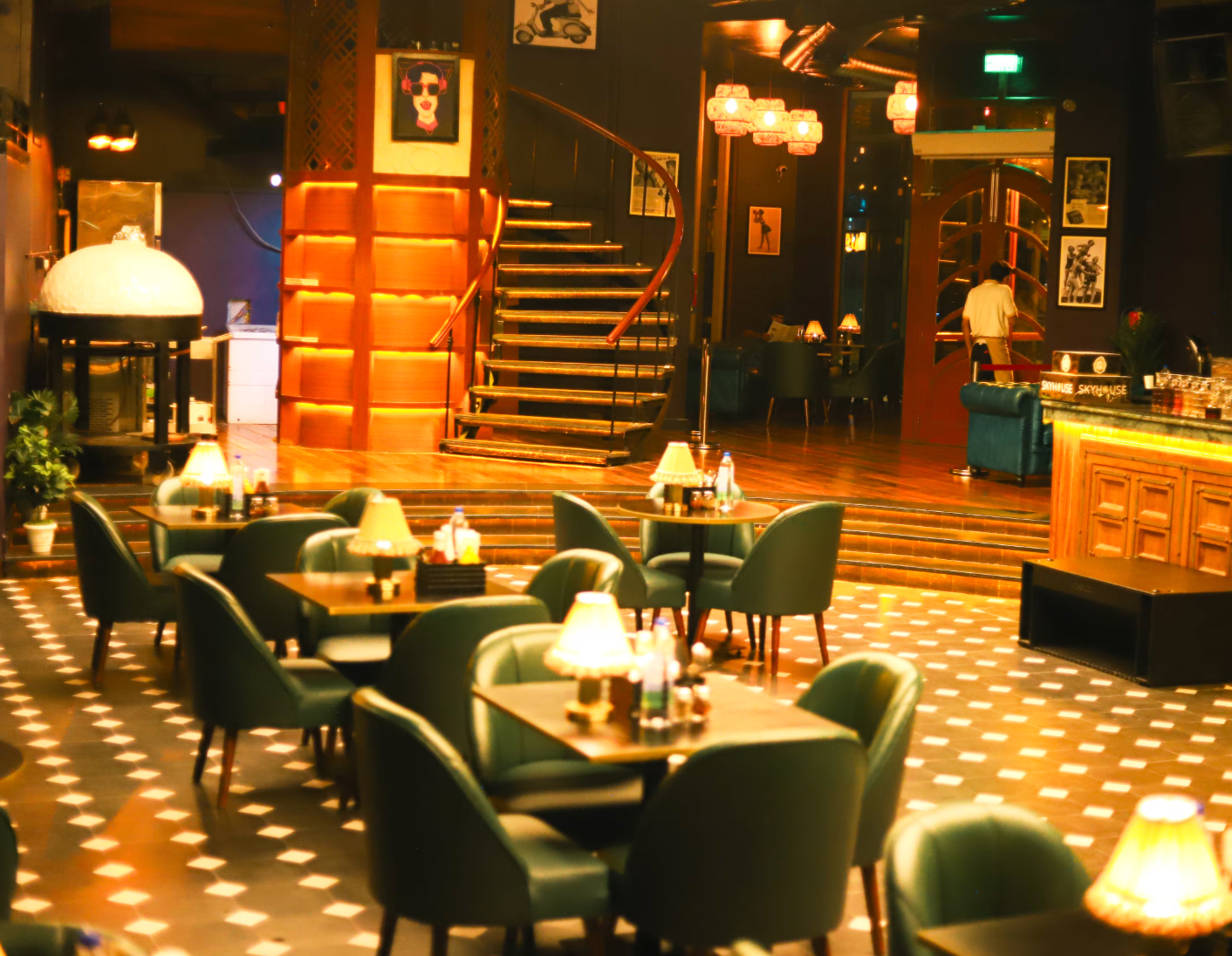

In the bustling lanes of North Kolkata, a culinary institution has quietly rewritten the rules of digital growth. Mitra Café, a name synonymous with Kolkata’s food culture since 1910, recently announced a staggering 6x growth in annual order volumes after partnering with Zomato in 2020. The numbers are impressive: from just over 23,000 orders in 2020 to more than 1.42 lakh orders in 2025 .
mitra cafe
As a restaurant business coach, stories like this excite us—not just because of the growth, but because of how it was achieved. This isn’t a story of a trendy new cloud kitchen cashing in on a viral dish. It’s the story of a 115-year-old brand that managed to preserve its soul while embracing the digital revolution.
At RestaurantCoach.in, we always tell our clients that “Tradition vs. Technology” is a false choice. Mitra Café proves that your legacy can be your biggest asset in the digital age, provided you execute with operational discipline. In this post, we’ll dissect their success and provide you with a clear, actionable roadmap to apply these lessons to your own restaurant, café, or food business.
Before we dive into the “how-to,” let’s look at what actually happened. Mitra Café, led by Tapash Roy, didn’t just put their menu on Zomato and wait for orders to pour in. They undertook a strategic transformation while staying true to their roots.
The core of their strategy rested on three pillars:
Operational Consistency: They focused on strengthening kitchen operations to ensure that the signature dishes—like the iconic Brain Chop and Fish Kabiraji—tasted exactly the same whether served in their 12 Kolkata outlets or packed for delivery .
Digital Collaboration: Instead of viewing Zomato as just a listing service, they treated them as a growth partner. They participated in brand campaigns, invested in advertisements on the platform, and utilized Zomato’s tools to boost visibility.
Scaling with Control: They expanded thoughtfully. While they have 12 outlets in Kolkata, their expansion to cities like Bengaluru and Bhubaneswar was calculated, ensuring their supply chain and kitchen processes could handle the scale .
The result? A heritage brand that now serves a new generation of customers without alienating the loyal patrons in their 70s and 80s.
You might be thinking, “That’s great for a 115-year-old legend, but what does it mean for my small café in Pune or my cloud kitchen in Gurugram?” The answer is: everything. Mitra Café’s journey highlights the critical dynamics of India’s platform economy that affect every single food business owner today.
As of mid-2025, Zomato and Swiggy together control over 90% of India’s food delivery market . Ignoring them is no longer an option if you want to scale. A study by NCAER found that 59% of restaurant owners reported access to new customers after joining platforms . For Mitra Café, this meant reaching customers beyond their traditional North Kolkata footprint.
However, with great reach comes great cost. Industry data suggests that effective commissions for small outlets can land in the high-20% range when you factor in advertisements and platform fees . Many restaurants operate on thin margins, and while platform revenues have risen from 22% to 29% of their business, profitability remains a tightrope walk .
If you aren’t paying for ads on these platforms, your restaurant often won’t show up unless a customer searches for your exact name . Mitra Café’s investment in ads wasn’t an expense; it was a strategic move to ensure they remained discoverable in a crowded digital marketplace.
So, how do you replicate this success? Based on our coaching experience at RestaurantCoach.in, here are five actionable steps you can implement in your business right now.
The biggest mistake we see is restaurants joining platforms when their kitchen processes are chaotic. If your dish quality varies, negative reviews will kill your business faster than anything else.
Next Step: Create a Standard Operating Procedure (SOP) for your top 5-10 selling dishes. Weigh ingredients, time the cooking process, and photograph the final plating. Ensure every chef, across every shift, follows it to a T.
You need to know exactly where your money goes. Let’s look at a typical ₹400 online order breakdown :
| Cost Component | Calculation | Amount Left |
|---|---|---|
| Order Subtotal | ₹400 | |
| Less: Promo/Discount | @ 20% | (₹80) |
| Net Value in Pipe | ₹340 | |
| Less: Aggregator Commission | @ 26% on net | (₹88) |
| Less: Payment Gateway | @ 2% on net | (₹7) |
| Less: Advertising Cost | ~11.8% of gross | (₹40) |
| Less: Cost of Goods Sold | @ 30% of gross | (₹128) |
| Contribution Margin 1 (CM1) | Before Rent & Salaries | ₹76 |
Next Step: Download your last month’s sales report from the aggregator app. Plug your numbers into this table. If your CM1 is consistently low, you need to either adjust your menu pricing for online channels or reduce your cost of goods sold.
Zomato has launched initiatives like the Restaurant Services Hub, which helps with hiring, FSSAI registrations, and taxation by partnering with verified vendors like Apna and WorkIndia . Similarly, Hyperpure can streamline your ingredient sourcing .
Next Step: Open your partner app today and explore the “Services Hub.” If you’re struggling to find reliable staff or dealing with compliance headaches, these tools can save you massive amounts of time and money.
While you need aggregators for discovery, you must own the customer relationship. The future of profitability lies in direct online ordering, where you keep 100% of the revenue and build a loyal community .
Next Step: Start simple. Add a QR code on every table and every parcel sticker that leads to your own WhatsApp ordering link or a simple website ordering page. Offer a small discount (like 5% off) for direct orders to incentivize the switch.
Aakarshan Harlalka, a growth expert for brands like Grandmama’s Cafe, notes that the strongest brands don’t just sell meals—they sell moments . Mitra Café’s enduring brand itself is a draw.
Next Step: Look at your packaging and your plating. Is it “shareable”? In 2025, user-generated content is free marketing. Create one signature dish that is visually stunning or has unique packaging that customers will want to photograph.
In our years of coaching restaurant owners, one truth has become self-evident: algorithms love brands. Zomato and Swiggy are not charities; their algorithms are designed to show customers what they are most likely to order. A strong brand—one with high ratings, consistent quality, and high “click-through rates”—gets preferential treatment in search results without having to spend a rupee on ads.
This is what Mitra Café understood intuitively. Their “brand” was their biggest asset. They didn’t try to become something they weren’t. They simply made their legendary food more accessible.
This is why, at RestaurantCoach.in, we emphasize building a “Digital-Ready Brand” . It’s not just about having a logo; it’s about having a story (like Mitra Café’s 115-year-old friendship story), a signature dish, and an obsessive focus on consistency. When you have these three things, the platforms become a distribution channel for your brand, rather than you becoming a commodity supplier for them.
You don’t need to be 115 years old to build a legacy. You just need to start treating your restaurant like one. Mitra Café’s 6x growth is proof that in India’s booming food delivery market—projected to reach $265 billion by 2033—there is immense opportunity for those who blend authentic flavors with smart, modern operations .
The key takeaway? Respect the platforms for the discovery they provide, but build your operations and your brand to outlast any trend.
Are you ready to build a profitable, sustainable restaurant business that thrives both online and offline? You don’t have to figure it out alone.
Need expert guidance to navigate these industry changes? Our restaurant coaching programs at RestaurantCoach.in help food entrepreneurs like you build profitable, sustainable businesses. [Click here to book your free discovery call] and let’s transform your restaurant vision into reality.
Previous Post
The Indian food service industry is witnessing a fascinating shift. Homegrown brands are no longer…
The recent buzz around Indiranagar, Bangalore—where several popular cafes are reportedly restricting laptop usage—has sparked…
As a restaurant business coach working with food entrepreneurs across India, I’ve seen a recurring…
The Indian restaurant industry thrives on energy, passion, and a connection with its customers. So,…

Founded in 2015 by seasoned restaurant professionals who understood the challenges faced by food entrepreneurs in India, Restaurant Coach began as a vision to democratize restaurant success.

Founded in 2015 by seasoned restaurant professionals who understood the challenges faced by food entrepreneurs in India, Restaurant Coach began as a vision to democratize restaurant success. After witnessing countless talented chefs and passionate food lovers struggle with business aspects of restaurant operations, our founders decided to bridge the gap between culinary passion and business acumen.